
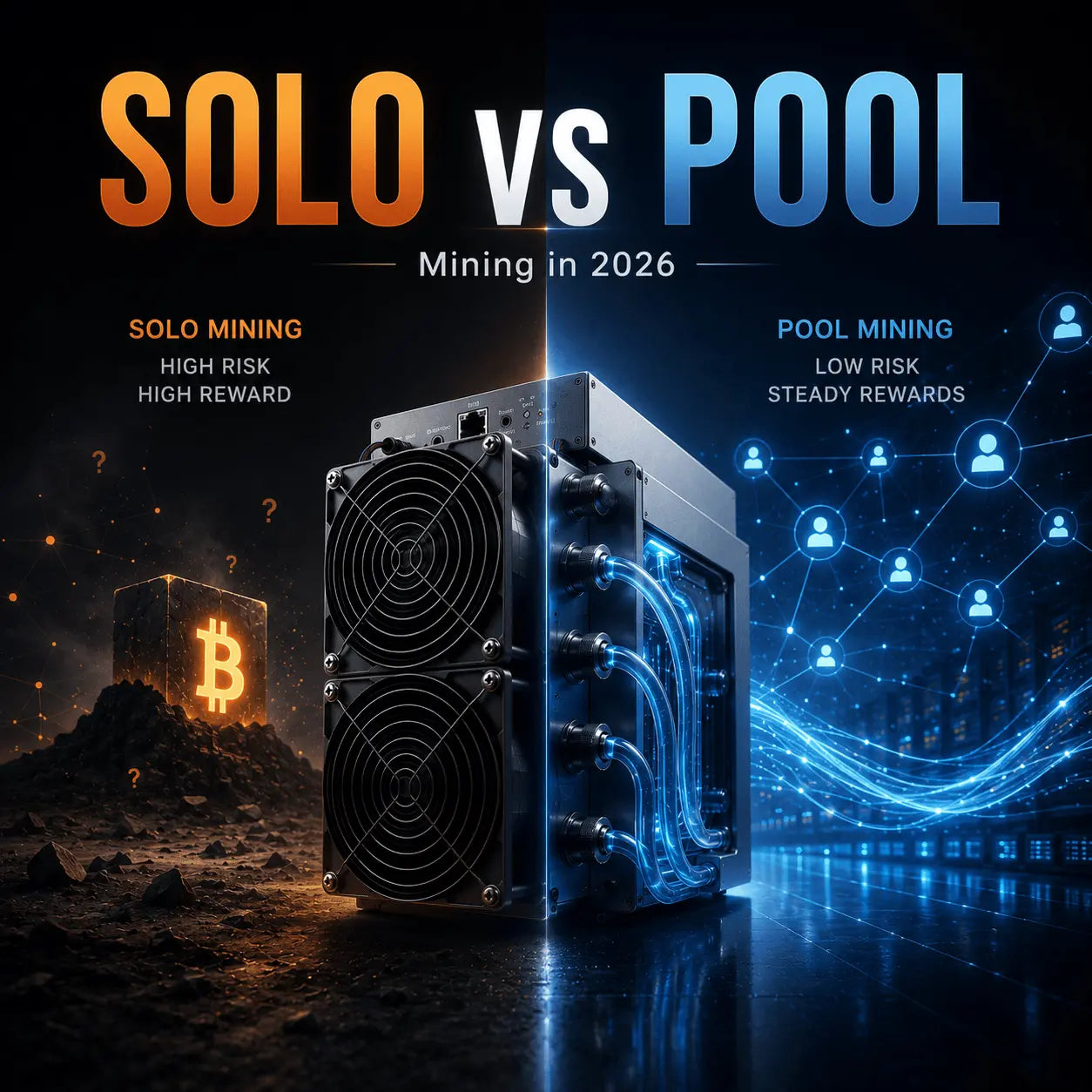
Minería en solitario frente a grupos de minería
¿Qué estrategia tiene sentido en 2026?
Minería ASIC · Recompensas en bloque de Bitcoin · Modelos de pago de pool · Riesgo de variación · Compensaciones de descentralización
En esta página
1Respuesta rápida
Para la mayoría de los mineros ASIC en 2026, la minería en grupo es la estrategia principal correcta. El subsidio por bloque de Bitcoin es ahora de 3.125 BTC, la dificultad de la red sigue siendo extremadamente competitiva y las posibilidades de un pequeño minero de encontrar un bloque por sí solo son tan bajas que la minería en solitario suele comportarse más como un billete de lotería que como un negocio operativo. Los pools convierten ese proceso impredecible de descubrimiento de bloques en pagos regulares, que es lo que la mayoría de los mineros necesitan para pagar la electricidad, el alojamiento, las reparaciones y la financiación del hardware.
La minería en solitario todavía tiene un papel legítimo, pero pertenece a un conjunto más limitado de casos: granjas industriales muy grandes, mineros técnicamente capaces que quieren la máxima independencia de protocolo o mineros aficionados que entienden las probabilidades y tratan la actividad como un experimento que prioriza la soberanía. El error no es la minería en solitario. El error es esperar que la minería en solitario produzca ingresos estables con una sola máquina, un estante pequeño o incluso una granja modesta.
Utilice un fondo común para obtener ingresos confiables. Considere la minería en solitario sólo cuando pueda tolerar largos períodos sin ingresos, o cuando la asignación en solitario sea una parte pequeña y deliberada de una estrategia más amplia.
2Cómo funcionan la minería en solitario y la minería en piscina
La minería en solitario significa que sus ASIC trabajan para encontrar un bloque de Bitcoin válido y completo sin compartir la recompensa con otros mineros. Normalmente ejecuta su propio nodo Bitcoin o se conecta a través de una infraestructura de minería en solitario, apunta sus máquinas a esa configuración y espera. Si su minero encuentra un bloque, recibirá el subsidio del bloque más las tarifas de transacción. Si otro minero encuentra primero el siguiente bloque, no recibirás nada durante esa ronda.
La minería en pool cambia el mecanismo de pago. Miles o millones de ASIC presentan pruebas de trabajo de menor dificultad llamadas acciones. Estas acciones no crean bloques de Bitcoin por sí solas, sino que miden la contribución de cada minero. Cuando el grupo encuentra un bloque, distribuye recompensas de acuerdo con sus reglas de pago. El minero renuncia a una tarifa y a cierta autonomía, pero recibe ingresos más fluidos.
3El problema de la varianza en 2026
La minería es probabilística. La recompensa esperada de un minero se basa en su participación en el hashrate total de la red, pero el momento real de las recompensas es aleatorio. A la escala de red actual, la brecha entre el "valor esperado durante un tiempo muy largo" y el "efectivo recibido este mes" puede ser enorme para los pequeños mineros. Esa es la razón principal por la que existen los pools.
Un solo ASIC moderno puede ser poderoso en comparación con equipos domésticos más antiguos, pero es pequeño en comparación con la red global de Bitcoin. Incluso un pequeño despliegue comercial puede enfrentarse a un intervalo de bloqueo en solitario esperado medido en años o décadas. El minero podría tener suerte mañana, pero una empresa no puede presupuestar con seguridad esa posibilidad. Los proveedores de electricidad, los sitios de alojamiento y los prestamistas no esperan a que las probabilidades se igualen.
La minería en solitario puede tener el mismo valor esperado a largo plazo antes de tarifas, pero el riesgo de tiempo es muy diferente. Los grupos reducen la variación; no crean mágicamente más Bitcoin por hash.
4Por qué los pools de minería ganan para la mayoría de los operadores de ASIC
El argumento más fuerte a favor de la minería en pool es el flujo de caja predecible. Los mineros tienen costos recurrentes: electricidad, facturas de hosting, mantenimiento, servicio de red, personal, administración de firmware y, a veces, pagos de deudas. Los pagos comunes ayudan a igualar los ingresos con esos gastos. Eso hace que la planificación empresarial sea más realista, especialmente después de reducir a la mitad los ingresos comprimidos por subsidios en bloque.
Los pools también reducen la complejidad operativa. El minero configura una URL de estrato, un nombre de trabajador y una contraseña, luego monitorea la tasa de hash y las tasas de rechazo desde un panel. El grupo se encarga de la contabilidad de acciones, la distribución de bloques, el cálculo de pagos y, a menudo, la suavización de las tarifas de transacción. Esta conveniencia es una de las razones por las que incluso los operadores más sofisticados continúan usando pools.
| factores | Ventaja de minería de piscinas | Por qué es importante |
|---|---|---|
| flujo de caja | Pagos diarios o frecuentes | Ayuda a cubrir los costos operativos fijos |
| Escala | Funciona desde un ASIC hasta grandes granjas. | Baja barrera a la participación |
| Operaciones | Configuración de minero simple | Menos infraestructura de nodos y pagos que mantener |
| Variación | Las recompensas se distribuyen entre los participantes. | Reduce la posibilidad de largos períodos sin ingresos |
5Cuando la minería en solitario realmente tiene sentido
La minería en solitario puede tener sentido para operadores muy grandes con suficiente hashrate para encontrar bloques con regularidad. A esa escala, evitar las tarifas del pool puede ser significativo y el control directo sobre la construcción de bloques puede ser importante. Los grandes mineros también pueden tener el personal técnico necesario para ejecutar nodos, monitorear plantillas de bloques, administrar la conectividad de la red y responder rápidamente a las fallas.
La minería en solitario también puede tener sentido filosófico. Algunos mineros quieren reducir la dependencia de los grandes pools porque la producción concentrada de bloques puede generar preocupaciones sobre la presión de la censura, el control de plantillas y la resiliencia de la red. Un minero que valora la descentralización puede elegir la minería en solitario o un grupo más pequeño incluso si el pago del panel es menos conveniente.
Finalmente, la minería en solitario puede ser una estrategia de pasatiempo. Un minero doméstico o un pequeño operador puede elegir conscientemente la minería en solitario para tener la posibilidad de obtener un raro pago por bloque completo. Esto es válido siempre y cuando el presupuesto trate la electricidad como un gasto de pasatiempo, no como un retorno de inversión predecible.
6Modelos de pago común: FPPS, PPS+ y PPLNS
No todos los pools de minería pagan de la misma manera. FPPS, o pago completo por acción, paga a los mineros por acciones válidas en función de las recompensas esperadas en bloque y una estimación de los ingresos por tarifas de transacción. Es popular porque ofrece ingresos más fluidos, pero el grupo generalmente cobra una tarifa más alta porque absorbe más riesgo de variación.
PPS+ separa parte de la lógica de pago, y a menudo trata el componente de subsidio en bloque y tarifa de transacción de manera diferente. PPLNS, o Pago por las últimas N acciones, paga en función de una ventana móvil de acciones aportadas cuando se encuentra un bloque. PPLNS puede tener tarifas más bajas, pero los pagos fluctúan más según la suerte del grupo y el tiempo de actividad del minero.
| modelo | Mejor para | Compensación principal |
|---|---|---|
| FPS | Los pequeños y medianos mineros necesitan ingresos predecibles | Tarifas más altas a cambio de pagos más fluidos |
| PP+ | Mineros que comparan el tratamiento de tarifas y tarifas de transacción | Los términos varían según el grupo, así que lea atentamente la política de pagos |
| PPLNS | Los mineros estables más grandes se sienten cómodos con la variación | Las tarifas más bajas pueden conllevar una mayor fluctuación en los pagos |
| Piscina en solitario | Mineros solitarios al estilo lotería | No hay pago fijo a menos que su trabajador encuentre un bloque completo |
7La estrategia híbrida
Una estrategia híbrida dirige la mayor parte del hashrate a un grupo y dedica una pequeña parte a la minería en solitario. Por ejemplo, un operador podría mantener entre el 90% y el 95% de las máquinas en un grupo FPPS confiable y enviar entre el 5% y el 10% a una configuración individual. La asignación del fondo común paga las cuentas. La asignación individual crea una exposición al alza sin poner en riesgo el flujo de caja de toda la operación.
Este enfoque no es mágico. Las máquinas en solitario todavía enfrentan probabilidades extremadamente bajas a menos que la asignación sea grande. Pero puede ser psicológica y estratégicamente más limpio que apostar todo por cualquiera de los lados. También puede respaldar la descentralización si el minero evita enviar cada hash a los grupos más grandes.
Para los mineros que sienten curiosidad por la minería en solitario, una pequeña asignación suele ser más racional que desviar una granja entera de los ingresos del pool.
8Lista de verificación de decisiones para mineros ASIC
La estrategia correcta depende menos de la ideología y más de sus limitaciones operativas. Si necesitas ingresos mensuales, elige un pool. Si su costo de energía es alto, elija un grupo y concéntrese en la eficiencia antes de experimentar. Si su operación es lo suficientemente grande como para que el descubrimiento de bloques se vuelva frecuente, la minería en solitario merece un modelo serio.
- Elija minería en grupo si ejecuta un ASIC, una pequeña granja o cualquier operación con facturas mensuales fijas.
- Considere FPPS si los pagos predecibles importan más que minimizar la última fracción de las tarifas del fondo común.
- Considere PPLNS si tiene un tiempo de actividad estable y puede tolerar la fluctuación de las recompensas.
- Utilice la minería en solitario con cuidado cuando comprende la variación y puede permitirse largos períodos sin ingresos.
- Vigilar la concentración de la piscina porque la salud de Bitcoin depende de una producción de bloques amplia y resistente.
9Preguntas frecuentes: Minería en solitario frente a grupos de minería
¿Será rentable la minería en solitario en 2026?
Puede resultar rentable para mineros muy grandes o pequeños mineros afortunados, pero no es predecible para la mayoría de los operadores de ASIC. La minería en pool suele ser la estrategia práctica para generar ingresos.
¿Los pools de minería pagan menos que la minería en solitario?
Los pools cobran tarifas, por lo que los ingresos esperados por hash pueden ser ligeramente menores antes de considerar la variación. El beneficio son pagos más fluidos y frecuentes.
¿Qué modelo de pago es mejor para los pequeños mineros?
FPPS suele ser el modelo más sencillo para los pequeños mineros porque reduce la variación de los pagos y simplifica la planificación del flujo de caja.
¿Puedo dividir el hashrate entre un pool y una minería en solitario?
Sí. Muchos mineros pueden señalar diferentes trabajadores a diferentes destinos, creando una configuración híbrida con ingresos comunes y una pequeña asignación individual.
¿La minería en grupo perjudica la descentralización de Bitcoin?
La concentración de pools puede generar preocupaciones sobre la descentralización porque un pequeño número de pools puede influir en la producción de bloques. Los mineros pueden reducir este riesgo comparando el tamaño del grupo, las políticas y los términos de pago.
10Referencias y fuentes de datos
Las fuentes a continuación fueron seleccionadas por su autoridad de protocolo, uso amplio en la industria y relevancia directa para los datos de minería. Los enlaces se abren en una nueva pestaña y están marcados como nofollow.
- Guía para desarrolladores de Bitcoin: cadena de bloquesReferencia técnica para pruebas de trabajo, bloques, confirmaciones y mecánica de cadenas de Bitcoin.
- Bitcoin.org: cómo funciona BitcoinExplicación educativa ampliamente utilizada sobre las transacciones, la minería y la validación de redes de Bitcoin.
- Gráficos de dificultad y hash de minería de Mempool.spaceRecurso de datos de la red pública Bitcoin para revisar las tendencias de dificultad y hashrate.
- Índice de consumo de electricidad de Bitcoin de CambridgeRecurso de investigación institucional para el contexto energético de la minería de Bitcoin y el análisis de electricidad a escala industrial.
- arXiv: RPPLNS y diseño de pagos del pool mineroReferencia académica que analiza el pago por las últimas N acciones, la reducción de la varianza, la equidad y los incentivos para los mineros en grupos de minería de prueba de trabajo.
Veredicto final
La minería en pool debería ser la estrategia predeterminada para la mayoría de los mineros ASIC en 2026 porque convierte el descubrimiento de bloques raros en ingresos operativos utilizables. Por lo general, vale la pena pagar la tarifa cuando llegan las facturas de electricidad y alojamiento todos los meses.
La minería en solitario sigue siendo importante, pero principalmente para los operadores a gran escala, los mineros centrados en la descentralización y los aficionados que aceptan variaciones a nivel de lotería. La rara victoria en solitario es emocionante; el pago del fondo común es lo que mantiene a la mayoría de las máquinas en funcionamiento.



Deja un comentario
Este sitio está protegido por hCaptcha y se aplican la Política de privacidad de hCaptcha y los Términos del servicio.