
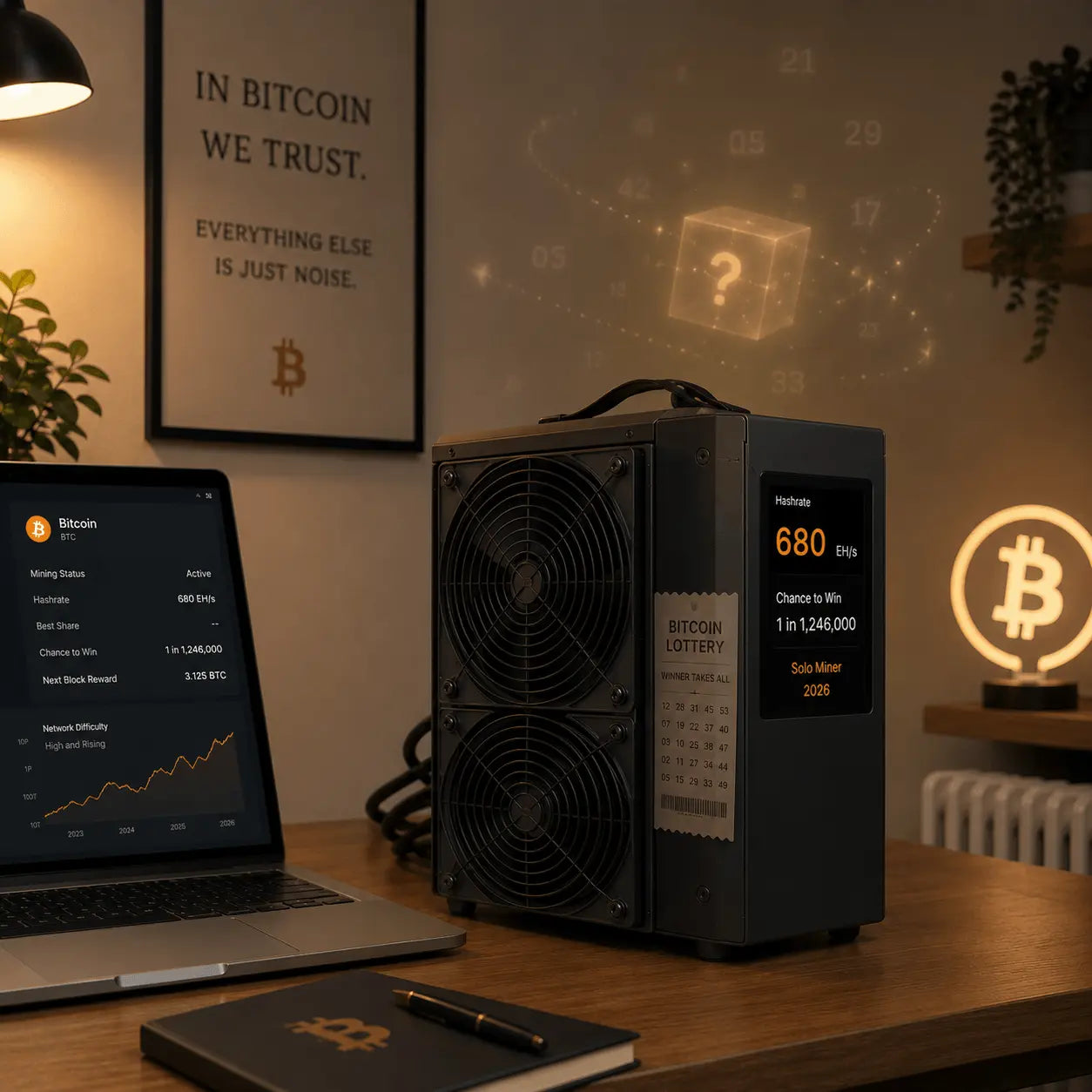
¿Por qué los mineros domésticos de Bitcoin en 2026 se parecen más a “máquinas de lotería” que a dispositivos de ingresos?
La conclusión principal es la siguiente: en 2026, el principal valor de los micromineros domésticos de Bitcoin ya no será la recuperación estable de la inversión. En cambio, ofrecen una forma sin barreras de participar en la red Bitcoin, aprender cómo funciona la prueba de trabajo y tener una posibilidad muy pequeña de ganar una recompensa de bloque completo.
A medida que la tasa de hash de la red global Bitcoin continúa aumentando, los mineros domésticos compiten contra un entorno minero altamente industrializado y centralizado. Según los datos proporcionados, para la primavera de 2026, la tasa de hash total de la red de Bitcoin es de alrededor de 1,02 ZH/s, mientras que la dificultad de la red es de aproximadamente 138,97 T. En estas condiciones, los pequeños dispositivos domésticos con sólo unos pocos TH/s a una docena de TH/s generalmente generan muy pocos ingresos en la minería conjunta convencional, e incluso pueden funcionar con pérdidas después de los costos de electricidad del hogar.
Es por eso que el papel de los mineros domésticos de Solo ha cambiado. Ya no intentan competir con las granjas mineras a gran escala por un flujo de caja diario estable. En cambio, permiten a los usuarios ejecutar hardware ASIC SHA-256 real con un consumo de energía relativamente bajo y participar directamente en el descubrimiento de hash de bloques. Si el dispositivo encuentra de forma independiente un hash de bloque válido que cumpla con el objetivo de dificultad de la red actual, el usuario puede recibir la recompensa del bloque completo más las tarifas de transacción. En el ciclo actual de reducción a la mitad, el subsidio en bloque es de 3.125 BTC, y las tarifas de transacción varían según la actividad en la cadena.
En otras palabras, la minería en solitario no se trata de “ganar un poco todos los días”. Se trata de un funcionamiento a largo plazo y de una probabilidad extremadamente baja de obtener un pago importante. Esta es la razón principal por la que los mineros domésticos como NerdQaxe y NerdOCTAxe continúan atrayendo a geeks, entusiastas de Bitcoin y usuarios de implementaciones domésticas en 2026.
¿Quién es realmente adecuado para un minero de Bitcoin en solitario en casa?
La conclusión principal es la siguiente: los mineros Solo domésticos son adecuados para usuarios que comprenden la naturaleza de baja probabilidad de la minería Solo y se preocupan por el aprendizaje, la experimentación y la participación en la red. No son adecuados para usuarios que sólo desean ingresos predecibles.
El primer grupo son los estudiantes de protocolo. Para principiantes, desarrolladores y entusiastas de Bitcoin, un pequeño minero ASIC convierte conceptos abstractos como PoW, Stratum, direcciones de billetera, conexiones de grupos de minería, plantillas de bloques y monitoreo de tasa de hash en un sistema práctico. En comparación con simplemente leer documentos, implementar un minero real hace que sea mucho más fácil comprender cómo funciona la red Bitcoin a nivel de infraestructura.
El segundo grupo es partidario de la descentralización de la red. Las granjas mineras industriales mejoran la seguridad total de la red, pero también concentran el poder minero entre los grandes operadores de capital y las regiones de bajo costo de electricidad. Un minero Solo doméstico no puede cambiar la estructura global de la tasa de hash por sí solo, pero sí restablece la posibilidad para que los usuarios comunes participen en la minería desde casa.
El tercer grupo son los usuarios con una alta tolerancia a resultados de baja probabilidad y grandes ventajas. El valor esperado de la minería Solo no es adecuado para los cálculos tradicionales de ROI. Está más cerca de una actividad basada en probabilidades. Los usuarios deben aceptar la posibilidad de no recibir pagos durante un largo tiempo y, al mismo tiempo, comprender que un descubrimiento de bloque exitoso produciría una recompensa altamente concentrada.
El cuarto grupo son los usuarios residenciales, de apartamentos y de oficinas. Los grandes mineros industriales ASIC suelen consumir mucha energía, generar mucho calor y producir altos niveles de ruido. No son adecuados para espacios habitables normales. Los dispositivos como NerdQaxe y NerdOCTAxe normalmente funcionan entre 100W y 240W, lo que los hace mucho más fáciles de implementar en casa.
El quinto grupo son los usuarios interesados en aplicaciones de calefacción en invierno. Casi toda la electricidad consumida por un minero ASIC se convierte en última instancia en calor. Si un usuario ya necesita calefacción eléctrica, la producción de calor del minero puede tratarse como parte del proceso de calentamiento, mientras que los cálculos hash se convierten en una oportunidad adicional basada en la probabilidad.
¿Cuál es la diferencia principal entre NerdQaxe y NerdOCTAxe?
La conclusión principal es la siguiente: NerdQaxe es mejor para principiantes, operación silenciosa e implementación de bajo consumo, mientras que NerdOCTAxe es mejor para usuarios avanzados que desean una mayor tasa de hash y más intentos de hash Solo por segundo.
Los modelos representativos de la serie NerdQaxe son la versión NerdQaxe++ Rev 6.1 refrigerada por aire y la versión Hydro refrigerada por líquido. Ambos proporcionan una tasa de hash nominal de 6 TH/s, consumen alrededor de 103 W y logran una eficiencia de aproximadamente 17,17 J/TH. Su ventaja no es la tasa de hash máxima, sino el bajo consumo de energía, el tamaño compacto, el bajo ruido y una experiencia de aprendizaje amigable para principiantes.
La serie NerdOCTAxe aumenta el número de chips a 8 chips ASIC BM1370, lo que ofrece tasas de hash más altas. El NerdOCTAxe 9.6TH/s consume alrededor de 160W, mientras que el NerdOCTAxe Rev 3.1 12TH/s consume alrededor de 240W. Estos modelos son más adecuados para usuarios que ya comprenden la mecánica de probabilidad de la minería Solo y desean aumentar sus intentos de hash dentro de un entorno de escritorio doméstico.
En pocas palabras, si sus prioridades son un funcionamiento silencioso, un bajo uso de energía y una fácil implementación, NerdQaxe es la mejor opción. Si su prioridad son más intentos de hash por unidad de tiempo, NerdOCTAxe es la opción más sólida.
¿Cómo se deben entender las especificaciones y los precios de los cuatro modelos principales?
La conclusión principal es la siguiente: estos cuatro dispositivos no se clasifican simplemente de “baratos a caros” o de “débiles a fuertes”. Cada uno corresponde a un equilibrio diferente de consumo de energía, ruido, tasa de hash y entorno de implementación.
| modelo | Tasa de hash | Consumo de energía | Eficiencia | Diseño de refrigeración | Precio de Referencia | Mejor para |
|---|---|---|---|---|---|---|
| NerdQaxe++ Rev 6.1 refrigerado por aire | 6 TH/s | Alrededor de 103W | Alrededor de las 17.17 J/TH | Refrigeración por aire con doble ventilador | Alrededor de $349 | Principiantes, usuarios de bajo consumo |
| NerdQaxe++ Hydro Rev 6.1 refrigerado por líquido | 6 TH/s | Alrededor de 103W | Alrededor de las 17.17 J/TH | Refrigeración líquida/radiador | Alrededor de $290 | Usuarios sensibles al ruido |
| NerdOCTAxe 9.6TH/s | 9,6 TH/s | Alrededor de 160W | Alrededor del 16-17 J/J | Refrigeración por aire con doble ventilador | Alrededor de $279 | Usuarios que buscan un equilibrio entre la tasa de hash y la potencia. |
| NerdOCTAxe Rev 3.1 12TH/s | 12 TH/s | Alrededor de 240W | Alrededor de 20 J/TH | Flujo de aire directo de cuatro ventiladores | Alrededor de $339 | Usuarios avanzados que buscan una mayor tasa de hash |
Los precios de los mineros pueden fluctuar según el inventario, los canales de venta, las promociones y la demanda del mercado. La tabla anterior debe tratarse como una referencia de selección y no como una cotización de compra fija.
Desde una perspectiva de selección, la versión NerdQaxe++ refrigerada por aire es ideal para un uso básico conservador; NerdQaxe++ Hydro es mejor para usuarios sensibles al ruido; NerdOCTAxe 9.6TH/s es una opción de tasa de hash de escritorio equilibrada; y NerdOCTAxe Rev 3.1 12TH/s es la opción correcta para los usuarios que desean la tasa de hash Solo más alta entre estos modelos.
¿Para qué caso de uso es mejor la versión refrigerada por aire NerdQaxe++ Rev 6.1?
La conclusión principal es la siguiente: la versión refrigerada por aire NerdQaxe++ Rev 6.1 es el mejor dispositivo de minería Solo de nivel básico para principiantes.
Este modelo proporciona 6 TH/s de tasa de hash, consume alrededor de 103 W y utiliza 4 chips ASIC BM1370. Su consumo de energía es comparable al de una bombilla de alta potencia o un pequeño dispositivo de escritorio, lo que significa que supone muy poca carga para un tomacorriente doméstico estándar y no requiere cableado dedicado.
Su principal ventaja es una implementación sencilla y una ruta de aprendizaje clara. Los usuarios pueden usarlo para aprender a configurar la dirección de la billetera, administrar el panel de control de AxeOS, conectar el grupo de minería, monitorear la temperatura, actualizar el firmware y comportamiento de la tasa de hash. En comparación con los mineros industriales, no introduce ruidos ni calor inaceptables en un entorno doméstico normal.
Sin embargo, la versión enfriada por aire aún requiere atención a la vida útil del ventilador y al mantenimiento térmico. Después de un funcionamiento prolongado las 24 horas del día, los 7 días de la semana, los ventiladores originales pueden experimentar desgaste de los cojinetes, menores RPM o ruidos notables. Para una implementación a largo plazo, reemplazar los ventiladores originales por alternativas más silenciosas y confiables es una forma común de mejorar la experiencia del usuario.
¿Vale la pena elegir la versión NerdQaxe++ Hydro refrigerada por líquido?
La conclusión principal es la siguiente: vale la pena elegir la versión Hydro refrigerada por líquido para los usuarios sensibles al ruido, pero no mejora la probabilidad de encontrar un bloque Solo.
El NerdQaxe++ Hydro Rev 6.1 también proporciona 6 TH/s y consume alrededor de 103W. Por lo tanto, tiene esencialmente la misma probabilidad teórica de descubrimiento de bloques que la versión enfriada por aire. Su verdadera mejora reside en la gestión térmica y el confort acústico.
El sistema de refrigeración líquida utiliza un medio de circuito cerrado para transferir calor desde los chips ASIC al radiador externo, lo que reduce la dependencia de los ventiladores de alta velocidad. Esto es muy importante en dormitorios, estudios y entornos de oficina tranquilos. Según los datos proporcionados, la versión Hydro puede funcionar por debajo de los 40 dB y puede acercarse a los 30 dB en condiciones ideales, lo que la hace más adecuada para un funcionamiento a corto plazo a largo plazo.
Sin embargo, la versión refrigerada por líquido también tiene consideraciones de implementación. La refrigeración líquida gestiona principalmente el calor del chip, mientras que es posible que los componentes de PCB, como los VRM, no reciban suficiente flujo de aire. Si los usuarios aplican un overclocking agresivo, la sección de entrega de energía puede acumular calor. Por lo tanto, la versión Hydro es más adecuada para un funcionamiento estable, silencioso y conservador en lugar de una sintonización de frecuencia extrema.
¿Por qué NerdOCTAxe 9.6TH/s es una opción de tasa de hash de escritorio equilibrada?
La conclusión principal es la siguiente: el NerdOCTAxe 9.6TH/s ofrece uno de los mejores equilibrios entre tasa de hash, consumo de energía, ruido y dificultad de implementación doméstica.
En comparación con el NerdQaxe de 6 TH/s, 9,6 TH/s representa aproximadamente un aumento del 60% en la frecuencia de intentos de hash local. Esto no cambia la naturaleza de probabilidad extremadamente baja de la minería Solo, pero sí significa más intentos de hash durante el mismo período operativo.
Este modelo consume alrededor de 160 W, lo que sigue siendo fácil de manejar para un tomacorriente doméstico estándar. No requiere circuitos eléctricos dedicados, ventilación forzada o una sala de equipos aislada como suelen hacer los mineros industriales. Es adecuado para escritorios, estudios, talleres o espacios de almacenamiento bien ventilados.
Para los usuarios que ya entienden la minería Solo y desean más de 6 TH/s sin saltar directamente a un entorno de cuatro ventiladores de 240 W, el NerdOCTAxe 9.6TH/s es una actualización natural.
¿Qué usuarios avanzados deberían elegir NerdOCTAxe Rev 3.1 12TH/s?
La conclusión principal es la siguiente: NerdOCTAxe Rev 3.1 12TH/s es adecuado para usuarios que desean una mayor tasa de hash Solo y pueden aceptar un mayor consumo de energía y demandas térmicas.
Este modelo proporciona 12 TH/s, lo que lo convierte en el dispositivo con mayor tasa de hash entre los cuatro modelos comparados. Utiliza 8 chips ASIC BM1370 y los combina con una entrega de energía más potente y un diseño de flujo de aire directo de cuatro ventiladores. Su propósito es maximizar los intentos de hash dentro de una categoría de dispositivo de uso doméstico.
Su ventaja es sencilla: mayor tasa de hash y más intentos por unidad de tiempo. Para los usuarios que tratan la minería Solo como un juego de probabilidad a largo plazo, una mayor tasa de hash significa una mejor probabilidad relativa.
Pero las compensaciones son igualmente claras. Una carga continua de 240 W produce calor comparable al de un pequeño calentador eléctrico. No es ideal para dormitorios pequeños o armarios cerrados. El sistema de cuatro ventiladores también puede alcanzar 40-55 dB en condiciones de carga o temperatura más altas. Si se coloca sobre un escritorio hueco, puede generar vibraciones de baja frecuencia. Este modelo es más adecuado para un estudio bien ventilado, un garaje, una sala de equipos o una instalación con calefacción asistida en invierno.
¿Cómo se debe entender la probabilidad de encontrar un bloque con un minero casero en solitario?
La conclusión principal es la siguiente: la probabilidad de encontrar un bloque mediante la minería Solo es extremadamente baja, pero es un proceso aleatorio continuo. Cuanto mayor sea la tasa de hash y mayor el tiempo de ejecución, mayor será la probabilidad acumulativa.
La minería en solitario puede entenderse mediante un modelo de distribución de Poisson. Si la tasa de hash local del minero es H y la dificultad de la red es D, entonces la tasa de llegada para encontrar un bloque válido se puede expresar como:
```texto
lambda = H / (D × 2^32)
```
Después de correr durante t segundos, la probabilidad de encontrar al menos un bloque es:
```texto
P = 1 - e^(-lambda × t)
```
Esta fórmula muestra tres cosas. En primer lugar, una mayor tasa de hash aumenta la probabilidad. En segundo lugar, una mayor dificultad de la red reduce la probabilidad. En tercer lugar, un tiempo de ejecución más prolongado aumenta la probabilidad acumulativa.
Sin embargo, es fundamental comprender que la minería Solo no tiene el concepto de "acercarse". Cada intento de hash es independiente. No encontrar un bloque en el pasado no hace que sea más probable que se produzca uno en el siguiente segundo. Es por eso que los usuarios no deben evaluarla como una curva de ingresos tradicional. Más bien, deberían entenderlo como una participación en la red a largo plazo, de baja probabilidad y alta volatilidad.
¿Cómo se deben configurar el firmware AxeOS y los ajustes del grupo de minería individual?
La conclusión principal es la siguiente: la configuración de AxeOS no es difícil, pero la configuración inicial de la red, las actualizaciones del firmware y los parámetros del grupo de minería deben manejarse en el orden correcto.
NerdQaxe y NerdOCTAxe suelen utilizar AxeOS como interfaz de control. En el primer arranque, el dispositivo ingresa al modo de configuración AP y transmite un punto de acceso Wi-Fi como Bitaxe_XXXX. Después de conectarse a esta red temporal, el usuario puede acceder a la página de configuración local y conectar el minero a una red Wi-Fi doméstica de 2,4 GHz.
En las versiones más nuevas de AxeOS, el acceso depende más de la dirección IP directa del dispositivo. Los usuarios pueden encontrar la dirección IPv4 en la lista de clientes DHCP del enrutador o en la pantalla del minero y luego abrir el panel de control web. Si falla una actualización de firmware, se puede utilizar una página de recuperación para la reparación.
Una configuración típica de Solo CKPool es:
```texto
Dirección del estrato: solo.ckpool.org
Puerto: 3333
Nombre del trabajador: la dirección de su billetera de la red principal de Bitcoin
Contraseña: x
```
Si un ISP o enrutador restringe ciertos puertos, los usuarios pueden probar un puerto alternativo como 443. Para la dirección de billetera, se recomienda una dirección Native SegWit que comience con bc1q o una dirección Taproot que comience con bc1p para una mejor compatibilidad y eficiencia de tarifas en futuros acuerdos en cadena.
Al actualizar el firmware, se recomienda actualizar primero la capa del sistema AxeOS y luego actualizar el paquete de firmware ESP-Miner subyacente. El uso del orden de actualización incorrecto puede provocar una interrupción durante el reinicio o la escritura de recursos, lo que podría provocar problemas con el controlador o el trabajo de recuperación.
¿Qué riesgos de hardware se deben evitar durante el funcionamiento a largo plazo?
La conclusión principal es la siguiente: los mineros domésticos Solo pueden funcionar continuamente, pero los usuarios deben prestar atención a la entrega de energía, la gestión del calor, los conectores y la vida útil del ventilador.
El primer riesgo es el sobrecalentamiento del VRM. Especialmente durante el overclocking, un mayor consumo de energía genera una mayor tensión térmica y actual en la sección de entrega de energía. La versión refrigerada por líquido puede mantener los chips fríos, pero si los componentes de la PCB no reciben suficiente flujo de aire, los VRM aún pueden sobrecalentarse.
El segundo riesgo es la falla del conector de alimentación. El material proporcionado menciona que algunas versiones que utilizan conectores rápidos XT30 pueden enfrentar riesgos de formación de arco durante la inserción de polaridad inversa, la inserción forzada o la conexión en caliente. Los usuarios deben evitar enchufar o desenchufar bajo energía y deben confirmar la polaridad y el estado del conector.
El tercer riesgo es el envejecimiento de los ventiladores. Después de un funcionamiento prolongado, los cojinetes del ventilador pueden desgastarse, provocando un ruido más fuerte o menores RPM. Una velocidad más baja del ventilador puede aumentar aún más las temperaturas del chip y del VRM. Para usuarios 24 horas al día, 7 días a la semana, la inspección periódica del ventilador es importante.
El cuarto riesgo es la acumulación de calor en espacios cerrados. Incluso 100 W, 160 W o 240 W pueden no parecer altos al principio, pero el funcionamiento continuo libera calor sin parar. Los mineros deben ubicarse en áreas ventiladas y mantenerse alejados de gabinetes cerrados, cubiertas de tela o materiales inflamables.
¿Se puede utilizar un Home Solo Miner como dispositivo de calefacción?
La conclusión principal es la siguiente: sí, pero se entiende mejor como un dispositivo de calefacción auxiliar que como un sustituto completo de la calefacción del hogar.
Casi toda la electricidad consumida por un minero ASIC se convierte en calor. Desde una perspectiva termodinámica, un NerdOCTAxe Rev 3.1 de 240 W funcionando durante una hora libera aproximadamente:
```texto
240 W × 3600 s = 864 000 J/h ≈ 819 BTU/h
```
Esto es comparable a la producción de calor continua de un pequeño calentador eléctrico. En invierno, si el usuario ya necesita calefacción eléctrica, se puede aprovechar el calor generado por el minero. En ese caso, la electricidad ya se utilizaría para calefacción, mientras que el minero también ofrece una oportunidad de descubrimiento de hash Solo.
Sin embargo, esta lógica sólo se aplica durante las temporadas de calefacción y en espacios que realmente necesitan calor. En verano o en climas cálidos, el calor minero aumenta la carga del aire acondicionado, lo que puede compensar o incluso aumentar los costos totales de electricidad. Por lo tanto, tratar a un minero como un “calentador inteligente” sólo tiene sentido en las condiciones adecuadas.
¿Cómo se debe tomar la decisión final sobre la implementación en 2026?
La conclusión principal es la siguiente: elegir basándose en "uso de nivel básico, funcionamiento silencioso, rendimiento equilibrado o tasa de hash más alta" es más razonable que simplemente comparar precios.
Si eres nuevo en la minería Solo, elige primero la versión refrigerada por aire NerdQaxe++ Rev 6.1. Tiene un bajo consumo de energía, una implementación simple y una curva de aprendizaje suave, lo que lo hace ideal para comprender billeteras, grupos de minería, firmware y monitoreo de tasa de hash.
Si eres muy sensible al ruido, elige NerdQaxe++ Hydro Rev 6.1. No aumenta la tasa de hash, pero mejora significativamente el confort acústico, lo que lo hace adecuado para dormitorios, estudios y configuraciones de escritorio premium.
Si desea un equilibrio entre el consumo de energía y la tasa de hash, elija NerdOCTAxe 9.6TH/s. Ofrece una frecuencia de intento de hash más alta que los dispositivos de 6 TH/s mientras permanece dentro de un rango de potencia doméstico manejable.
Si desea la tasa de hash Solo más alta entre estos modelos, elija NerdOCTAxe Rev 3.1 12TH/s. Es mejor para usuarios avanzados, implementaciones asistidas por calefacción en invierno y usuarios que pueden aceptar 240 W de salida de calor y un mayor ruido del ventilador.
¿Cuál es la conclusión final?
La conclusión principal es la siguiente: el valor de los mineros locales de Solo Bitcoin en 2026 no reside en unos ingresos estables. Su valor radica en la participación en la red con barreras bajas, el aprendizaje práctico de protocolos, la participación en la minería descentralizada y una posibilidad de costo controlado de obtener una recompensa de bloque completo con una probabilidad extremadamente baja.
NerdQaxe y NerdOCTAxe representan dos caminos claros. NerdQaxe es la ruta básica de bajo consumo, silenciosa y fácil de implementar. NerdOCTAxe es la ruta con mayor tasa de hash y mayor frecuencia de intentos para usuarios más avanzados.
Si trata estos dispositivos como productos de inversión, es posible que se sienta decepcionado. Pero si los tratamos como puertas de entrada físicas a la red Bitcoin, herramientas de aprendizaje de protocolos, hardware geek y calentadores auxiliares para el invierno, se vuelven realmente interesantes. En 2026, un minero Solo doméstico no será una granja minera en miniatura. Es una máquina de experimentos de probabilidad de Bitcoin de escritorio.



Deja un comentario
Este sitio está protegido por hCaptcha y se aplican la Política de privacidad de hCaptcha y los Términos del servicio.