
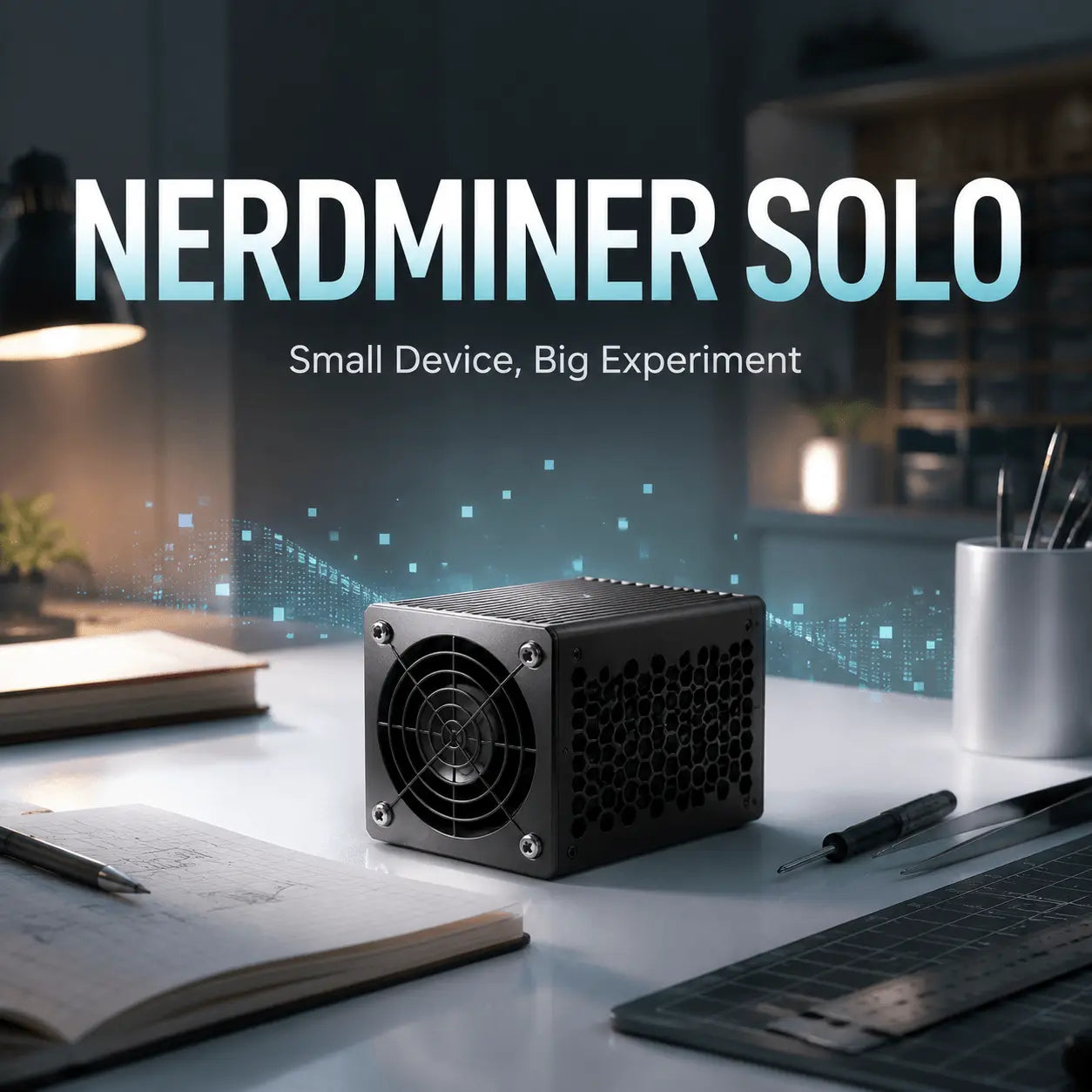
Principais Mineradores Solo NerdMiner
Especificações e Realidade de Lucratividade
Mineração de loteria · Dispositivos SHA-256 de baixa potência · Mineradores classe Bitaxe · Custos de funcionamento · Chances de bloco solo
Nesta Página
1O que a Mineração Solo NerdMiner Realmente Significa
Dispositivos estilo NerdMiner são pequenos mineradores SHA-256 usados principalmente para mineração solo de Bitcoin, educação e experimentação amadora. Eles não são construídos para competir com fazendas ASIC industriais em termos de receita constante. Seu apelo é diferente: baixo consumo de energia, operação silenciosa, configuração Wi-Fi simples, cultura de código aberto e a possibilidade, por mais remota que seja, de encontrar um bloco completo de Bitcoin.
A palavra importante é solo. Em uma pool de mineração normal, as recompensas são distribuídas entre os participantes de acordo com o hashrate contribuído, gerando pagamentos pequenos e previsíveis. Na mineração solo, um minerador não recebe nada a menos que ele encontre pessoalmente um bloco válido. Se isso acontecer, a recompensa pode ser enorme: o subsídio atual do Bitcoin é de 3,125 BTC por bloco, mais as taxas de transação. A chance de isso acontecer com um pequeno minerador doméstico é extremamente baixa.
Dispositivos da classe NerdMiner devem ser tratados como hardware de mineração estilo loteria, não como máquinas de renda confiáveis. Compre-os para aprender, mexer e ter uma chance remota de lucro.
2Comparação dos Principais Mineradores Solo da Classe NerdMiner
Os dispositivos abaixo representam vários níveis da categoria de mineração solo para consumidores: mineradores educacionais baseados em display, dispositivos estilo Bitaxe de código aberto e construções entusiastas de hashrate mais alto. As especificações podem mudar conforme a revisão da placa, firmware, bin do chip, configuração de resfriamento e pacote do vendedor, portanto, confirme os dados exatos antes de comprar.
| Classe do Modelo | Classe de Hashrate | Classe de Potência | Melhor Para | Estrutura de Lucro |
|---|---|---|---|---|
| NerdMiner TV / unidades de display | kH/s a baixo MH/s | ~5 W | Aprendizagem e painéis visuais | Educacional, não baseado em ROI |
| Classe Bitaxe Gamma | ~1 TH/s | ~15 W | Mineração solo eficiente de código aberto | Bilhete de loteria de baixo custo |
| Classe NerdQaxe++ Hydro | ~6 TH/s | ~100 W | Mineração amadora equilibrada | Melhores chances com potência modesta |
| Classe NerdOctaxe Hydro | 10+ TH/s | 200+ W | Máxima probabilidade para mineradores domésticos | Maiores chances, ainda como loteria |
A diferença de hashrate é enorme. Um dispositivo da classe TH/s tem chances muito melhores do que um minerador de display medido em kH/s ou MH/s. No entanto, todos esses dispositivos permanecem minúsculos em comparação com a rede Bitcoin, que é medida em exahashes por segundo. Essa diferença de escala é toda a história econômica.
3Detalhes dos Modelos Individuais
NerdMiner TV / minerador de display: esta categoria é melhor para pessoas que querem entender a mineração de Bitcoin visualmente. O dispositivo pode mostrar hashrate, dados de rede e status de mineração solo, usando energia insignificante. É uma escolha ruim para quem espera uma probabilidade significativa de encontrar um bloco.
Classe Bitaxe Gamma: Dispositivos Bitaxe são mineradores Bitcoin de chip único de código aberto com uma forte comunidade em torno de firmware, revisões de hardware e mineração educacional. Uma unidade da classe Gamma oferece um nível de hashrate muito mais sério do que pequenos mineradores de display, mantendo-se com baixa potência o suficiente para uso doméstico contínuo.
Classe NerdQaxe++ Hydro: esta categoria é destinada a usuários que desejam um aumento significativo na probabilidade de encontrar blocos sem migrar para o ruído e a potência de ASICs industriais. O resfriamento assistido por hidro ou aprimorado pode ajudar a estabilizar longos tempos de execução, mas os compradores devem verificar os detalhes da bomba, ventilador, líquido de arrefecimento e risco de vazamento antes da compra.
Classe NerdOctaxe Hydro: construções entusiastas multi-chip buscam a maior probabilidade no nicho de mineração solo para consumidores. Eles ainda podem ser silenciosos em comparação com mineradores industriais, mas consomem energia suficiente para que eletricidade, calor e posicionamento exijam um planejamento real.
4Realidade da Rentabilidade: Valor Esperado vs. Vitória de Bloco
A lucratividade tradicional da mineração questiona se a receita diária excede o custo diário. A mineração solo NerdMiner não se comporta dessa maneira. Na maioria dos dias, a receita é zero. Todo o lucro vem do raro evento de encontrar um bloco Bitcoin válido. Isso cria uma desarmonia entre o apelo emocional e a realidade estatística.
A probabilidade de ganhar é aproximadamente o seu hashrate dividido pelo hashrate total da rede Bitcoin, repetido ao longo do tempo. Como a rede é enorme, mesmo um minerador solo doméstico de 10 TH/s possui apenas uma fração microscópica do hashrate global. Rodar por mais tempo melhora as chances cumulativas, mas não garante um resultado.
Não pergunte: "Quanto vai render por dia?" Pergunte: "Quanto estou disposto a gastar por dia por uma pequena chance de uma recompensa de bloco completa?"
É por isso que chamar qualquer NerdMiner de "minerador lucrativo" pode ser enganoso. Um minerador pode ser um excelente hardware e ainda ter um retorno diário esperado quase zero em termos práticos. O comprador certo entende que o valor de entretenimento, educação e descentralização pode fazer parte do retorno.
5Custo Diário de Funcionamento em Casa
O custo da eletricidade é a única parte dessa categoria que permanece amigável. Esses dispositivos usam muito menos energia do que os ASICs industriais, então o tempo de execução contínuo é realista para muitas residências. A fórmula é simples: watts dividido por 1.000, multiplicado por 24 horas, multiplicado pela sua tarifa de eletricidade.
| Consumo de Energia | kWh Diário | Custo a US$ 0,12/kWh | Observação para Planejamento |
|---|---|---|---|
| 5 W | 0,12 kWh | Cerca de US$ 0,01/dia | Praticamente insignificante para a maioria dos usuários |
| 15 W | 0,36 kWh | Cerca de US$ 0,04/dia | Baixo o suficiente para uso amador sem supervisão |
| 100 W | 2,4 kWh | Cerca de US$ 0,29/dia | Notável, mas ainda modesto |
| 230 W | 5,52 kWh | Cerca de US$ 0,66/dia | Planeje calor e posicionamento |
A baixa potência não gera lucro esperado alto por si só. Apenas torna o bilhete de loteria barato para manter funcionando. Se o custo do hardware for alto, o retorno ainda depende quase inteiramente de uma rara vitória de bloco.
6Qual Minerador Solo Se Encaixa em Qual Usuário?
Para a maioria dos usuários, o melhor dispositivo é aquele que eles conseguirão operar confortavelmente por anos. Uma unidade com hashrate um pouco maior que se torna irritante, barulhenta, quente ou não confiável pode ser pior do que um minerador menor que permanece online sem atrito.
7Lista de Verificação de Configuração para Mineração Solo
A configuração de mineração solo geralmente é simples, mas pequenos erros podem desperdiçar todo o tempo de execução. Antes de começar, confirme o firmware do dispositivo, a estabilidade do Wi-Fi, o endereço da carteira, o endpoint da pool solo, os requisitos de voltagem, o resfriamento e a sincronização de tempo. Registre a configuração original antes de alterar o firmware.
- Use um endereço Bitcoin dedicado: mantenha as recompensas de mineração solo fáceis de identificar caso um bloco seja encontrado.
- Verifique o endpoint da pool: use uma pool solo de boa reputação ou sua própria configuração com suporte de nó.
- Monitore o hashrate local e da pool: um minerador só é útil se o trabalho enviado estiver sendo aceito.
- Proteja as credenciais: altere as senhas padrão e evite expor painéis publicamente.
- Planeje a energia e o resfriamento: dispositivos pequenos ainda precisam de fluxo de ar para estabilidade a longo prazo.
As primeiras 24 horas devem ser tratadas como um teste de estabilidade. Observe as shares rejeitadas, temperatura, reinicializações, quedas de Wi-Fi e relatórios da pool antes de assumir que o dispositivo está funcionando corretamente.
8Riscos e Avisos para o Comprador
O maior risco é a incompreensão da categoria de produto. Um dispositivo da classe NerdMiner não substitui um ASIC industrial e não deve ser comercializado para um comprador como uma fonte de renda passiva confiável. É um pequeno minerador solo com probabilidade ínfima e potencial assimétrico de lucro.
Outros riscos incluem pagar demais por hardware de edição limitada, confiar em alegações inflacionadas de hashrate, usar firmware não verificado, inserir um endereço de pagamento errado e assumir que a dificuldade da rede permanecerá estável. A dificuldade do Bitcoin e o hashrate da rede mudam continuamente, e cada aumento reduz a participação de um pequeno minerador na probabilidade total.
Se o custo do hardware, o calor ou a frustração o incomodariam sem uma vitória de bloco, escolha um minerador menor. A mineração solo deve ser acessível mesmo que nunca pague.
9FAQ de Mineração Solo NerdMiner
Um NerdMiner pode gerar renda diária em Bitcoin?
Geralmente não. A mineração solo estilo NerdMiner não produz pagamentos regulares, a menos que o dispositivo encontre um bloco Bitcoin completo.
O que acontece se um minerador solo encontra um bloco?
O minerador pode receber o subsídio total do bloco mais as taxas de transação, dependendo da pool solo ou da configuração do nó e da configuração de pagamento.
Um hashrate mais alto é sempre melhor?
Um hashrate mais alto melhora a probabilidade de encontrar blocos, mas o preço do hardware, o calor, a confiabilidade e o custo de energia ainda importam.
Os dispositivos Bitaxe e NerdMiner são os mesmos?
Eles pertencem à mesma cultura de mineração solo de baixa potência, mas Bitaxe é um projeto de minerador ASIC de código aberto, enquanto NerdMiner frequentemente se refere a mineradores solo educacionais estilo ESP32.
Quem deveria comprar um mini minerador solo?
Um comprador que deseja aprender sobre mineração de Bitcoin, operar hardware de baixa potência, apoiar a descentralização e aceitar que o pagamento pode nunca acontecer.
10Referências e Fontes de Dados
Essas fontes foram selecionadas para documentação oficial de projetos, referências de mineradores de código aberto, contexto do protocolo Bitcoin e infraestrutura de mineração solo. Elas abrem em uma nova aba e são marcadas como nofollow.
- Repositório GitHub do NerdMiner v2Referência de projeto de código aberto para firmware e contexto de configuração de mineração solo baseada em ESP32 NerdMiner.
- Repositório GitHub do BitaxeProjeto de minerador ASIC de Bitcoin de código aberto cobrindo hardware Bitaxe, ecossistema de firmware e desenvolvimento comunitário.
- Repositório de Firmware ESP-MinerReferência de firmware usada em mineradores de código aberto estilo Bitaxe.
- Guia do Desenvolvedor Bitcoin: Block ChainReferência em nível de protocolo para blocos, prova de trabalho, confirmações e seleção de cadeia.
- Mineração Solo da Public PoolInterface de pool de mineração solo amplamente utilizada para mineradores solo de Bitcoin de baixa potência e monitoramento de hashrate.
Veredicto Final
Mineradores solo da classe NerdMiner e Bitaxe são melhor compreendidos como dispositivos de mineração de Bitcoin educacionais, de código aberto e estilo loteria. São baratos de operar, agradáveis de monitorar e tecnicamente significativos para aprender como a prova de trabalho funciona.
Eles não são hardware de renda confiável. A melhor escolha é o dispositivo que você pode se dar ao luxo de manter funcionando indefinidamente sem precisar de um pagamento: um pequeno NerdMiner para aprendizado, uma unidade da classe Bitaxe para eficiência de código aberto, ou uma construção multi-chip maior para máxima probabilidade amadora.



Deixar comentário
Este site é protegido por hCaptcha e a Política de privacidade e os Termos de serviço do hCaptcha se aplicam.