
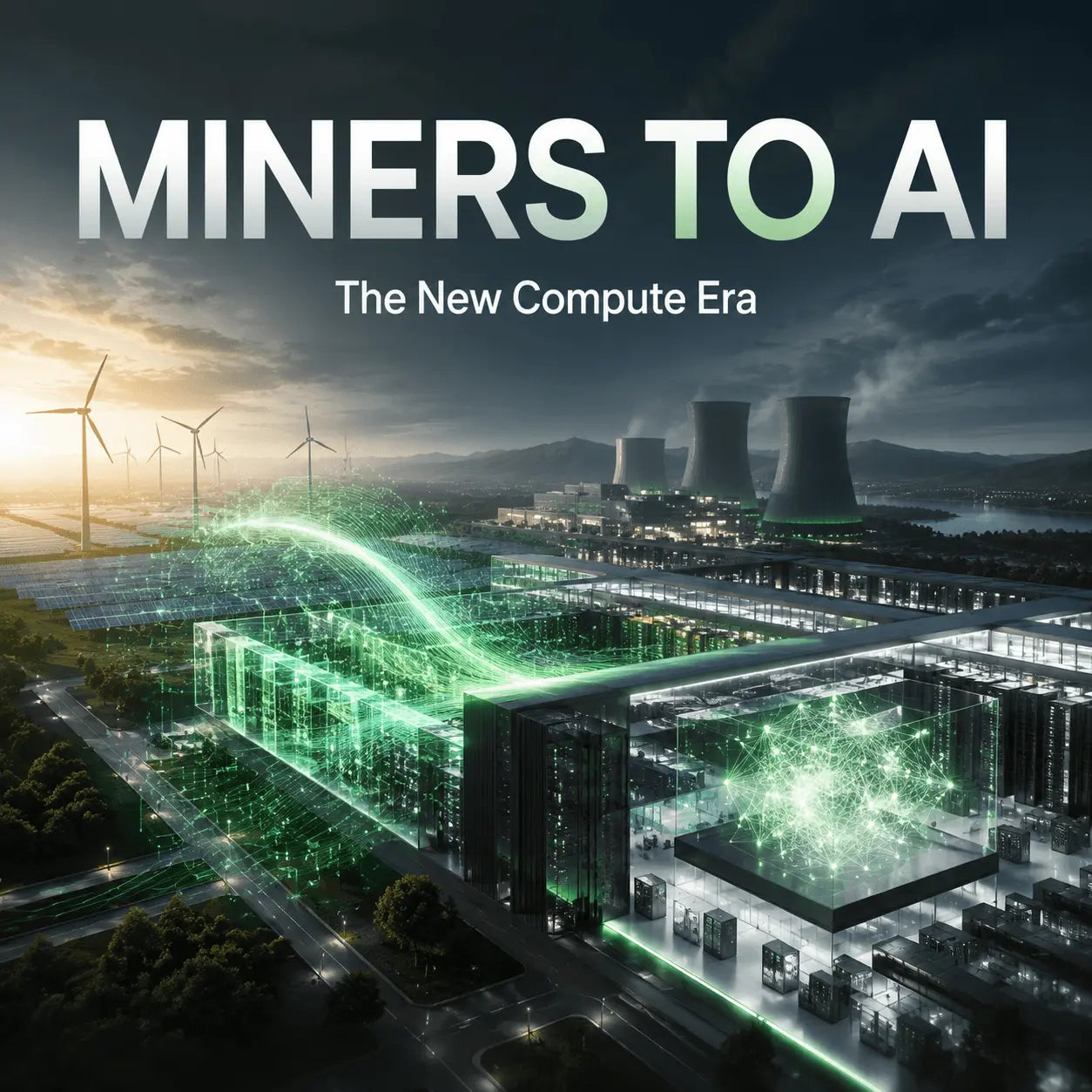
Por que os mineradores de Bitcoin estão transformando energia em capacidade de computação para IA
Pressão no Hashprice · Contratos de IA/HPC · Ativos de energia · Resfriamento líquido · Estratégia de infraestrutura híbrida
Nesta Página
1O Antigo Modelo de Mineração Está Sob Pressão
Por anos, grandes mineradores de Bitcoin operaram em torno de uma fórmula clara: garantir energia barata, comprar ASICs eficientes, manter o tempo de atividade alto e deixar que o preço do Bitcoin e a dificuldade da rede determinassem as margens. O halving de abril de 2024 tornou essa fórmula mais difícil. O subsídio por bloco caiu de 6.25 BTC para 3.125 BTC, enquanto os custos de energia, mão de obra, serviço da dívida e infraestrutura não caíram junto.
Ao mesmo tempo, ASICs mais recentes continuaram a elevar o hashrate global. Isso significou que os mineradores estavam competindo por um pool de subsídios menor com máquinas mais eficientes e maiores requisitos de capital. Quando o hashprice cai, o mesmo megawatt que antes parecia atraente para a mineração de Bitcoin começa a parecer subutilizado em comparação com outras cargas de trabalho de data centers.
O mercado não está mais avaliando algumas mineradoras públicas apenas como operadoras de hashrate. Ele está valorizando seus terrenos, subestações, contratos de energia, experiência em refrigeração e capacidade de hospedar computação.
2Por que a Computação de IA Muda a História da Receita
A receita de IA e computação de alto desempenho se comporta de forma diferente da receita de mineração de Bitcoin. Uma mina de Bitcoin vende recompensas de bloco probabilísticas precificadas em BTC. Um local de hospedagem de IA vende capacidade contratada: energia, refrigeração, racks, rede, operações e tempo de atividade. O cliente pode ser um provedor de nuvem, laboratório de IA ou locatário de computação pagando em dólares sob um contrato de vários anos.
Essa diferença importa para credores e acionistas. A receita de mineração de Bitcoin pode variar drasticamente com o preço da moeda, taxas de transação, dificuldade e restrição. Os contratos de hospedagem de IA podem oferecer maior visibilidade, contrapartes com boa reputação de crédito e estruturas de tipo take-or-pay. Eles também exigem muito mais confiabilidade, engenharia mais rigorosa e muito mais capital por megawatt.
| Modelo de Receita | Mineração de Bitcoin | Hospedagem de IA/HPC |
|---|---|---|
| Unidade de Receita | Recompensas e taxas de bloco BTC | Capacidade de computação ou colocation contratada |
| Exposição ao Preço | Preço do Bitcoin e dificuldade | Contratos e utilização do cliente |
| Infraestrutura | Racks ASIC, resfriamento a ar ou imersão | Racks de GPU, resfriamento líquido, fibra, redundância |
| Padrão de Tempo de Atividade | Alto tempo de atividade é valioso, mas a restrição pode ser estratégica | Desempenho de SLA rigoroso é frequentemente exigido |
3Por que os Mineradores Tinham os Ativos Certos
Os mineradores de Bitcoin não se tornaram acidentalmente atraentes para os locatários de IA. Eles passaram anos reunindo os insumos mais difíceis para a computação em larga escala: terrenos, interconexões elétricas, subestações, relacionamentos de compra de energia, equipes de construção e experiência na operação de equipamentos elétricos de alta densidade. No boom da IA, o acesso à rede pode ser mais lento para garantir do que as GPUs.
É por isso que a virada é realmente sobre energia. Um local de mineração com centenas de megawatts de capacidade disponível ou expansível pode ser mais valioso como uma plataforma de energia industrial do que como um salão ASIC puro. Os locatários de IA precisam de velocidade para o mercado, e os mineradores às vezes podem oferecer terrenos energizados mais rapidamente do que um desenvolvedor de data center greenfield começando do zero.
4Os Acordos que Definem a Virada
Várias mineradoras públicas anunciaram acordos de IA ou HPC que mudaram a forma como os investidores veem o setor. A CoinShares relatou que os contratos anunciados de IA/HPC entre mineradoras públicas cresceram para mais de US$ 70 bilhões até o início de 2026, com uma previsão de que a receita relacionada à IA poderia se tornar uma parcela muito maior da receita das mineradoras públicas até o final do ano.
Anúncios de empresas mostram por que o mercado está prestando atenção. A IREN anunciou um grande acordo de serviços de nuvem de IA com a Microsoft, atrelado à implantação de GPUs NVIDIA. A TeraWulf, Hut 8, Cipher Mining e Core Scientific anunciaram ou expandiram planos de hospedagem de IA/HPC em larga escala, parcerias ou conversões de data centers. A contribuição exata para a receita depende da construção, financiamento, cronograma do cliente e marcos de energização.
O valor do contrato anunciado não é o mesmo que a receita atual. Os mineradores ainda precisam financiar, construir, energizar, operar e atender aos requisitos do cliente antes que o valor de longo prazo seja realizado.
5Por que a Conversão Não é Apenas Rebranding
Uma mina de Bitcoin e um data center de IA são ambos grandes cargas elétricas, mas não são a mesma instalação. A mineração ASIC pode tolerar mais interrupções, redes mais simples e menor redundância do que as cargas de trabalho de treinamento ou inferência de IA. Os clusters de GPU exigem alta densidade de energia de rack, resfriamento líquido, conectividade de fibra, controles ambientais mais rigorosos, sistemas de incêndio, segurança, fluxos de trabalho de peças de reposição e processos operacionais construídos em torno do tempo de atividade do cliente.
A intensidade de capital também é diferente. Um local de mineração muitas vezes pode ser construído mais barato por megawatt do que uma instalação pronta para IA. A conversão de IA pode exigir grandes atualizações em edifícios, loops de resfriamento, transformadores, painéis de controle, rotas de rede e sistemas de monitoramento. É por isso que apenas alguns mineradores podem fazer a transição. O acesso à energia é necessário, mas não suficiente.
| Requisito | Sala de Mineração ASIC | Local de Computação Pronto para IA |
|---|---|---|
| Resfriamento | Ar, imersão ou hidro, dependendo da frota ASIC | Resfriamento líquido de alta densidade cada vez mais comum |
| Conectividade | Conectividade de pool estável | Fibra redundante de alta capacidade e rede do cliente |
| Operações | Hashrate, temperatura, energia, reparo | SLA, suporte ao locatário, segurança, resposta a incidentes |
| Flexibilidade | Pode ser restringido durante economia fraca ou eventos de rede | Menos flexível se vinculado por contratos de tempo de atividade |
6A Virada é Frequentemente Difícil de Reverter
Alguns observadores presumem que os mineradores podem alternar entre Bitcoin e IA sempre que a economia relativa mudar. Na prática, grandes conversões de IA são frequentemente compromissos de longo prazo. Uma vez que um local é reconstruído para racks de GPU com resfriamento líquido e vinculado por obrigações de tempo de atividade do cliente, essa capacidade não pode ser casualmente retornada à mineração ASIC porque o hashprice melhora.
Essa interrupção faz parte da troca. A hospedagem de IA pode reduzir a exposição à volatilidade diária da receita do Bitcoin, mas introduz risco de concentração de clientes, risco de dívida, risco de construção, risco de atualização tecnológica e risco de SLA. Um minerador se torna mais como um operador de data center, e isso exige um conjunto de habilidades de gerenciamento diferente.
7O Que Significa para a Indústria de Mineração
A indústria provavelmente se dividirá em vez de abandonar completamente a mineração. Algumas empresas se tornarão operadoras de infraestrutura híbrida, mantendo a mineração ASIC onde for adequado, enquanto constroem capacidade de IA/HPC em locais premium. Algumas podem se tornar principalmente empresas de data centers de IA. Outras permanecerão como mineradoras puras porque sua energia é barata, interrupível, remota ou inadequada para locatários de IA.
Para operadores menores, a lição não é necessariamente copiar os mineradores públicos. A maioria dos pequenos locais não tem a escala de energia, fibra, balanço patrimonial ou acesso a clientes necessários para hospedagem de GPU. Sua oportunidade pode permanecer na mineração de baixo custo, programas de curtailment, reuso de calor, hospedagem de nicho ou compra de ASICs quando os mineradores públicos redirecionam capital para outro lugar.
- A qualidade da energia importa mais: capacidade firme, em larga escala e conectada por fibra é reavaliada para cima.
- A demanda por ASIC pode se tornar mais seletiva: a expansão da mineração pura compete com o capex de IA.
- Os contratos de hospedagem precisam de uma análise mais rigorosa: tempo de atividade, direitos de curtailment e termos de repasse de energia importam.
- A segurança da rede permanece resiliente, mas mudando: parte da capacidade deixa a mineração, enquanto mineradores eficientes e puros continuam operando.
8Checklist para Mineradores que Avaliam a Computação de IA
Antes de considerar uma conversão de IA ou HPC, os mineradores devem separar o valor de seu ativo de energia do custo de se tornar um operador de data center. Um local que funciona bem para ASICs ainda pode falhar na due diligence de IA se não tiver fibra, redundância, água de resfriamento, segurança, acesso a clientes ou capacidade de financiamento.
| Pergunta | Por Que Importa | Sinal de Decisão |
|---|---|---|
| A energia é firme ou interruptível? | Locatários de IA geralmente precisam de garantias de tempo de atividade mais fortes | Energia firme suporta contratos de maior valor |
| Há fibra disponível? | As cargas de trabalho da GPU precisam de conectividade séria | Sem fibra pode bloquear a conversão |
| O resfriamento suporta alta densidade de rack? | As cargas de IA concentram o calor de forma diferente dos ASICs | O resfriamento líquido pode exigir grandes investimentos de capital |
| Quem financia a construção? | A conversão de IA é intensiva em capital | Os termos da dívida podem determinar o sucesso ou o fracasso da virada |
| O que acontece com a receita do ASIC? | MW convertidos podem estar indisponíveis para mineração | Custo de oportunidade do modelo em ciclos BTC |
9FAQ sobre Mineradores de Bitcoin e Computação de IA
Por que os mineradores de Bitcoin estão entrando na computação de IA?
Muitos mineradores controlam grandes locais de energia, subestações, terrenos e experiência em refrigeração que as empresas de IA precisam. A hospedagem de IA também pode oferecer receita em dólar contratada em vez de apenas receita de mineração denominada em BTC.
Qualquer mina de Bitcoin pode se tornar um data center de IA?
Não. Locais de IA precisam de resfriamento mais forte, fibra, redundância, procedimentos de tempo de atividade, segurança e investimento de capital do que muitos locais de mineração ASIC possuem.
A hospedagem de IA significa que os mineradores param de minerar Bitcoin?
Algumas empresas podem reduzir ou sair da mineração, enquanto outras operarão modelos híbridos. O resultado depende da qualidade do local, contratos, termos de energia e estratégia de capital.
A computação de IA é mais lucrativa do que a mineração de Bitcoin?
Pode oferecer maior receita contratada por megawatt premium, mas também exige muito mais capital, tempo de atividade mais rigoroso, execução do cliente e experiência em operações de data center.
O que os pequenos mineradores devem fazer?
A maioria dos pequenos mineradores deve se concentrar no custo da energia, ASICs eficientes, tempo de atividade, opções de curtailment e ROI conservador, em vez de presumir que podem atrair locatários de IA.
10Referências e Fontes de Dados
Estas fontes foram selecionadas para pesquisa institucional de mineração e anúncios oficiais de empresas. Elas abrem em uma nova aba e estão marcadas como nofollow.
- Relatório de Mineração de Bitcoin da CoinShares: T1 2026Fonte de pesquisa institucional sobre pressão no hashprice, contratos de IA/HPC de mineradoras públicas e previsões de receita do setor.
- Contrato de Serviços de Nuvem de IA da IREN com a MicrosoftAnúncio oficial da empresa sobre um grande contrato de serviços de nuvem de IA e plano de implantação de GPU.
- Acordo de Hospedagem de IA da TeraWulf e FluidstackAnúncio oficial ilustrando contratos de hospedagem de IA de longo prazo apoiados por capacidade de energia em larga escala.
- Parceria de Infraestrutura de IA da Hut 8 e FluidstackAnúncio oficial da empresa para uma parceria de infraestrutura de IA em larga escala no Beacon Point.
- Acordo de Hospedagem AI/HPC da Cipher MiningAnúncio oficial mostrando a conversão de ativos de poder de mineração em capacidade contratada de hospedagem AI/HPC.
Veredito Final
Os mineradores de Bitcoin estão transformando energia em computação de IA porque o recurso de IA mais escasso não são apenas as GPUs. É terreno energizado, interconexão, capacidade de resfriamento e operadores que sabem como lidar com grandes cargas elétricas.
A mudança pode gerar uma receita contratual mais estável, mas não é simples nem isenta de riscos. A hospedagem de IA exige mais capital, maior tempo de atividade, clientes diferentes e bloqueio de longo prazo. Os vencedores serão os operadores que entendem que estão gerenciando a infraestrutura de energia em primeiro lugar e o hardware de mineração em segundo.


Deixar comentário
Este site é protegido por hCaptcha e a Política de privacidade e os Termos de serviço do hCaptcha se aplicam.