
BIP-110 Fork Mining Guide: XBT, BTCB2, BLAKE2b, and Risks
chain split · ticker ambiguity · BLAKE2b hardware · DATUM · wallet and liquidity checks
On This Page
1What Is the BIP-110 BLAKE2b Fork? The Quick Answer
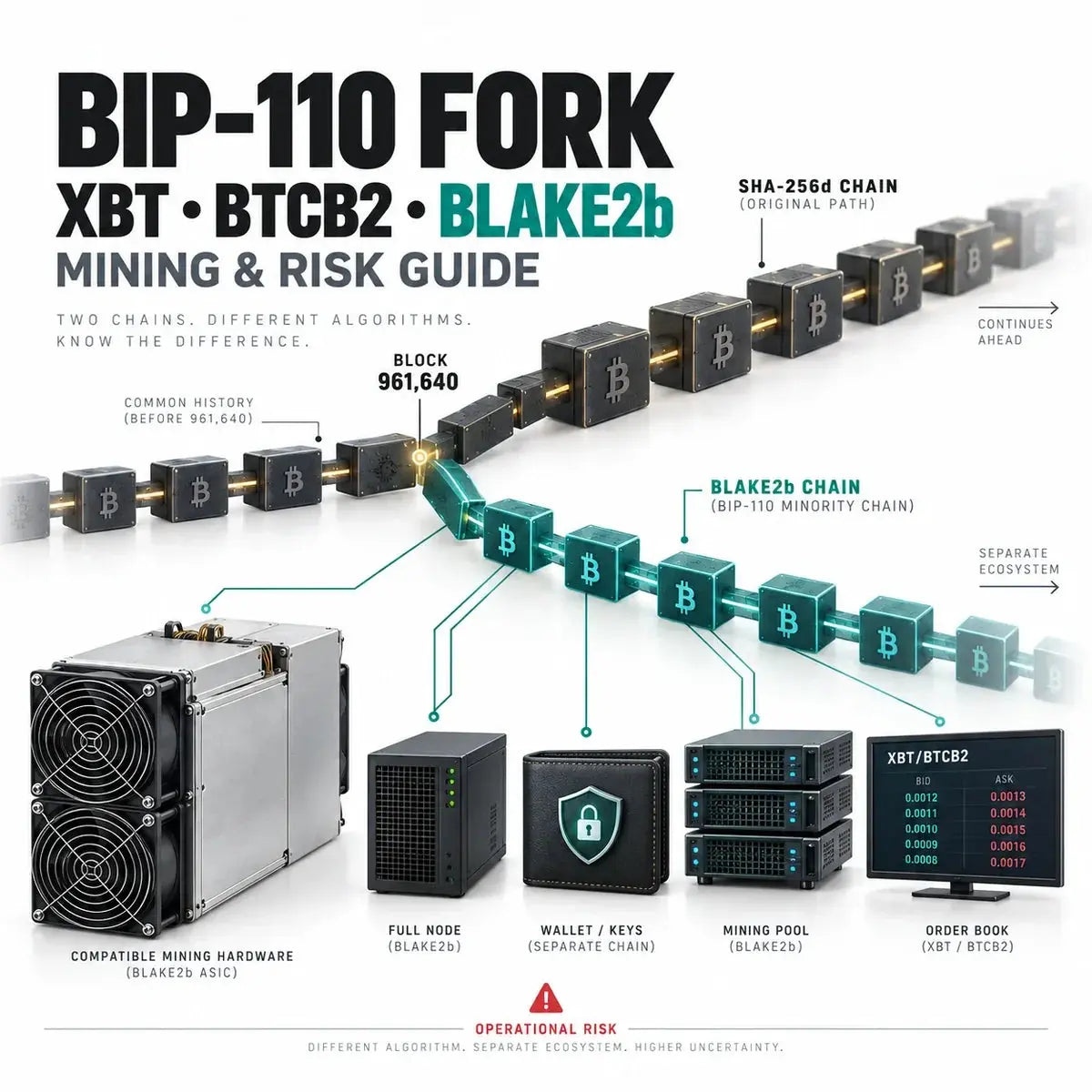
The network commonly labeled XBT or BTCB2 is a minority hard-fork chain that shares Bitcoin's history through the split, then uses different consensus rules and BLAKE2b proof of work from block 961,640 onward. It is not the Bitcoin mainnet mined by SHA-256d ASICs, and the ticker alone is not enough to identify it.
The original BIP-110 was a temporary reduced-data soft-fork proposal. It retained SHA-256d and did not propose a new mining algorithm. The public BIP repository marked it Closed on August 9, 2026 after a chain split with stalled mining. The later BLAKE2b hard fork is a separate technical event, even though services and community sites often use "BIP-110 fork" as shorthand.
The BLAKE2b branch is running, Bitcoin Knots 29.4.2 is available, and public pools advertise support. That does not make the network mature. Wallet support, exchange depth, pool concentration, software behavior, difficulty, and the value of mined rewards can change quickly.
2From BIP-110 to a BLAKE2b Hard Fork
| Date or Height | Event | Why It Matters |
|---|---|---|
| Original proposal | BIP-110 described a temporary reduced-data soft fork while keeping SHA-256d proof of work. | It was a rule-tightening proposal, not a BLAKE2b mining plan. |
| August 8, 2026 | Nodes enforcing the proposal separated from the dominant SHA-256d chain, but the minority side lacked enough mining support to maintain normal block production. | The split exposed the gap between node preference and available hashrate. |
| August 9, 2026 | The official BIP repository marked BIP-110 Closed following the split and stalled mining. | Future BLAKE2b development should not be described as the original BIP activating normally. |
| Block 961,639 | Last SHA-256d block recognized by the later BLAKE2b branch. | SHA-256d and BLAKE2b mining belong to different eras of this branch. |
| Block 961,640 August 30, 2026 |
The minority chain began using BLAKE2b and a version 2 block header. | Conventional Bitcoin ASICs stopped being compatible with this branch. |
| September 21, 2026 | Bitcoin Knots 29.4.2 was released. | The project documentation now directs BLAKE2b node operators and miners to the stable 29.4.2 release. |
This sequence corrects two common claims. BIP-110 itself did not switch Bitcoin to BLAKE2b, and the BLAKE2b branch is no longer only an unreleased proposal. It is an operating minority network with distinct software and mining requirements.
3Bitcoin Mainnet and the Minority Chain Are Separate Networks
The two networks share transaction history and pre-split UTXOs, but they do not share a valid post-fork chain. Bitcoin mainnet continues with SHA-256d proof of work and the broad infrastructure normally associated with BTC. The minority branch accepts BLAKE2b version 2 headers and must be followed with compatible node software.
A project's preferred description of itself is not a universal market consensus. This guide uses the neutral term BLAKE2b minority fork and identifies the network by algorithm, software, and block history rather than by branding alone.
4XBT vs BTCB2: Why the Name Is Confusing
As of the review date, public services do not use one consistent ticker. AlphaPool displays XBT for its Bitcoin Knots BLAKE2b pool, while B2Pool uses BTCB2. Older pages and dashboards may preserve earlier names even after a homepage label changes.
| Label | Where It Is Observed | Main Risk | How to Verify |
|---|---|---|---|
| XBT | Used by AlphaPool for the BLAKE2b branch; also used elsewhere as a conventional ticker for Bitcoin. | The same letters may refer to two different networks. | Check the service's algorithm, node software, deposit network, and documented fork height. |
| BTCB2 | Used by B2Pool and some mining or market services for the BLAKE2b branch. | A ticker label does not prove that two services support the same wallet format or chain tip. | Compare block hashes, explorer height, wallet version, and deposit/withdrawal instructions. |
| BTC | Widely used for Bitcoin mainnet. | Sending across incompatible network rails can cause loss or an unrecoverable support case. | Confirm SHA-256d Bitcoin support, not just a familiar coin name or logo. |
Never select a wallet, pool, or deposit route from the letters XBT or BTCB2 alone. Confirm the BLAKE2b chain explicitly and verify the receiving service before sending any value.
5What Technically Changed for Miners and Nodes?
The proof-of-work function is not the only difference. Project documentation describes a 164-byte version 2 header rather than Bitcoin's classic 80-byte header. Software that assumes an 80-byte SHA-256d header cannot validate or mine the new branch merely by changing a pool URL.
The branch also applies temporary reduced-data rules and an 800,000-weight-unit limit, roughly 300 kB serialized, until the previous block's median time passes September 1, 2027 unless its community changes course. The BLAKE2b proof-of-work change is described as permanent, while the temporary data limits are not.
Bitcoin Knots 29.4.2 also separates BLAKE2b difficulty reporting from SHA-256d difficulty because the units cannot be converted meaningfully. Miners should read the chain's native BLAKE2b fields and should not compare a BLAKE2b difficulty number directly with Bitcoin's SHA-256d difficulty.
The project documentation describes a long coinbase-maturity rule associated with later heights and about 6,480 confirmations for affected mined outputs. Operators must check the current deployment state with compatible node software before assuming a reward can be spent. A displayed pool balance is not the same as a mature, withdrawable coin.
6Which Mining Hardware Has Real Compatibility Evidence?
A shared word such as BLAKE2b does not prove compatibility. The device must produce the chain's expected work, understand the pool or gateway dialect, receive valid jobs, submit accepted shares, and ideally produce a block that the node accepts.
| Evidence Level | Examples | What the Evidence Supports | What It Does Not Prove |
|---|---|---|---|
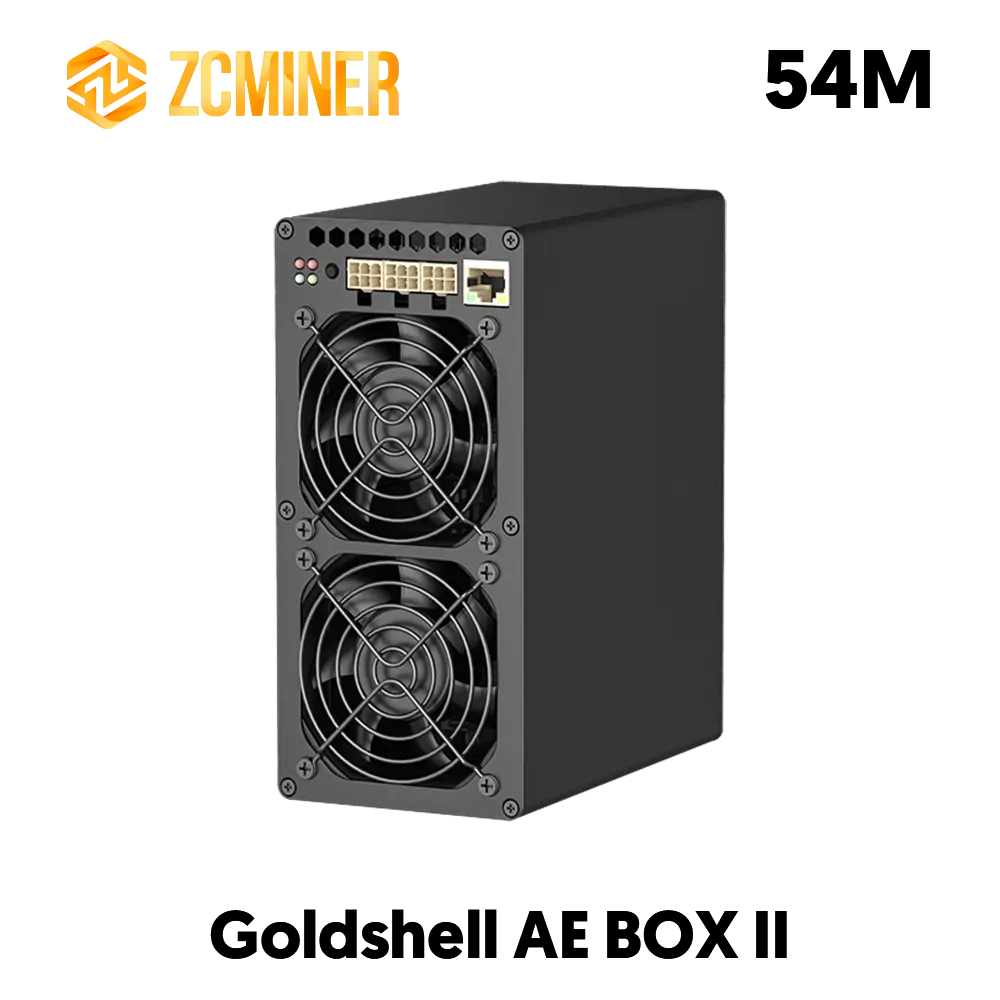
| Archived compatibility measurements | Goldshell HS-Box in SC mode, Goldshell SC5 Pro, Goldshell SC Box II, Bitmain Antminer A3; the report also documents Innosilicon S11 behavior. | Connection, job delivery, accepted shares, and model-specific block observations under the documented gateway test. | Every firmware version, every pool, permanent reliability, payout success, or profitability. |
| Project or pool listed | Project documentation names examples including Goldshell SC Lite and SC5 Pro; pool hardware pages list additional BLAKE2b-Sia models. | The operator expects the exact model or family to work with its published setup. | Independent hands-on testing, seller warranty, or identical behavior on another pool. |
| Algorithm match only | Other Siacoin-era BLAKE2b ASICs without an exact model record. | The silicon may compute a related hash function. | Header-v2 support, Stratum compatibility, accepted shares, blocks, or payouts. |
| Not compatible | Antminer S19/S21, WhatsMiner M50/M60, and other SHA-256d Bitcoin ASICs. | The hardware computes SHA-256d rather than this branch's BLAKE2b work. | No firmware toggle can change fixed SHA-256 ASIC silicon into a BLAKE2b ASIC. |
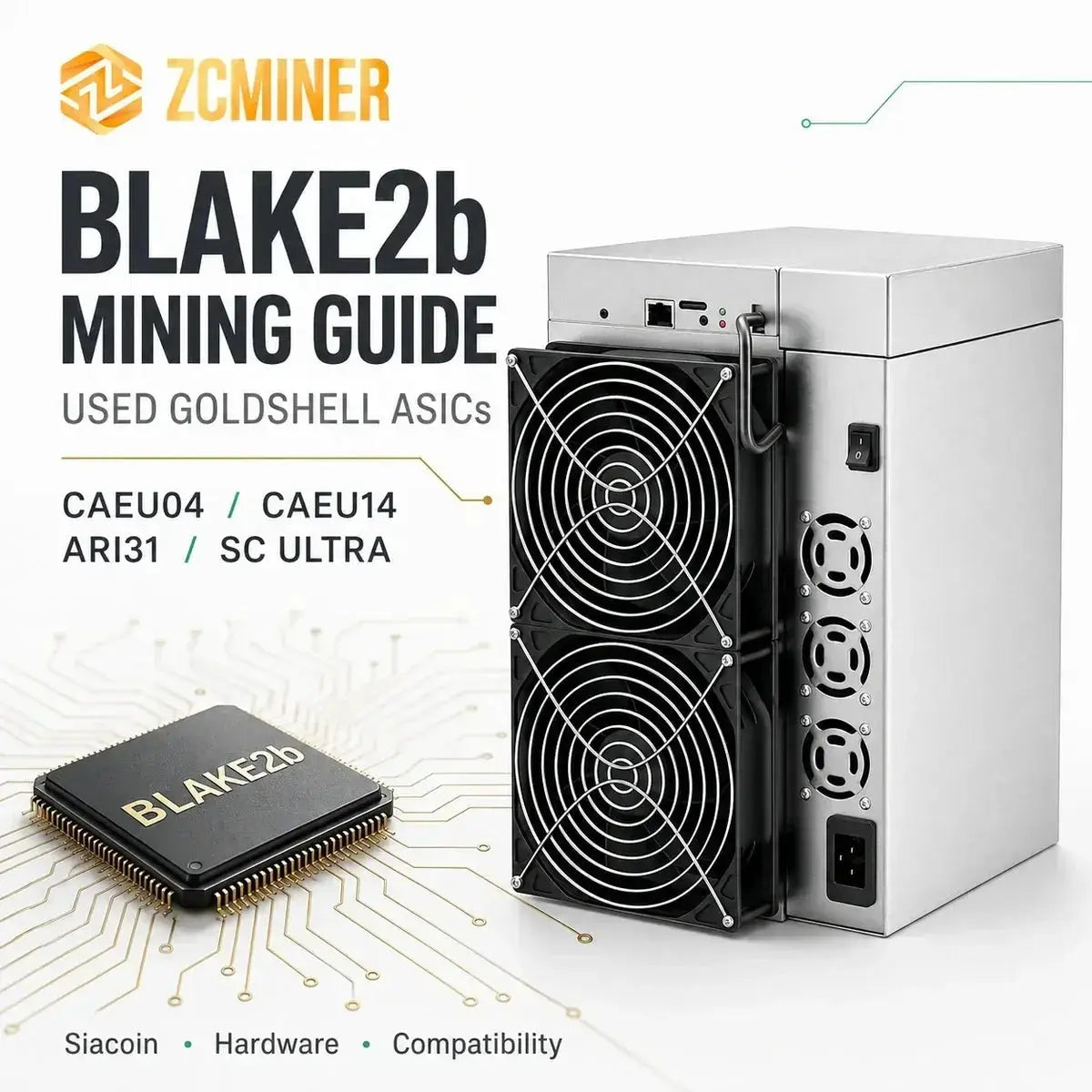
For hardware fundamentals, read the BLAKE2b algorithm guide. For current Goldshell model specifications, use the SC Lite, SC5 Pro, and SC5 Pro II comparison. Buyers evaluating older equipment can use the separate used Goldshell BLAKE2b miner guide.
7Node, DATUM, and Pool Setup Logic
There are two broad operating paths. A public Stratum pool may build work and distribute rewards according to its own rules. A node-based DATUM setup lets the operator construct block templates locally and route BLAKE2b work to compatible hardware through a gateway. Both approaches require chain-specific software and careful verification.
- Identify the exact network. Record the chain's expected fork height, proof-of-work algorithm, software release, and one or more recent block hashes.
- Use compatible node software. The project currently directs operators to Bitcoin Knots 29.4.2 for the BLAKE2b chain.
- Choose the connection model. Decide between a documented public pool and a compatible DATUM gateway attached to your own node.
- Verify the exact miner. Match model, firmware, operating mode, endpoint, port, worker format, and starting difficulty.
- Run a limited test. Confirm jobs, accepted shares, rejects, stale rate, credited balance, and one completed payout before scaling.
- Keep a fallback use. Prefer hardware that has a defensible use on another compatible network if this chain, pool, or market becomes unusable.
Pool pages are operator claims, not independent audits. Read the current fee method, payout threshold, maturity treatment, server status, and accounting rules every time you configure a machine. Screenshots from launch week are not a substitute for today's pool documentation.
8Wallet, UTXO, and Replay-Protection Risks
Because the networks share pre-fork transaction history, the same pre-split outputs exist in both ledgers. A transaction signed in a legacy-compatible way may be valid on both chains. That creates replay risk when a user tries to move or sell the forked asset without first understanding how the wallet separates the histories.
The BLAKE2b implementation includes an opt-in signature mode called SIGHASH_UNIFIED. It uses a distinct signature message when the wallet deliberately sets the `0x20` bit. The protection is not automatic for every old wallet or every existing transaction: ordinary signatures remain valid and may still replay.
Do not paste a Bitcoin seed phrase or private key into an unfamiliar fork wallet, browser tool, pool page, or support chat. Use chain-aware software, isolate testing funds, verify signatures and downloads, and seek expert help before attempting coin separation. A mistake can expose assets on both networks.
The ASIC firmware security checklist covers verified downloads, credential changes, network isolation, and recovery records for mining infrastructure.
9Can XBT or BTCB2 Mining Be Profitable?
There is not enough mature evidence for a universal profitability claim. A calculator can multiply hashrate by a reported reward estimate, but that output is useful only if the chain is advancing, the pool credits valid work, the reward becomes spendable, and a real market can absorb the amount without excessive spread or withdrawal risk.
| Input | Minimum Check | Failure Mode |
|---|---|---|
| Network activity | Compare current tip, recent timestamps, difficulty periods, and at least two independent observations. | A stale explorer can make an inactive or delayed chain look healthy. |
| Pool performance | Verify accepted shares, recent blocks, reward method, fees, maturity, and completed payouts. | Hashing without a spendable payout creates cost without realized revenue. |
| Market access | Check the exact chain, deposits, withdrawals, depth, spread, and your jurisdiction. | A displayed last price may not support a meaningful sale. |
| Electricity | Use measured wall watts: kW x 24 x electricity price per kWh. | Advertised hashrate alone hides daily operating cost and cooling overhead. |
| Capital risk | Model acquisition, shipping, tax, repairs, downtime, resale, and an alternative mining use. | Fork-specific demand can reverse before hardware pays back. |
Use the site's mining electricity cost guide for wall-power calculations, but substitute this chain's own difficulty, reward maturity, pool terms, and realizable market price. Do not borrow Bitcoin mainnet assumptions merely because some services use the ticker XBT.
10Pre-Mining Verification Checklist
- Confirm that the service explicitly supports the BLAKE2b fork, not conventional BTC under an XBT label.
- Record the node version, expected fork height, current tip, and a recent block hash before configuring hardware.
- Verify the exact ASIC model and firmware against model-specific evidence rather than an algorithm family name.
- Read the live pool fee, reward method, minimum payout, maturity rule, server status, and withdrawal process.
- Use a fresh chain-specific wallet environment and never expose a valuable Bitcoin seed to experimental software.
- Test with limited hashrate until accepted shares, credited rewards, maturity, withdrawal, and receipt are confirmed.
- Measure wall power and reject rate; include cooling, downtime, repair, shipping, and resale risk.
- Verify deposit and withdrawal support on the exact network before treating any displayed market price as realizable.
- Keep configuration backups and a fallback pool or fallback use for the hardware.
Related ZC MINER Guides
11BIP-110 Fork Mining FAQ
Is the BLAKE2b fork the same thing as BIP-110?
No. BIP-110 was a reduced-data soft-fork proposal that retained SHA-256d. The later minority chain adopted BLAKE2b at block 961,640. The histories are related, but the technical events are different.
Are XBT and BTCB2 the same coin?
Some services use XBT and others use BTCB2 for the same BLAKE2b branch. However, XBT is also used elsewhere for ordinary Bitcoin. Verify the network, algorithm, wallet, and service documentation instead of trusting the ticker.
Can an Antminer S21 mine this branch?
No. Antminer S19 and S21 models are fixed-function SHA-256d ASICs. This branch requires BLAKE2b-compatible work and a compatible header and pool protocol.
Can every Siacoin miner mine XBT or BTCB2?
No. Some BLAKE2b-Sia models have measured or operator-listed evidence, while others only share an algorithm label. Confirm the exact model, firmware, accepted shares, blocks, and payouts.
Is Bitcoin Knots 29.4.2 a stable release?
Yes. The official releases page lists 29.4.2 as a release dated September 21, 2026. The BLAKE2b project documentation directs operators to it. That release status does not guarantee third-party wallet, pool, or exchange maturity.
Does SIGHASH_UNIFIED remove all replay risk?
No. It is opt-in. Signatures that use the distinct message can provide one-way separation, but ordinary legacy-compatible signatures remain valid and may replay. Do not attempt key import or coin separation without chain-aware tools and a tested procedure.
Should a miner buy hardware only for this fork?
That is a high-risk decision. A safer evaluation requires a small verified payout, real withdrawal liquidity, measured power, a fallback network or resale use, and capital that can tolerate a total loss.
12References and Status Sources
- Bitcoin BIPs Repository: BIP-110Primary record for the original reduced-data proposal, its SHA-256d design, and Closed status.
- Bitcoin Knots ReleasesOfficial release history, including 29.4.2 published September 21, 2026.
- Bitcoin Knots PR #359: BLAKE2b Proof of WorkPrimary development record for the hard-fork proof-of-work and header changes; now closed.
- Bitcoin Knots PR #357: SIGHASH_UNIFIEDPrimary development record for the opt-in signature mode and its compatibility limits.
- BLAKE2b Chain Developer DocumentationProject documentation for height 961,640, version 2 headers, temporary data limits, difficulty fields, and wallet integration.
- BLAKE2b Chain Miner and DATUM DocumentationProject guidance for Knots 29.4.2, BLAKE2b hardware, DATUM, and reward maturity.
- DATUM BLAKE2b Gateway Compatibility RecordOpen-source compatibility measurements for specific Goldshell, Bitmain, and Innosilicon devices.
- B2Pool BTCB2 Operator PageCurrent operator naming, pool modes, endpoints, and hardware claims; verify live terms before use.
- AlphaPool XBT Operator PageCurrent operator use of the XBT label for Bitcoin Knots BLAKE2b mining.
- BT-Miners XBT/BTCB2 Mining GuideSecondary reference used to identify the naming issue and practical questions; technical claims were checked against primary project and code sources.
Final Verdict
The BLAKE2b minority fork is no longer only a proposal: it has a running chain, stable Knots release, public pools, and documented hardware tests. It is still a young, separate ecosystem whose labels, software support, wallet behavior, reward maturity, and markets require independent verification.
The safest rule is simple: identify the chain by its algorithm, block history, node software, and receiving service, not by the letters XBT, BTCB2, or BTC. Start small, prove a complete payout and withdrawal path, and treat unverified fork revenue as zero in a hardware purchase decision.


Deixar comentário
Este site é protegido por hCaptcha e a Política de privacidade e os Termos de serviço do hCaptcha se aplicam.