
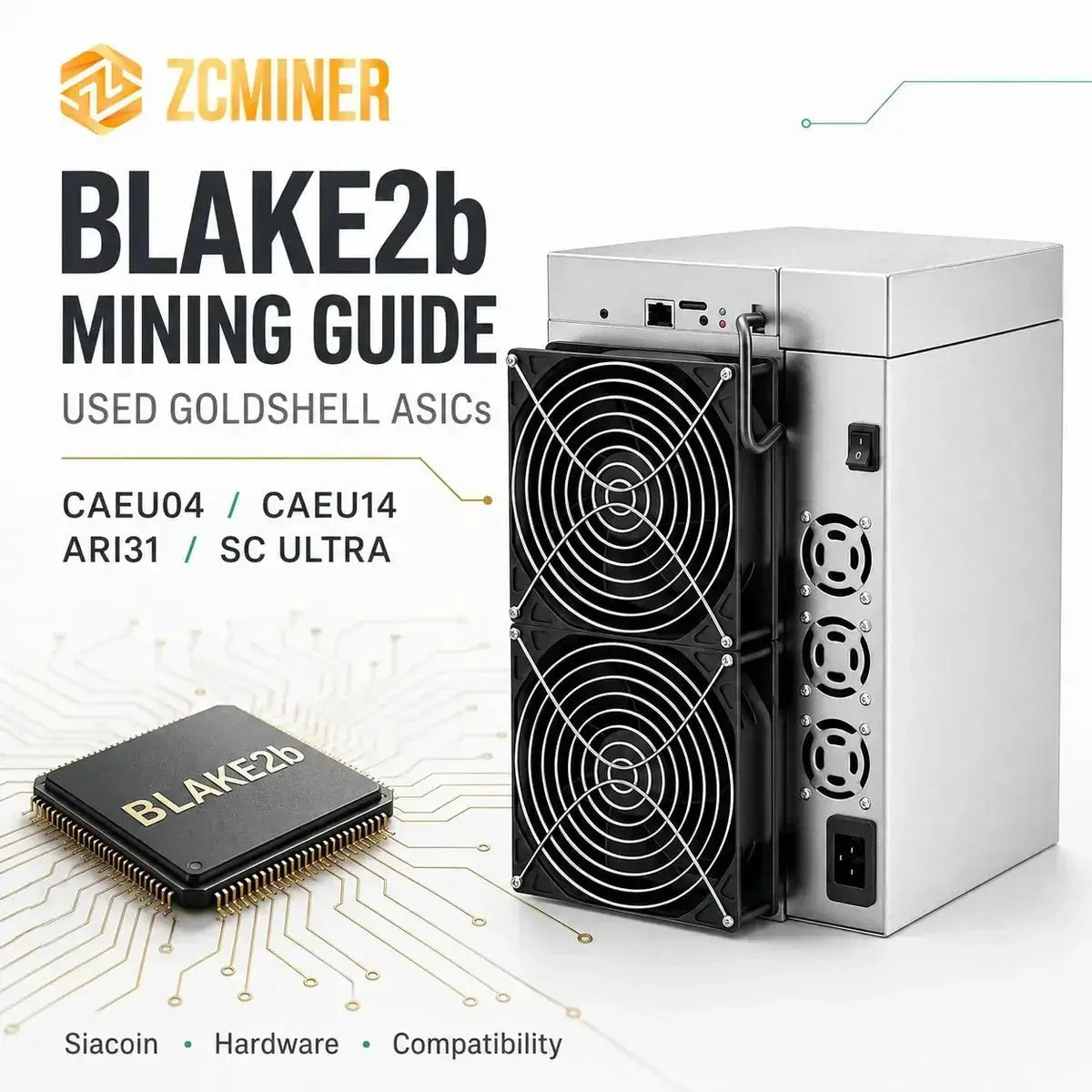
Used Goldshell BLAKE2b Miners:
CAEU04, CAEU14, ARI31 & SC ULTRA
Siacoin ASICs · normal versus Eco modes · the BLAKE2b fork · second-hand buying checks
On This Page
1Which Used BLAKE2b Miner Fits Your Plan?
Goldshell CAEU04, CAEU14, ARI31 and SC ULTRA are listed as used BLAKE2b-Sia ASIC miners for Siacoin. Their normal-mode output ranges from 11.8 to 24 TH/s, with energy-saving profiles that reduce both hashrate and power. They are specialized machines, not Bitcoin SHA-256d miners.
The emerging BLAKE2b fork gives buyers another compatibility question to investigate, but does not establish a new guaranteed income stream. Start with the exact machine, accepted work, wall power and purchase terms. Then evaluate any alternative network separately.
This comparison covers second-hand configurations. For the SC Lite and SC5 range, see our Goldshell Siacoin model comparison; its older fork commentary predates the September developments below.
2BLAKE2b: Hash Function, Mining Work and Siacoin
BLAKE2b is a cryptographic hash function, not a coin. RFC 7693 describes a design optimized for 64-bit platforms, with configurable output lengths up to 64 bytes. In proof-of-work mining, hardware repeatedly hashes candidate work until it finds an output below the required target.
That general definition does not make every BLAKE2b application interchangeable. Digest parameters, input layout, nonce handling and the protocol used to deliver work all matter. The label BLAKE2b-Sia identifies these listings with the Sia mining workload. It does not certify every blockchain using the same hash family.
Sia is a decentralized storage network: renter software encrypts files before distributing data across hosts, and Siacoin funds network activity. Mining secures transactions; owning a miner does not itself provide storage. Storage demand is useful context, not a promise that SC price or mining revenue will rise.
Sia documents a continuing miner subsidy of 30,000 SC per block, rather than Bitcoin-style repeated halvings toward zero. A separate Foundation subsidy also affects issuance. The June 2025 v2 hard fork required compatible network software; pool and wallet software must remain current even when the ASIC itself is unchanged.
3The BLAKE2b Fork: What Changed by September 4?
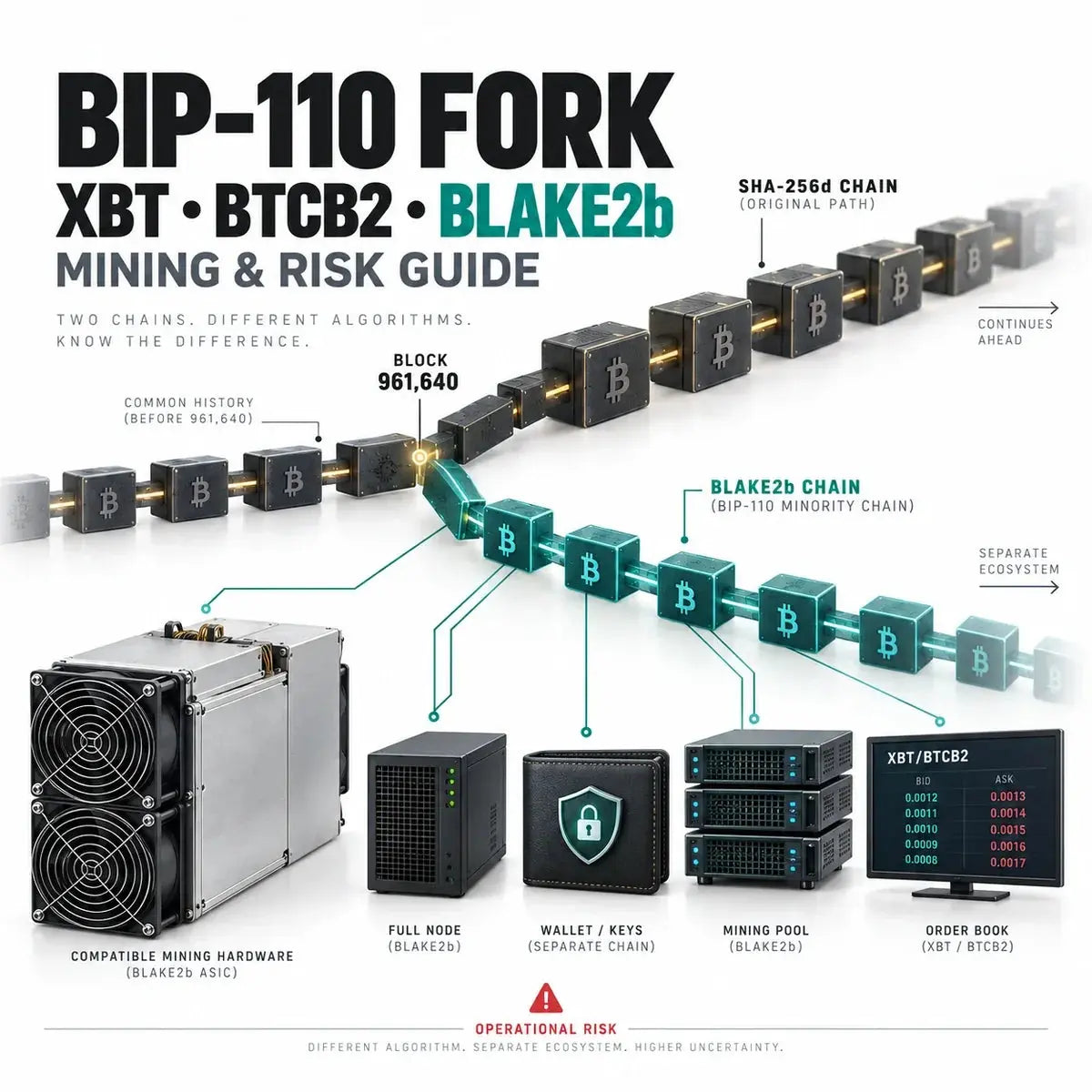
The BIP-110-associated minority chain moved away from SHA-256d. Released Knots code fixes BLAKE2b activation at height 961,640, identifying 961,639 as the final SHA-256d block. Independent node tracking dates the first BLAKE2b block to August 30, 2026 and reports subsequent block production and difficulty adjustments.
Bitcoin Knots v29.4.1.knots20260508 was published on September 2, 2026 at 19:02 UTC and is not marked as a prerelease. The earlier statement that only rc5 exists is outdated. PR #359 remains open, but its implementation is included in the stable release.
The release documents BLAKE2b proof-of-work, extended block-header fields, an opt-in signature format and a temporary 800 kWU block-weight limit. These are protocol changes, not a simple pool-address substitution. This guide treats the resulting network as a separate minority fork, not an upgrade to the dominant SHA-256d Bitcoin network.
Historical miner signaling percentages, including the previously reported 2.53%, are not measurements of this new network's support. BLAKE2b and SHA-256d hashrates cannot be directly equated. Knots node counts likewise do not measure miner participation or economic adoption.
A BTCB2/USDC market page exists on Neoxa Exchange. A listing or displayed quote alone does not establish usable market depth, reliable withdrawals or broad wallet support. Check executable liquidity before assigning any resale value to rewards. The BLAKE2 project's hash-function documentation is not an endorsement of this fork or these machines.
4Four Goldshell Models Compared
Values below come from the current ZC MINER listings. Efficiency is calculated as watts divided by TH/s, rounded to the nearest J/TH. These are listed profiles, not our laboratory measurements; used-unit condition and firmware can change actual results.
| Model | Normal Mode | Normal Efficiency | Eco Mode | Eco Efficiency |
|---|---|---|---|---|
| CAEU04 | 11.8 TH/s / 3,150 W | 267 J/TH | 9.5 TH/s / 2,400 W | 253 J/TH |
| CAEU14 | 14 TH/s / 3,400 W | 243 J/TH | 10.4 TH/s / 2,200 W | 212 J/TH |
| ARI31 | 15.8 TH/s / 3,450 W | 218 J/TH | 9.7 TH/s / 2,060 W | 212 J/TH |
| SC ULTRA | 24 TH/s / 5,780 W | 241 J/TH | 15 TH/s / 3,100 W | 207 J/TH |
ARI31 has the lowest listed normal-mode J/TH. SC ULTRA has the lowest Eco-mode J/TH, but ARI31 Eco uses the least absolute power. CAEU14 Eco delivers more hashrate than CAEU04 Eco while using less power. Purchase price, condition and site capacity still decide which trade-off makes sense.
5Explore the Four Used BLAKE2b Miners
Prices checked September 24, 2026 in USD. Product pages control current pricing, stock and order terms. Request a written quote where no positive selling price is published; shipping and applicable charges may be additional.

Goldshell CAEU04
A price-led option for buyers who can support its running cost. Its Eco profile reduces load, but remains less efficient on paper than the other three Eco profiles. Compare the initial saving with your expected operating hours.

Goldshell CAEU14
Its energy-saving profile offers a useful middle ground between output and power. Confirm that the supplied controller exposes both listed modes and that each board remains stable after a sustained warm-up.

Goldshell ARI31
The strongest listed normal-mode efficiency in this group, with the lowest absolute Eco power. The large drop in hashrate between modes makes actual revenue per kWh more informative than headline output alone.

Goldshell SC ULTRA
Designed around a larger power budget in normal mode. Eco cuts the listed load substantially while retaining 15 TH/s. Evaluate the complete installation, cooling and used-unit condition before paying for the extra capacity.
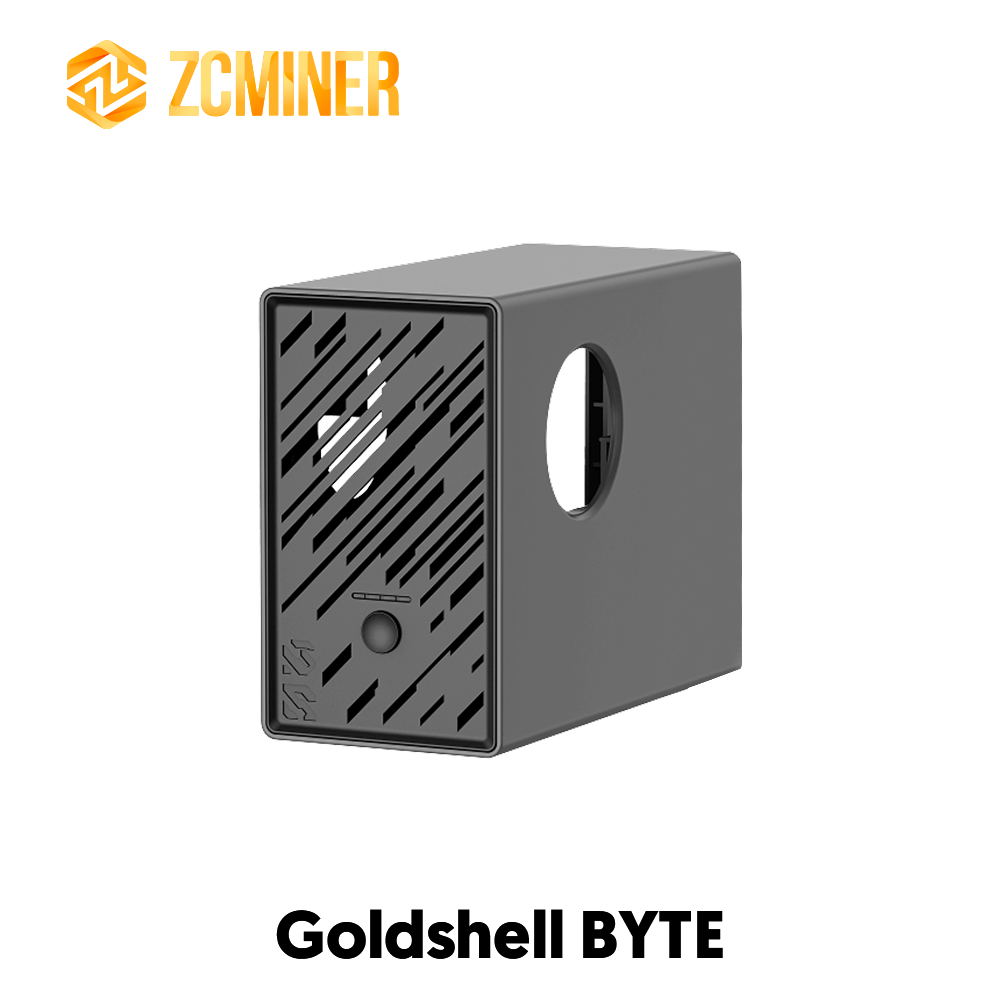
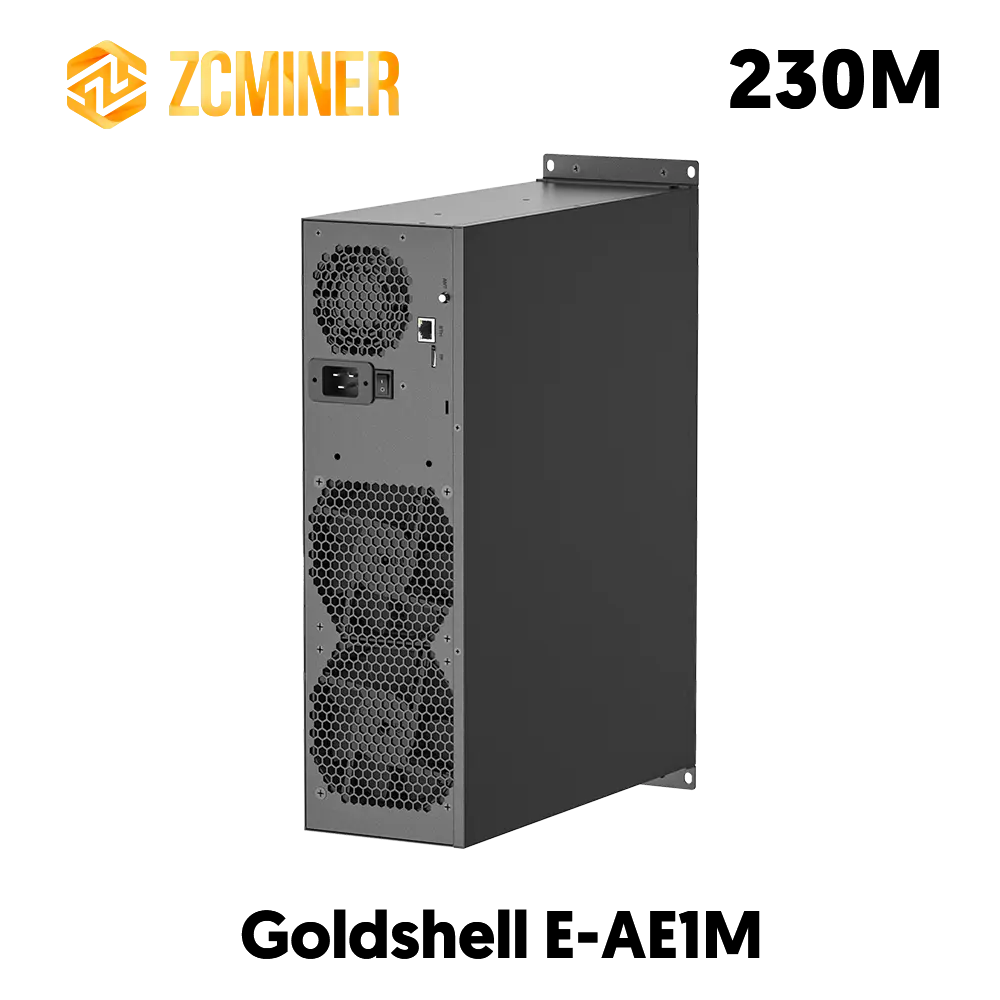
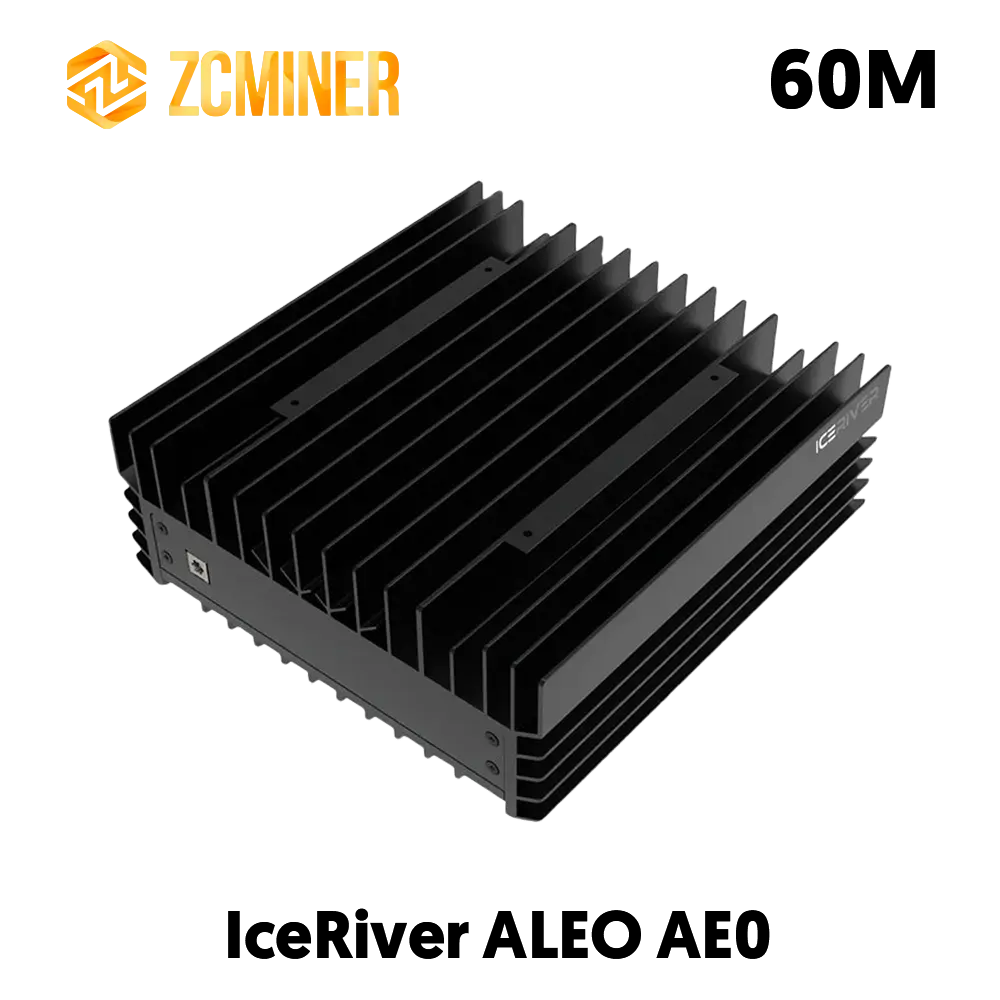
Catalogue images identify the advertised product family, not the condition of the particular used unit you will receive. Request serial-specific photographs and test records before payment.
6Electricity Cost and Site Requirements
Calculate daily energy as watts ÷ 1,000 × 24. At an illustrative $0.10/kWh, continuous operation produces the following miner-only costs. These are expense calculations, not profit forecasts.
| Model | Normal kWh/day | Normal $/day | Eco kWh/day | Eco $/day |
|---|---|---|---|---|
| CAEU04 | 75.60 | $7.56 | 57.60 | $5.76 |
| CAEU14 | 81.60 | $8.16 | 52.80 | $5.28 |
| ARI31 | 82.80 | $8.28 | 49.44 | $4.94 |
| SC ULTRA | 138.72 | $13.87 | 74.40 | $7.44 |
SC ULTRA's normal profile consumes about 4,162 kWh over 30 days before ventilation. Even the lowest-power Eco profile here is 2.06 kW. None should be approached as a casual desk appliance.
Have a qualified electrician verify the actual PSU label, supply voltage, connectors, circuit capacity and continuous-load requirements. Plan exhaust removal and replacement air; almost all electrical input becomes heat. Do not assume Eco mode makes an unsuitable installation safe.
Use measured wall power, pool fees, cooling, downtime and repairs in your operating model. Compare each mode's accepted revenue after costs, not just its lower J/TH. Our mining electricity cost guide explains the calculation framework.
7Verify Compatibility and Used-Unit Condition
The experimental DATUM BLAKE2b gateway publishes results for HS-Box, SC5 Pro, SC Box II, Antminer A3 and Innosilicon S11. Its matrix includes accepted shares and some block results, with model-specific limitations. It does not list CAEU04, CAEU14, ARI31 or SC ULTRA by these exact identifiers.
Successful tests on another Goldshell model are useful evidence, not certification of these four configurations. The cited gateway documents solo operation; its limitations should not be generalized to every independent pool. Connecting successfully is also weaker evidence than sustained accepted work, confirmed blocks and an understood payout path.
- Identify the unit. Match the chassis label, serial, controller and firmware to the invoice. Do not infer specifications from a similar enclosure.
- Inspect the hardware. Request photographs of boards, fans, PSU connections and any corrosion or repair history. Confirm included equipment and return terms.
- Establish a Siacoin baseline. Obtain a sustained test showing all boards, temperatures, measured power, accepted shares and errors in both advertised modes.
- Validate fork work separately. Record the node release, gateway or pool version, exact firmware, chain identity and rejection reasons. Confirm where rewards are paid.
- Protect the network. Reset credentials, isolate management access, and use verified firmware sources. Read the ASIC firmware security checklist.
The fork's unified signature mechanism is opt-in. Do not assume old Bitcoin signatures automatically gain replay protection, or import a valuable BTC seed into an unfamiliar fork wallet. A mining experiment should not put existing Bitcoin holdings at risk.
8BLAKE2b Miner FAQ
Can these miners mine ordinary Bitcoin?
No. The dominant Bitcoin network uses SHA-256d. BLAKE2b-Sia hardware cannot perform that workload; a separate BLAKE2b fork does not change this.
Is BLAKE2b the same as BLAKE3?
No. They are different hash designs. Sharing part of a name does not make a fixed-function ASIC interchangeable between them.
Does the stable Knots release guarantee miner compatibility?
No. Released consensus code and validated hardware integration are separate milestones. Verify the exact controller, firmware and mining service combination.
Which model offers the best efficiency?
From listed values, ARI31 leads in normal mode at roughly 218 J/TH; SC ULTRA leads in Eco at roughly 207 J/TH. Neither figure alone establishes the best return.
Should expected fork rewards justify a higher used price?
Only treat them as an uncertain scenario. A conservative purchase test should still account for zero realizable fork revenue, changing difficulty, failed compatibility and used-hardware repairs.
9References
- RFC 7693: BLAKE2 SpecificationHash-function design, parameters and variants.
- Sia: Renting StorageEncryption and decentralized file storage.
- Sia: Siacoin SupplyMiner rewards and separate Foundation issuance.
- Sia: June 2025 v2 Hard ForkNetwork-software transition requirements.
- Bitcoin Knots 29.4.1 ReleaseStable release and included consensus changes.
- Tagged Knots Activation ParametersHeight 961,640 and checkpoint definitions.
- Knots PR #359BLAKE2b implementation discussion; status checked September 4.
- Knots PR #357Unified opt-in signature mechanism.
- Experimental DATUM Compatibility MatrixCommunity test evidence, not manufacturer certification.
- Independent BLAKE2b Node TrackerOperator-reported activation and chain observations.
- Neoxa BTCB2/USDC MarketEvidence of a listed market, not guaranteed liquidity.
Final Verdict
Choose a tested BLAKE2b machine, not just a fork narrative. CAEU04 offers the lowest verified advertised entry price here; CAEU14 improves the Eco trade-off; ARI31 combines strong normal-mode efficiency with lower Eco power; SC ULTRA prioritizes output and demands a larger site budget.
Compare accepted work, actual watts, condition and landed cost. Keep Siacoin economics separate from the evolving BLAKE2b fork, and require evidence before treating compatibility as a purchasing advantage.


Laisser un commentaire
Ce site est protégé par hCaptcha, et la Politique de confidentialité et les Conditions de service de hCaptcha s’appliquent.