
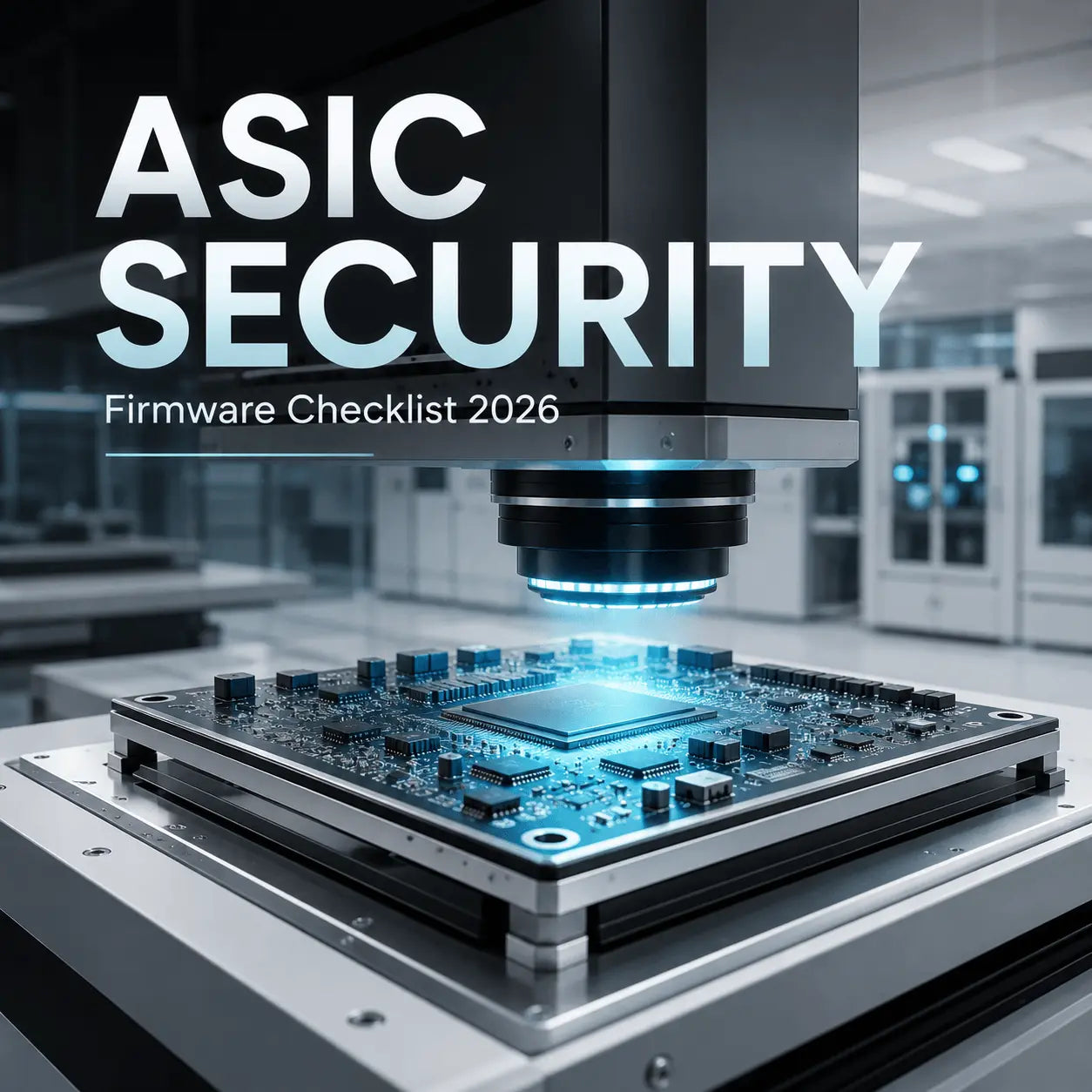
Lista de verificación de seguridad del firmware ASIC
Para los mineros en 2026
Firmware verificado · Protección del pool · Aislamiento de red · Controles de alojamiento · Planificación de recuperación
En esta página
1Por qué la seguridad del firmware es un problema de margen minero
Un minero ASIC es una computadora especializada con un tablero de control, interfaz web, servicios de red, credenciales de grupo almacenadas, lógica de ventilador y configuraciones de administración de energía. El firmware es la capa operativa que conecta la máquina física con el pago real. Si esa capa no es confiable, está desactualizada, mal configurada o expuesta, el minero puede seguir funcionando mientras los ingresos se escapan silenciosamente.
Esto es más importante en 2026 porque los márgenes de minería son más ajustados, las flotas suelen ser remotas o alojadas y muchos operadores utilizan firmware de terceros para ajustar la eficiencia. Un panel de control comprometido, una contraseña débil, una URL de grupo alterada o una implementación fallida del firmware pueden generar el mismo resultado comercial que un contrato de energía incorrecto: pérdida de ingresos y tiempo de inactividad.
No trate la seguridad del firmware como un extra de TI. Trátelo como protección de ingresos: software verificado, acceso restringido, configuración del grupo documentada y un plan de reversión funcional.
2Los riesgos de firmware que realmente enfrentan los mineros
La mayoría de los problemas de seguridad de ASIC provienen de atajos operativos comunes y no de ataques exóticos. Las máquinas usadas llegan con firmware desconocido. Los operadores descargan archivos de enlaces vueltos a publicar. Las credenciales predeterminadas sobreviven a la configuración. Los paneles de gestión se asientan en redes planas. La configuración del grupo no está documentada, por lo que los pequeños cambios pasan desapercibidos.
El firmware de terceros no es automáticamente inseguro. Puede mejorar la sintonización, el seguimiento y la eficiencia. La cuestión es que cambia el modelo de confianza. Antes de actualizar, comprenda la reputación del proveedor, los modelos admitidos, la estructura de tarifas, la documentación, el método de reversión y el impacto de la garantía.
3Lista de verificación previa al flash para cualquier ASIC
Antes de instalar firmware en un ASIC nuevo, usado o alojado, haga una pausa lo suficiente para identificar la máquina exacta. Los nombres de los modelos pueden ser similares, aunque los tableros de control, las ramas de liberación o los métodos de recuperación difieren. Actualizar el archivo incorrecto puede reducir la estabilidad o dejar la unidad inalcanzable.
| paso | acción | Por qué es importante |
|---|---|---|
| Identificar | Confirmar modelo, lote, tablero de control y versión actual | Evita firmware incorrecto y malas suposiciones |
| Fuente | Descargue solo de proveedores documentados oficiales o confiables | Reduce el riesgo de paquetes reenviados o alterados |
| Registro | Guarde la configuración del grupo, la red y el usuario antes de realizar cambios | Hace posible la verificación posterior a la actualización |
| prueba | Destella una unidad antes que la flota completa | Limita el tiempo de inactividad si la liberación es inestable |
| Revertir | Mantenga listo el firmware en buen estado y los pasos de recuperación | Convierte una actualización fallida en una reparación controlada |
Después de flashear, verifique la URL del grupo, el nombre del trabajador, el identificador de cuenta o billetera, el comportamiento de los fanáticos, la temperatura, el hashrate local, el hashrate del lado del grupo y la tasa de acciones rechazadas. La actualización no finaliza hasta que el minero esté ganando correctamente.
4Mantenga aislado el hardware de minería
Un archivo de firmware seguro no es suficiente si el minero se encuentra en una red insegura. Los ASIC deben tratarse como tecnología operativa: equipos estables y diseñados específicamente que necesitan acceso de gestión restringido. Los paneles de control de mineros no pertenecen a direcciones IP públicas, Wi-Fi de oficina compartida o la misma red plana que los sistemas de contabilidad y las computadoras portátiles de los empleados.
Utilice una VLAN o subred dedicada para dispositivos de minería. Permita conexiones salientes a grupos aprobados y acceso de administración solo desde máquinas de administración aprobadas. El acceso remoto debe realizarse a través de una VPN o un host de salto controlado con registro, no un acceso entrante directo a cada minero. Esto sigue el mismo principio general promovido en las directrices de OT y ciberseguridad: segmentar los equipos críticos y reducir la exposición innecesaria.
Los mineros normalmente necesitan tráfico de grupo saliente y una administración local limitada. No deberían aceptar tráfico de gestión entrante abierto desde Internet.
5Proteger la configuración del grupo y las rutas de pago
La configuración del pool es el objetivo de ingresos más directo en un ASIC. Si la URL del grupo, el nombre del trabajador, el campo de contraseña o el identificador de la cuenta cambian, la máquina puede continuar con el hash mientras las recompensas se acreditan en otro lugar. Es por eso que la configuración del grupo debe tratarse como una configuración controlada, no como campos de texto casuales.
Registre los valores esperados del grupo antes de la implementación. Compruébelos después de flashear, después de reinicios por lotes, después de la migración del alojamiento y siempre que el hashrate del lado del grupo no coincida con los informes locales. Las flotas más grandes deben mantener una lista aprobada de dominios de grupo y alertar sobre conexiones o búsquedas de DNS inesperadas. Los operadores más pequeños aún pueden revisar los registros del enrutador y los paneles del grupo con regularidad.
Stratum V2 es una dirección importante para la modernización de los protocolos de minería, incluidas características mejoradas de eficiencia y seguridad, pero no sustituye al control de acceso básico. Confirme lo que realmente admiten su firmware y su grupo antes de asumir que el transporte cifrado o autenticado está activo.
6Los ASIC alojados necesitan responsabilidad compartida
En la coubicación o el alojamiento, la seguridad del firmware se convierte en una cuestión de responsabilidad compartida. La instalación controla el acceso físico, el diseño de la red y, a menudo, la reparación práctica. El propietario de la máquina aún necesita visibilidad de la versión del firmware, la configuración del grupo, el historial de reinicio y la aprobación de cambios.
- Autoridad de firmware: definir quién puede actualizar el firmware y bajo qué proceso de aprobación.
- Segmentación de red: Pregunte si los mineros están separados por cliente, rack o sitio.
- Manejo de credenciales: Confirme que se cambian las contraseñas predeterminadas y se evitan las cuentas compartidas.
- Pista de auditoría: requieren un registro de actualizaciones de firmware, cambios de grupo y acceso remoto.
- Verificación independiente: compare los informes de las instalaciones con el hashrate y los pagos del lado del grupo.
Las respuestas vagas no son sólo una preocupación de seguridad. Son el riesgo de tiempo de inactividad, el riesgo de disputas y el riesgo de recuperación lenta. Un buen anfitrión debería poder explicar claramente su política de firmware.
7Monitoreo de deriva de configuración
La seguridad no finaliza el día de la instalación. Las flotas de ASIC se desvían: las contraseñas se reutilizan, las versiones de firmware divergen, los grupos cambian, las entradas de DNS cambian y los ventiladores fallidos crean una inestabilidad que parece un problema de grupo. El monitoreo debe cubrir tanto el rendimiento de la minería como la integridad de la configuración.
| Monitorear | Pregunta normal | Señal de advertencia |
|---|---|---|
| Configuración de la piscina | ¿Todas las unidades apuntan a puntos finales aprobados? | URL de grupo desconocida o patrón de nomenclatura de trabajadores |
| tasa de hash | ¿El hashrate del grupo coincide con los informes locales? | Brecha persistente más allá de la variación normal |
| Versión de firmware | ¿Los lanzamientos son consistentes por grupo de modelos? | Versión inesperada en una o más unidades |
| Registros de acceso | ¿Quién cambió la configuración y cuándo? | Inicio de sesión inexplicable o sesión remota |
| DNS/tráfico | ¿Los dispositivos están contactando los destinos esperados? | Nuevos dominios, IP o conexiones fallidas repetidas |
8Plan de incidentes y reversión
Todo operador debe saber qué sucede cuando falla una actualización de firmware, la configuración de un grupo cambia inesperadamente o un minero se vuelve inaccesible. El plan no necesita ser complicado, pero debe existir antes de que comience el apagón.
Mantenga el firmware en buen estado, las instrucciones de recuperación, las herramientas de descubrimiento de IP, las credenciales de administrador, la configuración del grupo y los contactos de garantía en una ubicación controlada. Para las flotas, defina cuándo detener una implementación, quién aprueba la reversión, cómo aislar una unidad sospechosa y cómo verificar los ingresos después de la recuperación. El objetivo es reducir el pánico y restaurar rápidamente el hash verificado.
Si una unidad de prueba muestra una tasa de hash inestable, un comportamiento inesperado del grupo, un tablero inaccesible o tráfico anormal después de parpadear, detenga la implementación e investigue antes de tocar el resto de la flota.
9Preguntas frecuentes sobre la seguridad del firmware ASIC
¿Qué es la seguridad del firmware ASIC?
Significa utilizar firmware confiable, proteger el panel del minero, restringir el acceso a la red, verificar la configuración del grupo y evitar cambios no autorizados que podrían reducir el tiempo de actividad o redirigir las recompensas.
¿Debo utilizar firmware ASIC de terceros?
El firmware de terceros puede resultar útil, pero revise la reputación del proveedor, los modelos compatibles, la estructura de tarifas, la documentación, el impacto de la garantía y las opciones de reversión antes de actualizar.
¿Con qué frecuencia se deben verificar los ajustes de la piscina?
Verifique después de la configuración, después de las actualizaciones de firmware, después de reinicios o movimientos de alojamiento, y siempre que la tasa de hash del lado del grupo no coincida con los informes de los mineros locales.
¿Es necesaria una VLAN para la configuración de un minero pequeño?
Se recomienda encarecidamente una VLAN para configuraciones más grandes o alojadas. Los pequeños operadores aún deberían aislar a los mineros de los dispositivos cotidianos cuando sea posible y bloquear el acceso de la administración pública.
¿Se requiere Stratum V2 para la seguridad minera?
No. Es una dirección de protocolo importante, pero el firmware verificado, el acceso de administración restringido, las credenciales sólidas y la configuración del grupo monitoreado siguen siendo esenciales.
10Referencias y fuentes de datos
Estas fuentes fueron seleccionadas para obtener orientación oficial sobre ciberseguridad, seguridad de la tecnología operativa y contexto del protocolo de minería. Se abren en una pestaña nueva y están marcados como nofollow.
- Objetivos de desempeño de ciberseguridad intersectorial de CISAOrientación del gobierno de EE. UU. que cubre controles prácticos como seguridad de cuentas, gestión de vulnerabilidades y resiliencia.
- Marco de ciberseguridad del NISTMarco de ciberseguridad ampliamente utilizado para identificar, proteger, detectar, responder y recuperarse del riesgo cibernético.
- NIST SP 800-82 Rev. 3: Seguridad de la tecnología operativaGuía autorizada para proteger entornos tecnológicos operativos, incluidas consideraciones de segmentación y acceso remoto.
- NIST SP 800-40 Rev.4: Gestión de parches empresarialesGuía de administración de parches y actualizaciones relevante para la planificación de la implementación del firmware y la disciplina de reversión.
- Protocolo estrato V2Referencia del protocolo de la industria para la comunicación minera modernizada entre mineros y pools.
Veredicto final
La seguridad del firmware ASIC es una protección práctica de los ingresos. El firmware verificado, las contraseñas modificadas, las redes de administración aisladas, la configuración del grupo documentada y las implementaciones controladas reducen los riesgos que realmente dañan las operaciones mineras.
Los mineros domésticos deben comenzar con firmware confiable, credenciales sólidas y sin exposición al panel público. Los operadores de flotas y hosting deberían agregar segmentación, registros de acceso, seguimiento de versiones, verificación de grupos independientes y procedimientos formales de reversión.





Deja un comentario
Este sitio está protegido por hCaptcha y se aplican la Política de privacidad de hCaptcha y los Términos del servicio.