
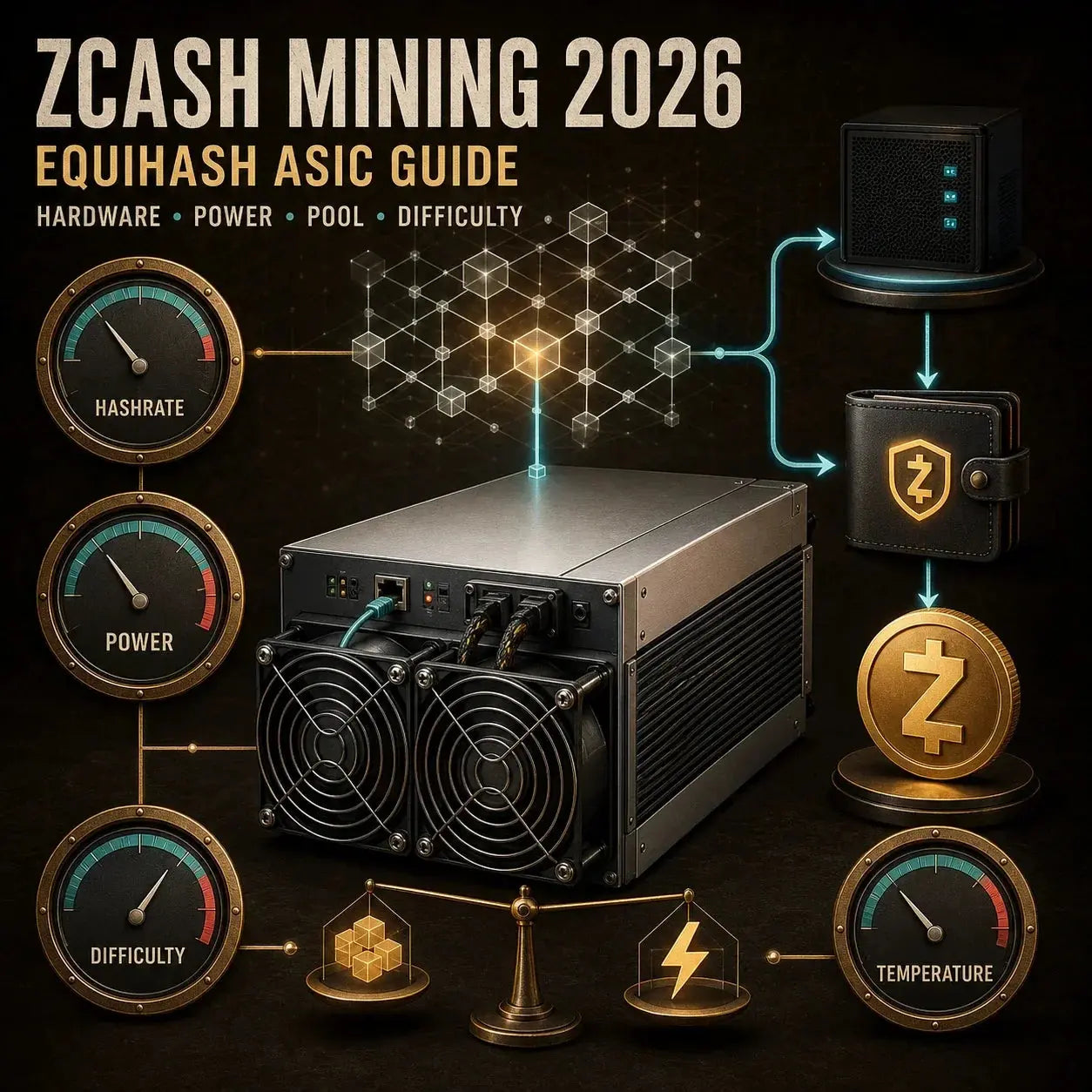
Segurança na Mineração de Zcash em 2026:
Correção do Orchard e Guia de Riscos
Mineração Equihash · Vulnerabilidade do Orchard · Remediação NU6.2 · Compatibilidade de nó · Segurança operacional
1Mineração de Zcash em 2026: Comece com o Sistema
Zcash continua sendo uma rede Proof-of-Work protegida por mineradores Equihash. Hardware ASIC especializado executa o trabalho de hashing, pools agregam compartilhamentos, nós completos validam blocos e carteiras recebem pagamentos. Uma operação lucrativa, portanto, depende de mais do que o hashrate. Eletricidade, tempo de atividade, confiabilidade do pool, segurança da carteira, compatibilidade de software, dificuldade da rede e o valor de mercado do ZEC estão na mesma cadeia operacional.
Isso importa porque o incidente do Orchard em 2026 não danificou um ASIC nem alterou a forma como um chip Equihash calcula o trabalho. Ele expôs uma falha em um circuito de transação blindada. No entanto, a resposta ainda afetou os mineradores: os operadores de nós e pools tiveram que coordenar as atualizações de software, a infraestrutura desatualizada corria o risco de produzir blocos rejeitados, e a confiança do mercado influenciou o valor das recompensas mineradas.
O risco de hardware e o risco de protocolo são diferentes. Um minerador pode estar eletricamente saudável e minerando normalmente enquanto seu pool, caminho de pagamento, nó validador ou valor de recompensa está exposto a um evento de nível de rede.
2A Pilha de Riscos da Mineração de Zcash
Os mineradores geralmente se concentram nas especificações das máquinas porque são fáceis de comparar. Isso é necessário, mas incompleto. Uma avaliação melhor separa os riscos por camada e atribui a cada um um proprietário, um sinal de monitoramento e um plano de resposta.
3O Que Aconteceu com o Orchard?
Em 29 de maio de 2026, o pesquisador de segurança Taylor Hornby relatou uma vulnerabilidade de robustez no circuito Orchard Action durante uma auditoria de segurança assistida por IA, encomendada pela Shielded Labs. O Orchard é um protocolo blindado do Zcash: ele permite que os usuários provem que uma transação privada segue as regras sem revelar seu remetente, destinatário ou valor.
A falha estava na implementação do circuito, não no hardware de mineração Equihash. Em termos simplificados, uma relação ausente dentro de um gadget de multiplicação escalar poderia permitir que um provador mal-intencionado criasse uma prova aparentemente válida para uma alteração de saldo oculta inválida. Uma exploração bem-sucedida poderia, portanto, ter permitido a criação não autorizada de valor dentro do pool do Orchard.
A vulnerabilidade era real e explorável em um ambiente controlado, mas isso não é prova de que os mineradores ASIC foram hackeados. Os relatórios da Zcash Foundation afirmam que o mecanismo de contabilidade de torniquete não encontrou evidências de criação não autorizada de valor e que a privacidade do usuário e o suprimento total permaneceram intactos.
| Pergunta | Resposta precisa | Relevância da mineração |
|---|---|---|
| O firmware ASIC era vulnerável? | Nenhuma evidência conecta a falha do circuito Orchard ao firmware ASIC. | Mantenha as verificações de segurança de hardware separadas das atualizações de protocolo. |
| Poderia ser criado valor inválido? | A falha poderia ter permitido a violação de saldo dentro do Orchard. | A confiança na oferta pode afetar o preço do ZEC e o valor da recompensa. |
| A exploração foi comprovada? | Nenhuma exploração conhecida ou oferta não autorizada foi encontrada. | Evite decisões baseadas em alegações sensacionalistas. |
| Os nós precisavam de atualizações? | Sim. Versões de emergência e compatíveis com NU6.2 foram necessárias. | Pools e nós validadores tiveram que permanecer na cadeia aceita. |
4Como a Rede Respondeu
A resposta utilizou duas etapas coordenadas. Primeiro, um soft fork de emergência desativou temporariamente as ações do Orchard enquanto os desenvolvedores completavam e revisavam o circuito corrigido. A mitigação foi ativada na mainnet no bloco de altura 3.363.426 em 2 de junho. Durante este período temporário, as transações Sapling e transparentes continuaram a operar.
Em segundo lugar, a NU6.2 foi ativada no bloco de altura 3.364.600 da mainnet em 3 de junho. Ela restaurou o Orchard usando um circuito corrigido e uma nova chave de verificação, além de impor um comprimento de prova canônico. As versões oficiais que suportam a atualização foram zcashd 6.20.0 e Zebra 5.0.0, ou versões compatíveis posteriores.
Esta resposta é uma lição de mineração útil. As mudanças de consenso não são atualizações de aplicativos comuns. Um pool ou nó que perde uma ativação urgente pode produzir trabalho que a rede atualizada rejeita, perder conectividade ou experimentar taxas elevadas de blocos órfãos. Um minerador conectado a essa infraestrutura pode continuar exibindo hashrate enquanto ganha menos do que o esperado.
5O Que o Evento Orchard Significa para os Mineradores de ZEC
Para um minerador que conecta um ASIC a um pool de terceiros, a pergunta mais importante é se o pool foi atualizado e permaneceu na cadeia aceita. O próprio minerador não valida todas as regras do protocolo. Ele envia compartilhamentos para o pool, e o nó do pool constrói ou valida blocos candidatos. Isso faz com que a disciplina de software do pool seja parte do risco da contraparte do minerador.
Os operadores que executam seu próprio nó completo ou pool têm uma responsabilidade maior. Eles devem monitorar os lançamentos oficiais, verificar binários e notas de lançamento, preparar atualizações, preservar backups de configuração e confirmar a contagem de pares pós-atualização, altura da cadeia, modelos de bloco e processamento de pagamentos. Durante uma atualização de emergência, esperar por uma janela de manutenção de rotina pode ser muito lento.
Os usuários de carteira também precisam distinguir o suporte de endereço e software da operação do minerador. Uma carteira de pagamento que não consegue seguir adequadamente uma atualização de rede pode atrasar o acesso às recompensas, mesmo que o pool tenha pago corretamente. Use o software de carteira atualmente suportado, proteja o material de recuperação offline e teste um pequeno pagamento após grandes mudanças na carteira ou no protocolo.
6Lista de Verificação de Segurança Prática
| Controle | O que verificar | Ação recomendada |
|---|---|---|
| Firmware ASIC | Fonte do fornecedor, checksum ou assinatura, versão e mudanças inesperadas de configuração | Baixe apenas do fabricante; desative a administração remota exposta. |
| Status do pool | Aviso oficial de atualização, aceitação de blocos, fila de pagamento e taxa de compartilhamento obsoleto | Mantenha pelo menos um endpoint de pool de failover testado. |
| Nó completo | Versão suportada, altura sincronizada, saúde dos pares, espaço em disco e logs de erros | Assine alertas de lançamento de Zcash e implementação. |
| Carteira | Versão de rede suportada, backup de recuperação, compatibilidade de endereço e comprovante de teste | Mantenha as chaves offline e confirme uma pequena transferência antes de alterar os destinos de pagamento. |
| Acesso à rede | Credenciais padrão, portas abertas, acesso VPN e permissões de conta | Segmente os mineradores de dispositivos de negócios e permita a administração apenas por caminhos confiáveis. |
| Registro de incidentes | Linha do tempo, sistemas afetados, mudanças de versão, avisos do pool e reconciliação de pagamentos | Documente as ações para que a perda de receita e a causa raiz possam ser revisadas posteriormente. |
Não pare em “o painel está online”. Confirme os compartilhamentos aceitos, o hashrate do lado do pool, a altura da cadeia, as alterações de blocos rejeitados ou compartilhamentos obsoletos e os pagamentos bem-sucedidos da carteira.
7Calcule a Lucratividade Sem Promessas Fixas
A receita do Zcash muda com a dificuldade da rede, a emissão de blocos, a sorte do pool, as taxas, o tempo de atividade e o preço do ZEC. Uma estimativa de lucratividade deve, portanto, ser tratada como um instantâneo, não uma garantia. Evite anualizar um dia excepcionalmente favorável ou supor que as condições atuais da rede permaneçam inalteradas.
Custo diário de eletricidade = potência em kW × 24 × tarifa de eletricidade. O fluxo de caixa operacional líquido é então a receita bruta de mineração menos eletricidade, taxas de pool, hospedagem, resfriamento, manutenção, tempo de inatividade e quaisquer custos de conversão. Depreciação de hardware e impostos também pertencem ao modelo de investimento completo.
Execute pelo menos três cenários: um caso base, um caso de desvantagem com preço ZEC mais baixo e dificuldade maior, e um caso de interrupção com menor tempo de atividade ou um problema temporário de pool. Eventos de segurança de protocolo pertencem a este último cenário porque podem afetar a liquidez, o preço, a disponibilidade de software e os pagamentos, mesmo quando o ASIC continua minerando.
8Uma Estrutura Melhor de Decisão "Vai/Não Vai"
- Prossiga quando a eletricidade permanecer competitiva em um cenário de desvantagem, a capacidade de resfriamento e do circuito for verificada, e o pool tiver um histórico de atualização crível.
- Reduza a exposição quando a maior parte da margem projetada depender de uma única suposição de preço do ZEC, um pool, uma carteira de pagamento ou tempo de atividade ininterrupto.
- Pause a expansão quando a compatibilidade de nós ou pools for incerta durante um incidente de rede ativo, ou quando você não conseguir conciliar compartilhamentos aceitos e pagamentos.
- Saia ou redistribua quando a margem operacional sustentada não cobrir mais a eletricidade, manutenção e depreciação de hardware em condições realistas.
O princípio chave é simples: um plano de mineração deve sobreviver a mais de um tipo de falha. Hardware eficiente ajuda, mas atualizações de software disciplinadas, custódia de pagamentos segura, redundância de pool e economia conservadora decidem se a operação permanece resiliente.
9Perguntas Frequentes
A vulnerabilidade do Orchard infectou os mineradores ASIC de Zcash?
Não. Foi uma falha de robustez na implementação do circuito de conhecimento zero do Orchard. O requisito operacional direto para os mineradores dizia respeito ao software de pool e nó compatíveis, não a uma infecção de hardware.
Foi criado ZEC falsificado?
A falha poderia ter permitido a criação não autorizada de valor no Orchard, mas os relatórios oficiais não encontraram evidências de que o suprimento total de ZEC foi afetado.
Por que os mineradores precisavam se preocupar com o NU6.2?
Pools e nós validadores precisavam de versões compatíveis para seguir as regras de consenso atualizadas. Uma infraestrutura desatualizada poderia perder conectividade ou produzir blocos rejeitados pela rede atualizada.
A lucratividade da mineração de Zcash pode ser prevista para um ano inteiro?
Apenas como um cenário, não uma promessa. O preço do ZEC, a dificuldade, o desempenho do pool, o tempo de atividade, as taxas e os custos de eletricidade podem mudar materialmente.
O que um minerador deve monitorar após uma atualização de rede?
Verifique os compartilhamentos aceitos, o hashrate do lado do pool, os compartilhamentos obsoletos ou rejeitados, a altura da cadeia do nó, a saúde dos pares, os avisos oficiais do pool e os pagamentos bem-sucedidos da carteira.
10Referências
- ZIP 257: Mitigação do Orchard e Implantação do NU6.2Registro oficial de consenso para a mitigação temporária do Orchard, circuito corrigido, alturas de ativação e versões de protocolo compatíveis.
- Lançamentos do Zcash: zcashd 6.12.5 e 6.20.0Notas de lançamento oficiais cobrindo o soft fork de emergência, remediação do Orchard e ativação do NU6.2.
- Zcash Foundation: Soft Fork de Emergência do Zebra e NU6.2Relato da Fundação sobre a descoberta, resposta, atualizações de nós, verificações de suprimento e restauração do Orchard.
- Shielded Labs: A Vulnerabilidade de Falsificação do OrchardHistórico de divulgação primária sobre a auditoria encomendada, pesquisa assistida por IA, validação de exploração e resposta responsável.
- Documentação Zcash: Guia de MineraçãoVisão geral oficial da mineração cobrindo Prova de Trabalho, ASICs Equihash, pools, carteiras, configuração e suposições de lucratividade.
Veredito Final
O incidente do Orchard não é prova de que o hardware ASIC da Zcash foi comprometido. É prova de que os retornos da mineração dependem de um protocolo mais amplo, nó, pool, carteira e pilha de mercado. A falha foi divulgada de forma responsável, contida temporariamente e corrigida por meio do NU6.2, com relatórios oficiais não encontrando criação não autorizada de suprimentos.
Os mineradores de ZEC devem tratar as atualizações urgentes da rede como eventos operacionais: verificar a prontidão do pool, atualizar nós próprios, testar pagamentos, preservar opções de failover e recalcular a lucratividade sob um cenário de interrupção. A disciplina de segurança pertence ao modelo de mineração, não ao lado dele.




Deixar comentário
Este site é protegido por hCaptcha e a Política de privacidade e os Termos de serviço do hCaptcha se aplicam.