
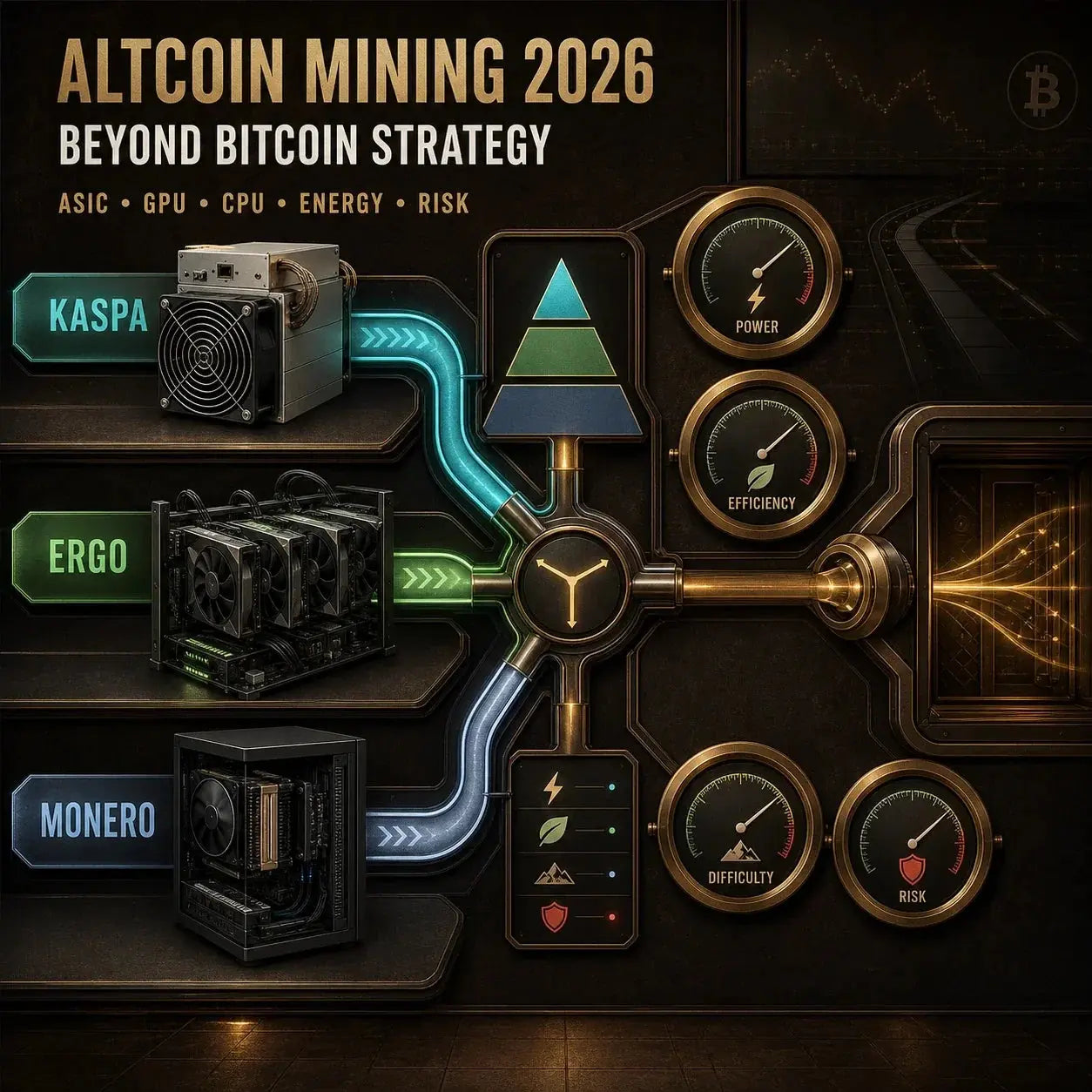
Ciclos de Altcoins e
Decisões de Mineração em 2026
Dominância do BTC · rotação de capital · sinais de temporada de altcoins · sincronização de ASICs · disciplina de saída
Nesta Página
1Por Que a Mineração de Altcoins Precisa de uma Estrutura de Ciclos
As decisões de mineração de altcoins não devem ser baseadas apenas no resultado da calculadora de hoje. As moedas de prova de trabalho (PoW) que não são Bitcoin podem se mover mais rápido que o Bitcoin, mas também carregam maior risco de liquidez, mudanças de dificuldade mais acentuadas, mercados de revenda mais fracos e ciclos narrativos mais curtos. Um minerador que compra hardware porque uma altcoin está em alta pode descobrir que a lucratividade desaparece quando a dificuldade acompanha o preço.
O artigo anterior sobre a ausência de uma temporada de altcoins deveria ser incorporado a este guia de mineração mais amplo, porque a verdadeira questão de negócio não é se uma temporada de altcoins existe hoje. A questão é como a dominância do BTC, a rotação de capital, a liquidez e a economia de mineração específica de cada moeda devem mudar o cronograma de hardware e o planejamento de saída.
A mineração de altcoins funciona melhor quando a rotação do mercado, a dificuldade da mineração, a liquidez da exchange, a eficiência do hardware e as opções de revenda apoiam a mesma tese.
2Dominância do BTC: O Primeiro Sinal a Observar
A dominância do BTC mede a participação do Bitcoin no mercado total de criptomoedas. Não é um indicador perfeito, mas ajuda os mineradores a entender onde o apetite por risco se encontra. Quando a dominância aumenta acentuadamente, o capital muitas vezes se concentra no Bitcoin e em exposições mais seguras de criptomoedas de grande capitalização. Quando a dominância começa a enfraquecer após um rali liderado pelo Bitcoin, as altcoins podem começar a receber atenção incremental.
Para os mineradores, a dominância importa porque a receita das altcoins geralmente está ligada tanto ao preço da moeda quanto à liquidez. Um minerador de KAS, LTC, DOGE ou outras PoW pode parecer atraente durante uma fase de rotação, mas se a liquidez permanecer presa no Bitcoin, o preço da altcoin pode não suportar o aumento de dificuldade que se segue à implantação de novos ASICs.
3Os Sinais de Temporada de Altcoins São Úteis, Mas Não Suficientes
Os índices de temporada de altcoins comparam o desempenho amplo das altcoins em relação ao Bitcoin em um período definido. Eles podem identificar se o mercado mais amplo está recompensando o risco além do BTC. Mas eles não dizem qual moeda de prova de trabalho é minerável com uma boa margem, se um ASIC específico tem um mercado de revenda saudável ou se a liquidez da exchange é profunda o suficiente para pagamentos regulares.
Um minerador deve ler esses índices como um termômetro, não como um sinal de compra. Se o índice estiver baixo, a mineração de altcoins ainda pode funcionar para uma moeda específica com taxas fortes, baixa dificuldade ou hardware barato. Se o índice estiver alto, o mercado já pode estar saturado e as suposições de retorno do ASIC podem ser muito otimistas.
Não compre um ASIC de altcoin apenas porque um gráfico de temporada de altcoins está subindo. Confirme a liquidez da moeda, a tendência de dificuldade de mineração, a eficiência do hardware, o custo de energia e a demanda de revenda primeiro.
4Como a Rotação de Mercado Altera o ROI da Mineração
O ROI da mineração de altcoins pode mudar mais rapidamente do que o ROI da mineração de Bitcoin porque muitas redes de altcoins são menores. Um aumento modesto de preço pode atrair uma grande quantidade de hashrate nova em relação ao tamanho da rede. Isso pode rapidamente reduzir a produção de moedas por minerador, mesmo que o preço do token permaneça forte.
Os mineradores também devem considerar a liquidez de pagamento. Se uma moeda é negociada principalmente em poucos locais, uma leitura de calculadora lucrativa pode não se traduzir em conversão fácil. Deslizamento, limites de retirada, confiabilidade da carteira, acesso à exchange e registros fiscais importam. A receita de mineração só é valiosa se puder ser armazenada, vendida ou usada sem atrito excessivo.
5Escolhas de Algoritmo e Hardware
Diferentes algoritmos de altcoins criam diferentes riscos de hardware. Mineradores Scrypt podem minerar Litecoin e Dogecoin através da economia de mineração mesclada, enquanto mineradores KHeavyHash se concentram em Kaspa. As famílias Blake, Equihash e outras famílias de algoritmos têm seus próprios ciclos de liquidez e hardware. Um minerador deve saber se o ASIC pode trocar de moedas ou se depende de uma única rede.
| Segmento de Mineração | Oportunidade de Ciclo | Principal Risco | Foco da Decisão |
|---|---|---|---|
| Kaspa / KHeavyHash | Rápido crescimento da rede e fortes ciclos narrativos | A dificuldade pode aumentar rapidamente após a adoção de ASICs | Verifique o crescimento do hashrate e a liquidez da KAS antes de comprar |
| Litecoin / Dogecoin Scrypt | Exposição à mineração mesclada e história mais profunda | O hardware pode ficar caro em ciclos de alta de moedas meme | Modele a receita de LTC e DOGE separadamente |
| Equihash / Zcash | A narrativa de privacidade pode retornar durante ciclos de vigilância | Incerteza regulatória e de liquidez | Use suposições conservadoras de preço da moeda e revenda |
| Moedas PoW Emergentes | A entrada antecipada pode produzir alto potencial de valorização | Baixa liquidez, risco de exchange, risco de carteira e obsolescência rápida | Limite a alocação e planeje a conversão antes de minerar |
6Matriz de Decisão para Mineração de Altcoins
Uma matriz de decisão útil separa as condições de mercado das condições operacionais. Se a dominância do BTC estiver caindo, a liquidez das altcoins estiver melhorando, a dificuldade ainda não estiver superaquecida e os preços do hardware estiverem razoáveis, a expansão pode fazer sentido. Se a dominância estiver subindo, o volume de altcoins estiver fraco e os preços dos ASICs ainda estiverem baseados na lucratividade de ontem, esperar pode ser melhor.
| Condição | Comprar | Manter | Sair ou Reduzir |
|---|---|---|---|
| Dominância do BTC | Enfraquecendo após rali liderado pelo BTC | Lateral e estável | Subindo bruscamente com baixo volume de altcoins |
| Liquidez da moeda | Melhorando em locais credíveis | Estável e utilizável | Livros de ofertas finos ou atrito na retirada |
| Dificuldade | Atrasando os ganhos de preço | Subindo gradualmente | Subindo mais rápido que o preço |
| Preços de ASIC | Descontados ou com retorno conservador | Justo em relação à receita | Precificados para um cenário de alta perfeito |
| Custo de energia | Baixo o suficiente para sobreviver a quedas | Médio, mas gerenciável | Energia residencial alta com margem estreita |
7Planejamento de Saída Antes de Comprar
Os mineradores de altcoins frequentemente se concentram no momento de entrada, mas negligenciam o planejamento de saída. Antes de comprar uma máquina, defina as condições que fariam você vender o ASIC, trocar de pool, converter as moedas mineradas ou parar de minerar. Isso é especialmente importante para máquinas de algoritmo único vinculadas ao ciclo de liquidez de uma moeda.
O planejamento de saída deve incluir canais de revenda de hardware, depreciação esperada, disponibilidade de peças de reposição, suporte de firmware, confiabilidade da pool, acesso à carteira e rotas de conversão. Se o único plano for manter as moedas mineradas até uma temporada perfeita de altcoins, a operação dependerá do timing do mercado em vez da disciplina de mineração.
Para cada compra de ASIC de altcoin, anote o cenário de preço da moeda, cenário de dificuldade, cenário de custo de energia e cenário de revenda. Se um deles quebrar o modelo de retorno, reduza o tamanho ou espere.
8Checklist do Minerador de Altcoins
- Verifique a dominância do BTC: Identifique se o capital está se concentrando no Bitcoin ou se está rotacionando para fora.
- Confirme a liquidez: Verifique a profundidade da exchange, o suporte a saques e os custos de conversão.
- Observe a dificuldade: O aumento do hashrate pode apagar rapidamente os ganhos de preço do token.
- Modele o custo de energia: A volatilidade das altcoins penaliza as altas taxas de eletricidade.
- Teste de estresse de retorno: Use suposições de preço da moeda de alta, base e baixa.
- Analise a revenda de hardware: Máquinas de algoritmo restrito podem se tornar difíceis de vender após uma virada de ciclo.
- Planeje o manuseio das moedas: Decida qual parte vender para cobrir os custos operacionais e qual parte manter.
9Perguntas Frequentes
A temporada de altcoins é necessária para a mineração lucrativa de altcoins?
Não. Uma moeda específica pode ser lucrativa antes de uma temporada ampla de altcoins, mas uma rotação ampla pode melhorar a liquidez e o sentimento.
Os mineradores devem comprar ASICs de altcoins quando a dominância do BTC cai?
A queda da dominância é um sinal útil, mas os mineradores ainda precisam verificar a liquidez da moeda, a tendência de dificuldade, o preço do ASIC e o custo da energia.
Mineradores de altcoins são mais arriscados do que mineradores de Bitcoin?
Frequentemente, sim. Redes menores podem ter mudanças de dificuldade mais rápidas, menor liquidez e valores de revenda de hardware mais voláteis.
Qual métrica de mineração de altcoins é a mais importante?
A lucratividade líquida após eletricidade e taxas é a mais importante, mas deve ser combinada com a tendência de dificuldade, liquidez e risco de revenda de hardware.
As altcoins mineradas devem ser mantidas ou vendidas?
Isso depende do fluxo de caixa. Muitos mineradores vendem parte da produção para cobrir a energia e mantêm apenas uma parte planejada para o tesouro.
10Referências
- Blockchaincenter: Índice de Temporada de AltcoinsIndicador de mercado amplo para comparar o desempenho de altcoins com o Bitcoin.
- Kaspa WikiReferência oficial do ecossistema Kaspa para contexto de rede e mineração.
- WhatToMineCalculadora pública de lucratividade de mineração usada para comparações entre moedas.
- minerstat: Dados de Mineração de KaspaDashboard público de lucratividade de mineração e dados de rede da KAS.
- minerstat: Dados de Mineração de LitecoinDashboard público de lucratividade de mineração e dados de rede da LTC.
Veredito Final
A mineração de altcoins em 2026 é um problema de timing e disciplina. A dominância do BTC e os indicadores de temporada de altcoins podem dizer aos mineradores quando o apetite por risco está mudando, mas não substituem a análise de lucratividade, liquidez, dificuldade e hardware no nível da moeda.
Os melhores mineradores de altcoins não perseguem simplesmente a narrativa mais recente. Eles compram quando o retorno ainda funciona sob suposições conservadoras, mantêm dinheiro para custos operacionais e sabem exatamente quando vão manter, converter, trocar ou sair.


Deixar comentário
Este site é protegido por hCaptcha e a Política de privacidade e os Termos de serviço do hCaptcha se aplicam.