
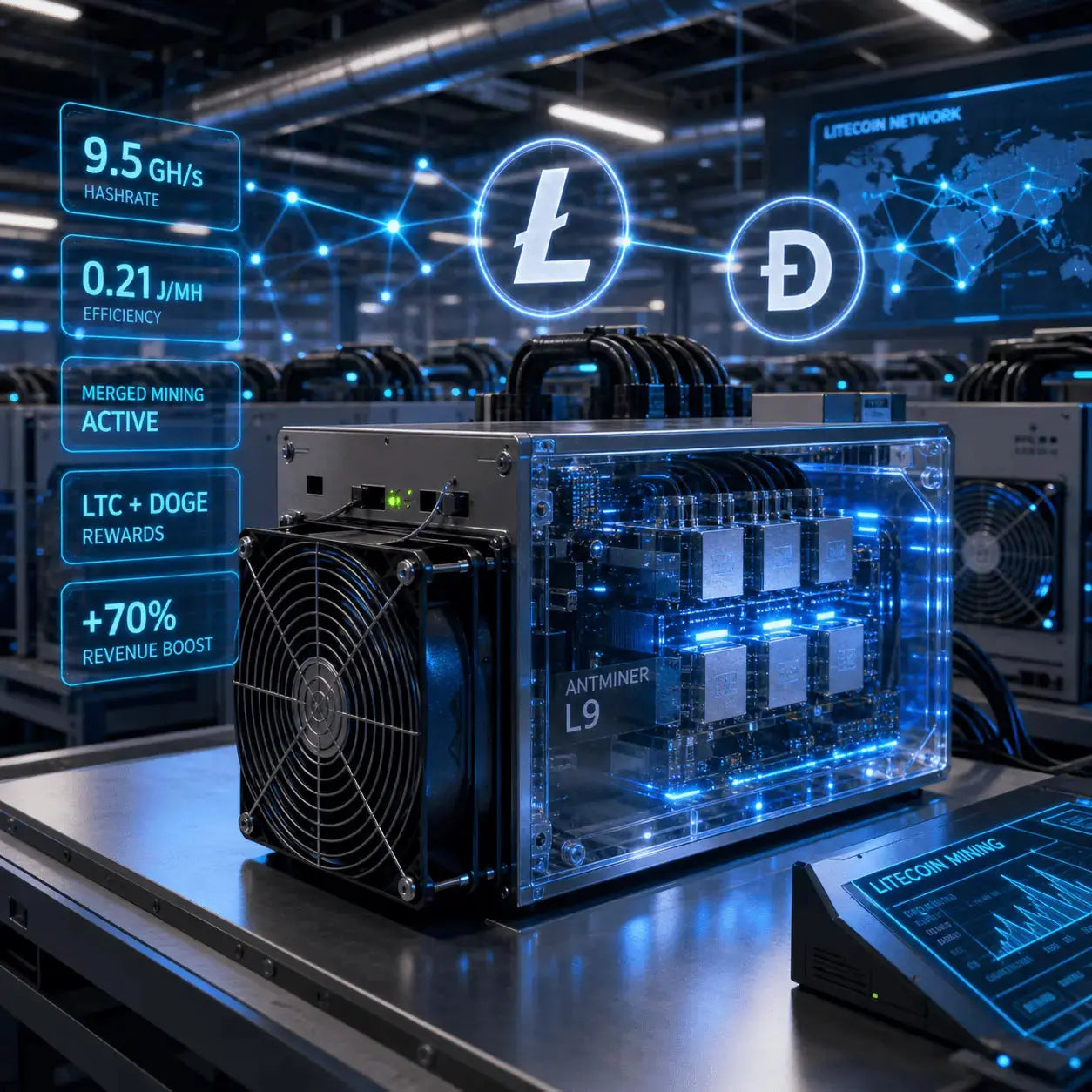
Qu’est-ce que le minage de Litecoin ?
Le minage de Litecoin consiste à utiliser la puissance de calcul pour valider les transactions réseau et les ajouter à la blockchain, gagnant ainsi des récompenses en bloc en retour. Il fonctionne sur un mécanisme de preuve de travail (PoW) utilisant l'algorithme Scrypt. Les mineurs s'affrontent pour résoudre des énigmes mathématiques complexes, et le premier à trouver la bonne solution peut ajouter le bloc suivant et reçoit du Litecoin (LTC) nouvellement généré en récompense. Le réseau produit un bloc toutes les 2,5 minutes environ, soit quatre fois plus vite que Bitcoin. Créé par l'ancien ingénieur de Google Charlie Lee en 2011, le Litecoin est souvent appelé « argent numérique » et maintient un historique opérationnel ininterrompu depuis plus de 14 ans.
Pourquoi l’exploitation minière du Litecoin mérite-t-elle encore d’être envisagée en 2026 ?
Litecoin offre un point d’entrée plus accessible dans le minage de crypto que Bitcoin en 2026, son principal avantage étant le minage fusionné – gagner deux pièces pour le coût de l’électricité d’une. L’exploitation minière de Bitcoin est devenue hautement industrialisée, avec des coûts d’entrée de 1 500 et 3 000 dollars, et même si les difficultés du réseau sont importantes, les mineurs individuels ont encore de la marge pour opérer. Plus important encore, comme Dogecoin (DOGE) utilise le même algorithme Scrypt, les mineurs de Litecoin peuvent utiliser exploitation minière fusionnée pour gagner à la fois du LTC et du DOGE simultanément en utilisant le même matériel et la même électricité. Les données montrent que les récompenses Dogecoin fusionnées représentent généralement 60 à 70 % des revenus totaux d'un mineur – un avantage structurel unique au Litecoin.
Comment fonctionne réellement le minage de Litecoin ?
Le minage est essentiellement une course mondiale dans laquelle les ordinateurs s'affrontent pour trouver un hachage valide, et le gagnant gagne le droit d'ajouter le bloc suivant et de récupérer la récompense. Voici le processus étape par étape : les utilisateurs diffusent les transactions sur le réseau Litecoin → les mineurs collectent les transactions en attente dans des blocs candidats → le matériel minier exécute les données du bloc via l'algorithme Scrypt, testant des millions de combinaisons par seconde → un mineur trouve le hachage correct qui répond à l'objectif de difficulté du réseau et le diffuse au réseau → d'autres nœuds vérifient la solution, et le mineur gagnant reçoit la récompense de bloc (actuellement 3,125 LTC) plus les frais de transaction. Le réseau Litecoin ajuste automatiquement sa difficulté de minage tous les 2 016 blocs (environ tous les 3,5 jours) pour maintenir le temps de blocage stable à environ 2,5 minutes. Ce mécanisme d'autorégulation garantit un fonctionnement fluide, quel que soit le nombre de mineurs rejoignant ou quittant le réseau.
Quels sont les principaux moyens d’extraire du Litecoin en 2026 ?
Pour les mineurs en 2026, le minage ASIC est la seule option économiquement viable, tandis que le cloud mining et le GPU mining ne sont plus recommandés. Le tableau ci-dessous résume chaque approche :
| Méthode d'extraction | Viable en 2026 ? | Principaux avantages et inconvénients |
|---|---|---|
| Exploitation minière ASIC | ✅ Seulement recommandé | Taux de hachage élevé, excellente efficacité, mais bruyant et nécessite un espace dédié |
| Extraction de GPU | ❌ N'est plus viable | Flexible et polyvalent, mais complètement surclassé par les ASIC sur Scrypt |
| Exploitation minière en nuage | ⚠️ Risque très élevé | Pas de matériel à gérer, mais des arnaques généralisées et des retours médiocres |
| Exploitation minière en piscine | ✅ Indispensable pour les débutants | Paiements quotidiens stables, atténue les écarts de chance |
| Exploitation minière en solo | ❌ Pas pour les débutants | Statistiquement peu fiable à moins d'exécuter des dizaines de mineurs de premier plan |
Presque tous les débutants en 2026 devraient choisir exploitation minière en piscine. Il combine votre taux de hachage avec celui d'autres mineurs, vous offrant des paiements fréquents et fiables, proportionnels à votre contribution, plutôt que d'attendre des mois ou des années pour trouver un bloc par vous-même.
Quel mineur ASIC Litecoin devriez-vous acheter en 2026 ?
La spécification la plus importante n'est pas le taux de hachage brut, mais l'efficacité mesurée en J/MH, qui détermine directement la part de vos revenus qui est absorbée par les coûts d'électricité. Vous trouverez ci-dessous une comparaison des principaux mineurs Scrypt ASIC en 2026 :
| Modèle de mineur | Taux de hachage | Puissance | Efficacité | Est. Prix | Idéal pour |
|---|---|---|---|---|---|
| Antminer L9 | 16 GH/s | 3 360 W | 0,21 J/MH | ~$2,800 | Meilleures performances globales |
| Antminer L7 | 9,5 GH/s | 3 425 W | 0,36 J/MH | $1,500–2,000 | Meilleur rapport qualité-prix pour la plupart des mineurs |
| Jasmineur X16-Q | 1,95 GH/s | 620W | 0,32 J/MH | ~$1,200 | Zones à coût élevé d’électricité |
| VolcMiner D1 | 10 GH/s | 4 000 W | 0,40 J/MH | ~$1,800 | Option de sauvegarde décente |
| Coquille d'or LT6 | 1,05 GH/s | 2 200 W | 2.10 J/MH | $600–900 | Débutants soucieux de leur budget |
Conseil d'achat : Si votre budget le permet et que l'électricité est bon marché, l'Antminer L9 est le mineur Scrypt le plus performant du marché. Pour la plupart des mineurs, l’Antminer L7 offre le meilleur équilibre entre taux de hachage et prix. Si votre coût d'électricité dépasse 0,10 $/kWh, l'efficacité supérieure du Jasminer X16-Q en fait le bon choix. Achetez toujours auprès de revendeurs agréés ou directement auprès des fabricants — le marché de l'occasion regorge d'unités vétustes et inefficaces. Exécutez tout achat potentiel via un calculateur de rentabilité comme WhatToMine avant de dépenser de l'argent.
De quel matériel et logiciel avez-vous besoin pour démarrer le minage ?
Une configuration complète de minage à domicile nécessite cinq composants principaux : le mineur, l'alimentation, le réseau, l'espace de refroidissement et le portefeuille, avec des coûts de démarrage totaux allant d'environ 3,500. Voici la liste de contrôle complète :
-
Mineur ASIC: Votre investissement principal, choisi en fonction de votre budget et du coût de l'électricité
-
Unité d'alimentation (PSU) : La plupart des mineurs en incluent un ; sinon, assurez-vous d'avoir au moins 10 à 15 % de marge au-dessus de la puissance nominale du mineur.
-
Unité de distribution d'énergie (PDU) : Indispensable pour gérer plusieurs mineurs avec protection intégrée contre les surtensions
-
Connexion réseau filaire: Ethernet uniquement – Le Wi-Fi introduit une latence et des partages supprimés qui réduisent les paiements
-
Espace dédié: Les mineurs ASIC produisent 65 à 80 dB de bruit (comme un aspirateur fonctionnant en permanence). Un sous-sol, un garage ou une dépendance est essentiel – jamais un espace de vie
-
Refroidissement et ventilation: Ventilateurs industriels, conduits d'évacuation ou climatisation. La chaleur est l’ennemi numéro un de la longévité du matériel
-
Portefeuille Litecoin: Pour recevoir des paiements. Faites confiance à Wallet ou Exodus pour une utilisation quotidienne ; Ledger/Trezor pour le stockage à long terme
Comment configurer et lancer votre Litecoin Miner étape par étape ?
L'ensemble du processus de configuration, depuis la création du portefeuille jusqu'à l'apparition du hashrate du mineur sur le tableau de bord du pool, prend environ 30 minutes une fois que vous avez le matériel en main. Suivez ces étapes dans l'ordre :
Étape 1 : Créer un portefeuille Litecoin
N’utilisez jamais une adresse de dépôt en bourse comme destination de paiement minier – les bourses peuvent geler des comptes ou radier des actifs sans avertissement. Portefeuilles recommandés : Portefeuille de confiance (mobile), Exode (ordinateur de bureau), ou Noyau de Litecoin (nœud complet). Notez votre phrase de départ et stockez-la en toute sécurité hors ligne. Sans cela, les fonds ne pourront pas être récupérés en cas de perte de votre appareil.
Étape 2 : Choisissez et inscrivez-vous auprès d’un pool minier
Les pools combinent votre taux de hachage avec d'autres pour offrir des paiements quotidiens stables. Meilleures piscines pour 2026 :
| Piscine | Frais | Méthode de paiement | Min. Paiement | Exploitation minière fusionnée |
|---|---|---|---|---|
| LitecoinPool.org | 0% | PPLNS | 0,01 SLD | Oui |
| F2Piscine | 2% | SPA+ | 0,01 SLD | Oui |
| ViaBTC | 2–4% | PPS/PPLNS | 0,001 LTC | Oui |
| Antpool | 1–2.5% | PPS+/PPLNS | 0,001 LTC | Oui |
Les débutants devraient commencer par LitecoinPool.org – zéro frais, opérationnel depuis 2011, excellente disponibilité et extraction Dogecoin fusionnée activée par défaut.
Étape 3 : Configurez votre mineur ASIC
① Connectez le mineur à l'alimentation et à Ethernet, puis connectez-vous à votre routeur (généralement à 192.168.1.1) pour trouver l'adresse IP locale du mineur. ② Entrez cette adresse IP dans votre navigateur pour ouvrir le tableau de bord Web du mineur (la connexion par défaut pour Antminer est admin/admin – modifiez-la immédiatement). ③ Accédez à « Configuration du mineur » ou « Paramètres du pool » et saisissez : URL du pool (par exemple, stratum+tcp://mine.litecoinpool.org:3333), Nom du travailleur (format : YourUsername.Worker1), mot de passe (généralement x ou 123). ④ Ajoutez des pools de sauvegarde dans les emplacements 2 et 3 pour un basculement automatique. ⑤ Enregistrez les paramètres et redémarrez le mineur. Dans un délai de 2 à 5 minutes, votre mineur apparaîtra comme actif sur le tableau de bord du pool affichant le hashrate en temps réel.
Étape 4 : Activer le minage fusionné (récompenses Dogecoin gratuites)
Dans la page « Paramètres de paiement » ou « Sous-compte » de votre pool, ajoutez votre Adresse du portefeuille Dogecoin (créez-en un dans Trust Wallet ou Exodus). La plupart des piscines, y compris LitecoinPool.org, activer automatiquement le minage fusionné une fois qu'une adresse DOGE est détectée. Cette configuration de cinq minutes vous rapporte des récompenses DOGE supplémentaires sans aucun coût supplémentaire en électricité ou en matériel.
Étape 5 : Surveillez les performances de votre mineur
Consultez quotidiennement le tableau de bord du mineur ou la page des statistiques du pool pour : le hashrate réel (doit être proche des spécifications annoncées), la température de la puce (inférieure à 75-80°C), le taux d'acceptation des partages (au-dessus de 99 %) et la disponibilité (continue). Utilisez Awesome Miner ou Hive OS pour configurer des alertes automatisées afin d'être immédiatement averti si un mineur se déconnecte ou si son hashrate chute de manière significative.
Combien d’argent pouvez-vous gagner en minant du Litecoin en 2026 ?
Un seul Antminer L7 dans des conditions de marché typiques de 2026, y compris l'exploitation minière fusionnée, génère un bénéfice net quotidien estimé à 7h50, ou 225 par mois. Voici un exemple concret utilisant de l'électricité à 0,08 $/kWh :
| Paramètre | Valeur |
|---|---|
| Modèle de mineur | Antminer L7 (9,5 GH/s) |
| Consommation électrique quotidienne | 3,425 kW × 24 = 82,2 kWh |
| Coût quotidien de l'électricité | 82.2 × 6.58** |
| Revenu quotidien estimé des SLD | $7–11 |
| Estimation des revenus fusionnés de DOGE | $2–4 |
| Revenu quotidien total | $9–15 |
| Bénéfice net quotidien | 7.50 |
| Bénéfice net mensuel | 225 |
Les récompenses DOGE du minage fusionné représentent généralement 60 à 70 % des revenus totaux – le minage sans le minage fusionné activé signifie laisser plus de la moitié de votre profit potentiel sur la table. Ces chiffres fluctuent constamment en fonction du prix du marché des SLD et des difficultés du réseau. Sur les marchés haussiers, les profits peuvent se multiplier ; en période de ralentissement économique, les mineurs les moins efficaces peuvent approcher le seuil de rentabilité.
Pourquoi le coût de l’électricité est-il le facteur le plus important de la rentabilité minière ?
Le coût de l’électricité est la variable la plus importante qui différencie les mineurs rentables de ceux qui ne le sont pas : il détermine directement si vous gagnez ou perdez de l’argent. En utilisant l'Antminer L7 comme exemple, voici comment les coûts quotidiens varient en fonction des différents tarifs d'électricité :
| Tarif d'électricité | Coût quotidien de l'électricité | Différence par rapport au taux bas |
|---|---|---|
| 0,07 $/kWh | $5.75 | Référence |
| 0,10 $/kWh | $8.22 | +74/mois) |
| 0,13 $/kWh | $10.69 | +148/mois) |
La différence entre 0,13 électricité équivaut à environ 150 $ par mois – ce qui représente souvent la limite entre un bénéfice sain et le seuil de rentabilité ou une perte d’argent. Les stratégies visant à réduire les coûts de l'électricité comprennent : l'utilisation de la facturation en fonction de l'heure d'utilisation (exploitation minière pendant les heures creuses), l'installation de panneaux solaires, l'obtention de tarifs commerciaux/industriels ou l'implantation dans des régions à faible coût comme le Texas, Washington ou le Kentucky. En tant que cadre général de rentabilité :
| Coût de l'électricité | Perspectives de rentabilité |
|---|---|
| En dessous de 0,05 $/kWh | Très rentable avec n'importe quel ASIC moderne |
| 0,05 à 0,08 $/kWh | Rentable avec du matériel performant (L7, L9, Jasminer) |
| 0,08 à 0,12 $/kWh | Marginal – rentabilité fortement liée au prix des SLD |
| 0,12 à 0,15 $/kWh | Au mieux, le seuil de rentabilité ; seules les machines les plus efficaces survivent |
| Au-dessus de 0,15 $/kWh | Probablement non rentable dans la plupart des conditions de marché |
Que signifient PPS, PPLNS et PPS+ et lequel devriez-vous choisir ?
Différentes méthodes de versement des pools permettent un compromis entre stabilité et rendement total à long terme ; PPS+ ou FPPS est le meilleur choix pour la plupart des mineurs en 2026. Voici comment fonctionne chaque méthode :
-
PPS (paiement par action) : Vous recevez un paiement fixe pour chaque partage valide que vous soumettez, que le pool trouve ou non un bloc. Le pool assume toute la variance de la chance. Extrêmement stable, mais les frais sont plus élevés (généralement de 2 à 4 %) car le pool prend le risque de séquences malchanceuses.
-
PPLNS (paiement par N dernières actions) : Vous n'êtes payé que lorsque le pool trouve réellement un bloc, en fonction de votre contribution au cours d'une fenêtre glissante. Vos paiements incluent le facteur chance du pool. Sur de longues périodes, cela peut rapporter 20 % de plus que le SPA, mais les écarts à court terme peuvent être importants. Idéal pour les mineurs qui peuvent tolérer certaines fluctuations pour des rendements à long terme potentiellement plus élevés.
-
PPS+ / FPPS (PPS complet) : Le standard dominant en 2026. Cette méthode verse la récompense globale sur une base PPS stable plus distribue les revenus des frais de transaction aux mineurs. Il offre la meilleure combinaison de stabilité et de paiement total.
Les débutants devraient choisir une piscine proposant du PPS+ ou du FPPS, comme F2Pool, ViaBTC ou Antpool. LitecoinPool.org utilise PPLNS sans frais – les rendements à long terme peuvent être plus élevés en raison de l’absence de frais, mais les paiements à court terme fluctuent légèrement en fonction de la chance du pool.
Qu'est-ce que le minage fusionné et comment exploiter à la fois le Litecoin et le Dogecoin ?
Le minage fusionné vous permet de gagner des récompenses Dogecoin tout en minant du Litecoin – en utilisant le même matériel et la même électricité, sans pénalité de performance et sans frais supplémentaires. Le nom technique est Auxiliary Proof of Work (AuxPoW), officiellement pris en charge depuis 2014. Étant donné que Litecoin et Dogecoin utilisent tous deux l'algorithme Scrypt, une solution de preuve de travail valide peut satisfaire simultanément aux exigences des deux blockchains. L’activation du minage fusionné ne nécessite que trois étapes simples :
-
Créez un portefeuille Dogecoin à l'aide de Trust Wallet, Exodus ou d'un périphérique matériel Ledger.
-
Connectez-vous au site Web de votre pool minier et ajoutez l'adresse de votre portefeuille DOGE dans la page « Paramètres de paiement » ou « Sous-compte ».
-
Le pool gère tout le reste automatiquement — aucune modification n'est nécessaire dans la configuration de votre mineur.
Les récompenses DOGE minières fusionnées représentent généralement 60 à 70 % des revenus totaux d'un mineur. Miner du Litecoin sans l’activation du minage fusionné signifie gaspiller plus de la moitié de votre profit potentiel chaque jour. Pour y mettre un numéro : si votre installation rapporte un extra 60 à 120 $ par mois ou 720 à 1 440 $ par an – entièrement gratuit. Tous les principaux pools prennent en charge l’exploitation minière fusionnée. Si vous utilisez un mineur Litecoin sans qu'il soit activé, arrêtez-le et configurez-le maintenant.
Quelles sont les sept erreurs les plus courantes commises par les nouveaux mineurs de Litecoin ?
La grande majorité des pertes minières ne proviennent pas de la baisse du prix des pièces, mais d'erreurs évitables dans la sélection du matériel, le calcul de l'électricité et la gestion de base. Voici les sept pièges les plus courants et comment les éviter :
-
Ne pas calculer les coûts d'électricité avant d'acheter du matériel — C’est la plus grosse erreur d’un débutant. Exécutez toujours vos chiffres via WhatToMine en premier, en utilisant votre tarif d'électricité réel et le modèle de mineur choisi. Confirmez qu’il existe une marge bénéficiaire claire avant de dépenser un seul dollar.
-
Acheter du matériel d'occasion obsolète ou inefficace — Le marché des ASIC d'occasion regorge de machines plus anciennes qui étaient autrefois rentables mais qui ne le sont plus. Vérifiez toujours la cote d’efficacité J/MH du modèle et exécutez-le via un calculateur de rentabilité avant de l’acheter. Demandez au vendeur des captures d'écran de hashrate en temps réel avant de conclure une transaction d'occasion.
-
Mauvaise gestion de la chaleur et de la ventilation — Les mineurs ASIC génèrent des niveaux de chaleur industriels. Leur exécution dans un petit espace non ventilé entraîne une limitation thermique (taux de hachage réduit), une dégradation accélérée du matériel et une éventuelle panne complète. Une bonne circulation de l’air est un élément essentiel de la configuration, et non une réflexion après coup.
-
Miner en solo au lieu de rejoindre un pool — À moins que vous n'utilisiez plusieurs dizaines de mineurs de premier plan, la probabilité de trouver un bloc solo est statistiquement extrêmement faible. Rejoignez un pool et gagnez des paiements quotidiens réguliers.
-
Laisser les pièces gagnées sur la piscine — Le solde de votre pool minier n'est pas un compte d'épargne. Des piscines ont été piratées et fermées sans avertissement. Retirez régulièrement vos gains sur votre portefeuille personnel, idéalement chaque fois que vous atteignez le seuil de paiement minimum.
-
Ignorer les mises à jour du micrologiciel — Les fabricants publient régulièrement des mises à jour du micrologiciel qui corrigent les bogues, améliorent la stabilité et améliorent parfois les performances. Consultez périodiquement le site Web de votre fabricant et tenez vos mineurs informés.
-
Traiter l’exploitation minière comme un revenu complètement passif — L'exploitation minière nécessite une surveillance active, surtout dans les premières semaines. Le matériel peut tomber en panne silencieusement, les connexions du pool peuvent chuter, les difficultés peuvent augmenter du jour au lendemain et les prix des pièces évoluent constamment. Vérifiez quotidiennement votre configuration, utilisez des alertes de surveillance automatisées et restez engagé.
Où devriez-vous stocker vos récompenses minières : portefeuille chaud ou portefeuille matériel ?
Pour les paiements miniers quotidiens, un portefeuille chaud est pratique, mais une fois que vous avez accumulé un solde significatif, vous devez le transférer vers un portefeuille matériel pour le stockage à froid – c'est l'exigence de sécurité minimale pour protéger vos actifs. Les hot wallets (comme Trust Wallet ou Exodus) sont connectés à Internet. Bien que pratiques, les clés privées stockées en ligne sont vulnérables aux attaques réseau ou aux logiciels malveillants. Les portefeuilles matériels (comme Ledger ou Trezor) conservent les clés privées complètement hors ligne dans une puce sécurisée, les rendant ainsi sécurisées même lorsqu'elles sont connectées à un ordinateur infecté. Vous trouverez ci-dessous une comparaison des principaux portefeuilles matériels pour 2026 :
| Modèle de portefeuille | Cote de sécurité | Écran | Avantage de base | Prix |
|---|---|---|---|---|
| Taxe du grand livre | EAL6+ | Encre électronique | Excellent écosystème mobile | $399 |
| Coffre-fort Trezor 7 | Élément sécurisé personnalisé | Touche de couleur | Entièrement open source, résistant aux quantiques | $249 |
| Clé de voûte 3 Pro | EAL6+ ×3 | Touche de couleur | 100 % avec espace d'air, signature QR | $149 |
| OneKey Pro | Architecture à quatre puces | Toucher | Open source, prise en charge Bluetooth | ~$150 |
Flux de travail recommandé : Configurez votre pool pour qu'il paie automatiquement à l'adresse de votre hot wallet. Une fois par semaine ou par mois, transférez les LTC et DOGE accumulés du hot wallet vers votre portefeuille matériel. Votre phrase de départ est la seule preuve de propriété de vos actifs : notez-en deux copies, stockez-les dans des emplacements sécurisés distincts et jamais stockez-les sur votre téléphone, votre ordinateur ou dans le cloud.
Le minage de Litecoin est-il toujours rentable en 2026 – et devriez-vous commencer ?
Dans de bonnes conditions – électricité inférieure à 0,10 $/kWh combinée à des ASIC efficaces comme le L7, L9 ou Jasminer – l’exploitation minière du Litecoin reste une entreprise réaliste et potentiellement rentable à long terme en 2026. Litecoin a plus de 14 ans d'exploitation ininterrompue, un écosystème mature, une liquidité importante (conversion instantanée en espèces sur pratiquement toutes les bourses majeures) et l'avantage structurel unique de l'exploitation minière fusionnée de Dogecoin. Contrairement au minage de Bitcoin, qui est désormais dominé par des sociétés à l'échelle industrielle, le réseau de Litecoin laisse encore de la place aux mineurs individuels et aux petits opérateurs. Lorsque vous prenez en compte les revenus fusionnés de DOGE, le seuil de rentabilité de l’électricité s’améliore considérablement. Traitez l'exploitation minière comme une entreprise : calculez le retour sur investissement avant d'acheter du matériel, garantissez de faibles coûts d'électricité, surveillez religieusement votre configuration et maintenez le micrologiciel à jour. Les mineurs qui abordent les choses de cette façon sont ceux qui génèrent des revenus durables tout au long de plusieurs cycles de marché, et pas seulement pendant les plus hauts. Si vous êtes prêt à passer à l'étape suivante, commencez par choisir un mineur efficace, trouvez un tarif d'électricité bas, rejoignez un pool fiable et activez le minage fusionné dès le premier jour.



Laisser un commentaire
Ce site est protégé par hCaptcha, et la Politique de confidentialité et les Conditions de service de hCaptcha s’appliquent.