
Introduction
En avril 2024, la quatrième réduction de moitié du Bitcoin a réduit la récompense de bloc de 6,25 BTC à 3,125 BTC – un moment largement considéré comme un tournant pour l'industrie minière. Avance rapide jusqu’en mars 2026, deux années complètes après la réduction de moitié, et la poussière est retombée.
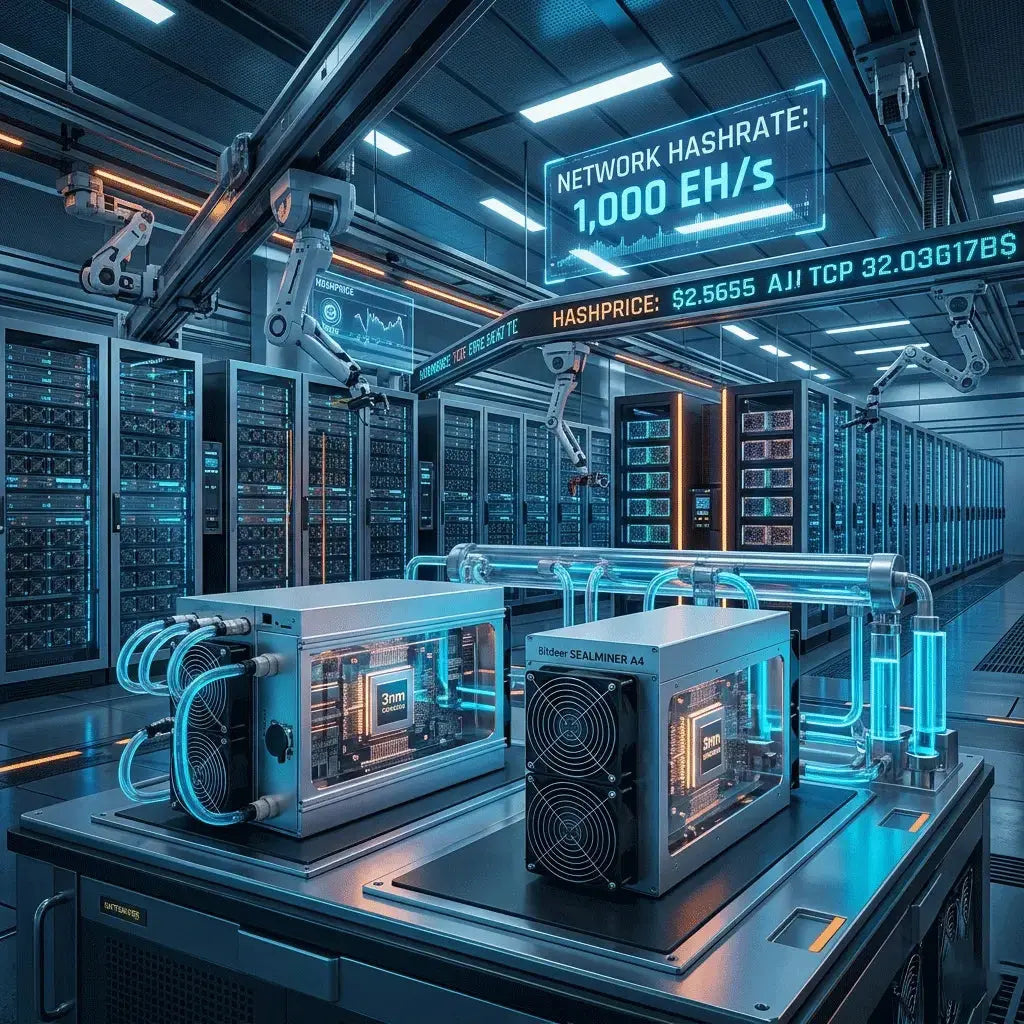
Le paysage minier a radicalement changé. Le hashrate du réseau a dépassé le cap des 1 000 EH/s et la difficulté du minage a grimpé au-dessus de 100 T, atteignant jusqu'à 138,97 T. Les prévisions d'un bouleversement majeur de l'industrie se sont pleinement matérialisées. D’un côté se trouve la domination à l’échelle industrielle, alimentée par une technologie de pointe de puces 3 nm et une énergie à faible coût provenant de sources mondiales. De l’autre, une vague de capacités obsolètes qui sont forcées de disparaître parce qu’elles n’ont pas réussi à franchir la « ligne de la mort en matière d’efficacité ».
Dans l'environnement concurrentiel d'aujourd'hui, l'efficacité du matériel n'est plus un « bon à avoir » : c'est un bouée de sauvetage. Cet article fournit une analyse complète du minage de Bitcoin en 2026, couvrant les conditions macroéconomiques, les mineurs ASIC de premier plan, le retour sur investissement, les stratégies d'hébergement, les évolutions réglementaires mondiales, la transition vers l'informatique IA et les outils de couverture financière – tous conçus pour vous aider à survivre et à profiter dans ce paysage brutal.
Chapitre 1 : Le paysage macroéconomique de 2026 – La ligne de mort de l’efficacité
Pour comprendre la rentabilité en 2026, il faut d’abord appréhender les données macro.
1.1 L'« effet plafond » du hashrate et de la difficulté du réseau
Début 2026, le hashrate du réseau Bitcoin est officiellement entré dans l'ère zettahash, fluctuant autour de 1 000 EH/s et culminant à 1 098 EH/s. En conséquence, les difficultés minières se sont stabilisées autour de 138,97 T en avril 2026.
La logique derrière ces chiffres est dure : bien que le hashrate total ait presque doublé par rapport à il y a deux ans, la production de blocs reste ancrée à des intervalles d'environ 10 minutes par le mécanisme d'ajustement de la difficulté. Cela signifie que la production par unité de hashrate a été sévèrement diluée. Le réseau produit désormais environ 450 BTC par jour.
Alors que l'activité en chaîne (telle que les inscriptions, les runes et les réseaux de couche 2) génère occasionnellement des hausses de frais qui créent des augmentations de bénéfices à court terme, dans des conditions normales, les frais de transaction ne représentent que 10 à 30 % des revenus des mineurs. Cette structure fait prix de hachage l'indicateur le plus fiable de la viabilité d'une opération minière.
1.2 Compression du prix de hachage et seuil de « capitulation »
Au premier trimestre 2026, le hashprice – le revenu quotidien en dollars généré par PH/s de hashrate – est tombé dans une fourchette de 28 à 30 $ par PH/s et par jour. Cela représente une baisse significative par rapport au sommet d'environ 63 $ atteint en juillet 2025, reflétant la rapidité avec laquelle l'amélioration de l'efficacité du matériel a dépassé l'appréciation du prix symbolique.
Lorsque les prix du Bitcoin oscillaient entre 65 000 et 70 000 dollars, les mineurs utilisant des équipements de niveau intermédiaire (avec une efficacité supérieure à 22 J/TH) atteignaient leur prix d'arrêt. Cela a déclenché la phase dite de « capitulation des mineurs » début 2026. Après avoir culminé à 156 T en novembre 2025, la difficulté du réseau a connu trois ajustements consécutifs à la baisse – preuve directe d’une capacité inefficace chassée du réseau.
Récapitulatif du seuil de rentabilité: Aux tarifs d'électricité d'hébergement standard (environ 0,07 $/kWh), les machines avec un rendement supérieur à 22 J/TH (comme les anciens modèles de la série S19) ont essentiellement perdu toute rentabilité.
Chapitre 2 : Le paysage des mineurs ASIC 2026 – Concurrence en matière d'efficacité à l'ère du 3 nm
Le marché du matériel a été complètement remanié en 2026. La série S23 de Bitmain et la série SEALMINER A4 de Bitdeer sont devenues les acteurs dominants, poussant la référence d'efficacité vers le niveau inférieur à 10 J/TH.
2.1 Niveau 1 : Efficacité d'élite (inférieure à 12 J/TH)
| Modèle | Taux de hachage | Efficacité | Refroidissement | Remarques |
|---|---|---|---|---|
| Bitdeer SEALMINER A4 Ultra | 886 TH/s | 9h45 J/J | Hydroélectricité | Record de l'industrie, publié en avril 2026 |
| Antminer S23 Hyd | 560-580 TH/s | 9,5–11,0 J/TH | Hydroélectricité | Préféré pour un déploiement à l’échelle industrielle |
| Bitdeer SEALMINER A4 Pro | 680 TH/s | 10.9 J/TH | Hydroélectricité | Alimenté par la puce SEAL04 interne |
| Antminer S23 (Air) | 270-318 TH/s | 11,0–14,5 J/TH | Aérien | Premier choix pour les nouveaux projets d’agrandissement |
L'Antminer S23 Hyd représente le summum actuel de l'efficacité minière. Même si cela nécessite une infrastructure de refroidissement par eau, il s’agit de l’option la plus avant-gardiste pour un déploiement à grande échelle. À un prix BTC d'environ 85 000 $, son bénéfice net quotidien varie de 12 $ à 16 $.
2.2 Niveau 2 : Performances grand public (12-17 J/TH)
Ce niveau dessert principalement les mines de taille moyenne et les sites où l'infrastructure de refroidissement liquide n'est pas encore entièrement déployée :
-
Antminer S21 XP Hybride (473 TH/s, 12,0 J/TH) : toujours un concurrent sérieux ; valeur croissante sur le marché secondaire à mesure que le S23 se généralise.
-
WhatsMiner M66S (jusqu'à 298 TH/s, ~18,5 J/TH) : convient aux régions où les coûts d'électricité sont inférieurs à 0,06 $/kWh ; la meilleure alternative non-Bitmain.
-
Antminer S21 Pro (234 TH/s, 15 J/TH) : est passé à un choix de valeur ; Les prix du marché secondaire ont baissé, mais il génère toujours un flux de trésorerie positif aux tarifs d'hébergement standard.
2.3 Les machines à éviter en 2026 : Le 22 J/TH « Cliff »
En 2026, les équipements dont l'efficacité dépasse 22 J/TH (comme la série WhatsMiner M30 et la série originale S19) ont effectivement perdu en rentabilité aux tarifs d'électricité d'hébergement standard. Leur valeur sur le marché secondaire est proche de zéro. La mise à niveau vers un S23 ou un S21 Pro permet généralement de récupérer la différence de coût matériel en un an grâce aux seules économies d'électricité.
Chapitre 3 : Comparaison du retour sur investissement – Ce que les chiffres révèlent réellement
En supposant un prix BTC de 85 000 $, voici les bénéfices quotidiens estimés pour différentes machines en fonction de divers coûts d'électricité (données de mars 2026) :
| Modèle | Taux de hachage | Efficacité | @ 0,045 $/kWh | @ 0,07 $/kWh | @ 0,12 $/kWh |
|---|---|---|---|---|---|
| SEALMINER A4 Ultra | 886 TH/s | 9h45 J/J | ~$21.50 | ~$16.40 | ~$6.20 |
| Antminer S23 Hyd | 560-580 TH/s | 9,5 J/TH | ~$14.20 | ~$10.80 | ~$4.10 |
| Antminer S23 (Air) | 270-318 TH/s | 11,0–14,5 J/TH | ~$6.30 | ~$4.40 | ~$0.60 |
| Antminer S21 Pro | 234 TH/s | 15 J/TH | ~$4.80 | ~$3.20 | Perte |
| S19j Pro (obsolète) | 100 TH/s | 29,5 J/TH | ~$0.50 | Perte | Perte grave |
Les données montrent qu’avec des coûts d’électricité de 0,12 $/kWh, seule une poignée de mineurs de premier plan peuvent maintenir une rentabilité même minimale. Cela explique pourquoi le home mining a quasiment disparu en 2026 et pourquoi l’hébergement professionnel est devenu incontournable.
Chapitre 4 : Avantages de l'hébergement et facteurs clés de succès en 2026
4.1 Pourquoi l’exploitation minière à domicile n’est plus viable
D’ici 2026, l’exploitation minière à domicile deviendra de plus en plus impossible à justifier. Les tarifs d'électricité résidentiels varient généralement de 0,12 $ à 0,18 $/kWh. Combiné au bruit, aux problèmes de dissipation thermique et à la difficulté d’accéder à du matériel efficace via les canaux de vente au détail, l’exploitation minière à domicile a pratiquement disparu.
Même avec un S23, une machine fonctionnant avec de l'électricité résidentielle supérieure à 0,15 $/kWh entraînerait une perte nette d'électricité de plus de 2 000 $ par an. Les mineurs à domicile devraient se tourner vers le cloud mining ou vers des accords d’hébergement fractionné.
4.2 Les principaux avantages de l'hébergement professionnel
Les installations d’hébergement bien gérées offrent généralement :
-
Des tarifs d'électricité plus bas: 0,045 $ à 0,075 $ par kWh — bien en dessous des tarifs résidentiels
-
Surveillance et maintenance 24h/24 et 7j/7: Minimiser les temps d'arrêt
-
Infrastructure de refroidissement de qualité industrielle: Prise en charge des modèles refroidis par eau comme le S23 Hyd
-
Avantages de l'achat en gros: Les fournisseurs d'hébergement obtiennent souvent du matériel à de meilleurs prix que les acheteurs au détail
En comparant 0,07 $/kWh (hébergement) à 0,15 $/kWh (résidentiel), un seul S23 peut générer environ 2 700 $ de bénéfice annuel supplémentaire. Pour une mine de 10 machines, cela représente 22 000 $ de plus par an.
4.3 Contrats électriques et stratégie énergétique
La conclusion de contrats d’électricité à long terme à taux fixe constitue la principale défense contre la volatilité du marché de l’énergie. De plus, la participation à des programmes de réponse à la demande (tels que ceux proposés par ERCOT) peut générer des crédits d'électricité substantiels en cas d'urgence du réseau.
Chapitre 5 : Géopolitique et régulation — L’échiquier mondial 2026
En 2026, la répartition géographique du minage de Bitcoin connaît son deuxième changement structurel majeur depuis l'interdiction chinoise de 2021.
5.1 Le dilemme minier américain
Bien que les États-Unis contrôlent environ 38 % du hashrate mondial (~400 EH/s), leur domination est confrontée à des vents politiques contraires importants :
-
Pointes tarifaires: Les tarifs sur les mineurs ASIC d'Asie du Sud-Est sont passés de 2,6% à 21,6%, avec des tarifs punitifs allant jusqu'à 125% proposés pour les mineurs fabriqués en Chine. Cela place les mineurs américains dans une situation de coût désavantageuse de 20 à 50 % par rapport à leurs concurrents du Kazakhstan ou de l’Éthiopie.
-
Texas SB 6法案: Nécessite que les grandes charges (75 MW+) paient au moins 100 000 $ en frais de contrôle initial, impose une réponse forcée à la demande et nécessite l'installation de dispositifs de déconnexion télécommandés.
5.2 Plateformes énergétiques mondiales émergentes
-
Ethiopie: Tirer parti de l’énergie hydroélectrique bon marché du barrage GERD, avec des coûts d’électricité aussi bas que 0,0399 $/kWh. L’Éthiopie est devenue le centre minier connaissant la croissance la plus rapide en 2026.
-
Paraguay: Utilisation de la capacité excédentaire du barrage d'Itaipu, avec des tarifs d'hébergement stables autour de 0,077 $/kWh.
-
Turbulences en Asie du Sud-Est: Le Laos a annoncé qu'il cesserait de fournir de l'électricité aux mineurs fin 2025 en raison des pénuries d'hydroélectricité pendant la saison sèche ; La Malaisie continue de lutter contre le vol d'électricité pour l'exploitation minière.
Chapitre 6 : Transformation de l'industrie — Du minage de Bitcoin aux centres de données IA/HPC
2026 marque le moment critique où le « pur mineur de Bitcoin » meurt et se transforme en « opérateur d’infrastructure numérique ».
6.1 L’attrait économique de l’IA/HPC
| Dimensions | Extraction de Bitcoins | Centre de données IA/HPC |
|---|---|---|
| CAPEX | ~1 M$ / MW | 8 à 15 millions de dollars / MW |
| Nature des revenus | Fluctuations quotidiennes | Contrats à long terme, haute certitude |
| Besoin énergétique | Interruptible | Doit être en ligne 24h/24 et 7j/7 |
| Objectif de marge brute | 10 à 30 % (cyclique) | 85 %+ (sur la base d'un contrat) |
Bien que les coûts de construction soient dix fois plus élevés, des entreprises de premier plan comme Core Scientific ont réussi à signer des contrats sur 12 ans d'une valeur de plus de 10 milliards de dollars. D’ici début 2026, on estime que 70 % des revenus des sociétés minières publiques proviendront progressivement des opérations d’IA.
6.2 Ingénierie des installations hybrides
Dans les installations nouvellement construites en 2026, l’architecture hybride est devenue la norme :
-
Zone à large bande passante: Déploie des clusters GPU pour la formation et l'inférence de l'IA
-
Zone de chargement flexible: Déploie des mineurs Bitcoin comme le S23 Hyd qui peuvent être instantanément arrêtés pour répondre aux demandes du réseau en échange de crédits d'électricité
Chapitre 7 : Ingénierie financière et couverture des risques — La sphère de sécurité du mineur
En 2026, les exploitants miniers qui réussissent doivent garder un pied sur le marché de l’énergie et l’autre sur celui des produits dérivés.
7.1 La montée des Hashrate Forwards (NDF)
Les transferts de hashrate non livrables, promus par des sociétés comme Louxor, sont devenus un outil de gestion financière essentiel pour les mineurs. En verrouillant le prix du hachage sur le marché à terme 6 à 12 mois à l'avance, les mineurs peuvent déterminer la valeur monétaire de leur production future, éliminant ainsi l'incertitude liée à la volatilité des prix du Bitcoin et à la croissance des difficultés du réseau.
7.2 Évolution de la structure du capital et vague de fusions et acquisitions
Les besoins massifs en capitaux de la transition vers l’IA ont fondamentalement modifié les ratios de levier de l’industrie minière. Cet environnement à fort effet de levier a déclenché une vague de consolidation du secteur : les sociétés minières disposant de flux de trésorerie sains et d’une électricité à faible coût deviennent des acquéreurs, tandis que les opérations criblée de dettes et incapables de moderniser leurs équipements obsolètes sont rapidement fusionnées.
Chapitre 8 : Meilleures pratiques opérationnelles en 2026 — Maintenance approfondie à l'ère du refroidissement liquide
Avec la prolifération d'équipements de haut niveau comme le S23 Hyd et le SEALMINER A4, la maintenance minière est passée du « simple nettoyage de la poussière » à la « gestion précise de la dynamique des fluides ».
Liste de contrôle de maintenance des clés
| Fréquence | Tâche | Objectif |
|---|---|---|
| Quotidien (en temps réel) | Surveiller le tableau de bord (hashrate, température, vitesse du ventilateur) | Garantir une production immédiate et stable |
| Hebdomadaire | Vérifier les journaux d'erreurs (erreurs matérielles > 2 %) | Identifier les puces ou les hashboards défaillants |
| Mensuel | Imagerie thermique des connexions électriques | Prévenir les risques d'incendie dus à des connexions desserrées |
| Trimestriel | Test de pression du système de refroidissement et remplacement du fluide | Maintenir l’efficacité de l’échange thermique |
La gestion de la qualité de l'eau pour les mineurs refroidis par liquide est particulièrement critique : le pH doit être maintenu entre 6,5 et 9,5 (selon le type de liquide de refroidissement), le débit doit être constant entre 8,0 et 10,0 L/min et la pression doit rester inférieure à 3,5 bars. Tout écart peut provoquer des dommages irréversibles aux copeaux en quelques semaines en raison d'une surchauffe.
Chapitre 9 : Pièges à éviter — Quels chemins sont des impasses en 2026 ?
-
Abandonner l’illusion du « home mining »: Les tarifs d'électricité résidentiels supérieurs à 0,15 $/kWh signifient que même un S23 subirait plus de 2 000 $ de pertes d'électricité nettes annuelles.
-
Attention aux primes « matériel obsolète »: Les unités standard S19 ou même S21 d'occasion dont le prix est supérieur à trois mois de production attendue ne représentent plus une valeur d'investissement.
-
Évitez les expositions « non couvertes »: Dans une année de compression extrême des prix du hash, les mines qui n'utilisent pas de contrats à terme ou de contrats à terme sur le hashrate pour verrouiller les prix risquent une perturbation des flux de trésorerie en raison d'une augmentation des difficultés d'un seul mois.
-
Éloignez-vous des projets énergétiques « informels »: En particulier dans les régions comme l'Asie du Sud-Est où le vol d'électricité fait l'objet de nombreuses poursuites, les sites sans contrat légal d'achat d'électricité risquent de voir votre équipement saisi à tout moment.
Conclusion : la fin du jeu industriel du minage de Bitcoin
Le minage de Bitcoin en mars 2026 n’est plus un terrain de jeu pour amateurs. C'est un industrie mondiale à actifs lourds, de haute technologie et étroitement réglementée.
Les deux années qui ont suivi la réduction de moitié ont prouvé une vérité : seules les entités capables de maximiser le hashrate réduisant l'entropie par joule d'énergie peuvent survivre sous les règles impitoyables du protocole de consensus.
L'arrivée de la série S23 de Bitmain et de la série SEALMINER A4 de Bitdeer a non seulement établi de nouvelles références en matière d'efficacité, mais a également annoncé que le minage de Bitcoin est officiellement entré dans le monde. ère milliwatt par seconde.
Pour les investisseurs en quête de profit à long terme, le guide de survie 2026 peut se résumer en quatre impératifs :
Sécurisez une alimentation à très faible coût → Déployez massivement du matériel 3 nm refroidi par liquide → Couvrez le risque de hashprice avec des instruments financiers → Poursuivez activement les synergies d'infrastructure, de la cryptographie à l'informatique IA
Alors que l’ombre d’une cinquième réduction de moitié en 2028 se profile déjà à l’horizon — les gains d’efficacité d’aujourd’hui sont le seul capital de survie de demain.
Références
-
Extraction de Bitcoin en 2026 : la difficulté diminue - BITmarkets
-
Économie du minage de Bitcoin en 2026 : réalité après la réduction de moitié - Spark
-
Taux de hachage du réseau Bitcoin (quotidien) - Données historiques et tendances - YCharts
-
Rapport CoinShares 2026 : les mineurs de Bitcoin ont-ils atteint leur moment le plus difficile ?
-
Difficulté de minage de Bitcoin ajustée à 138,97 T - Binance




Laisser un commentaire
Ce site est protégé par hCaptcha, et la Politique de confidentialité et les Conditions de service de hCaptcha s’appliquent.