
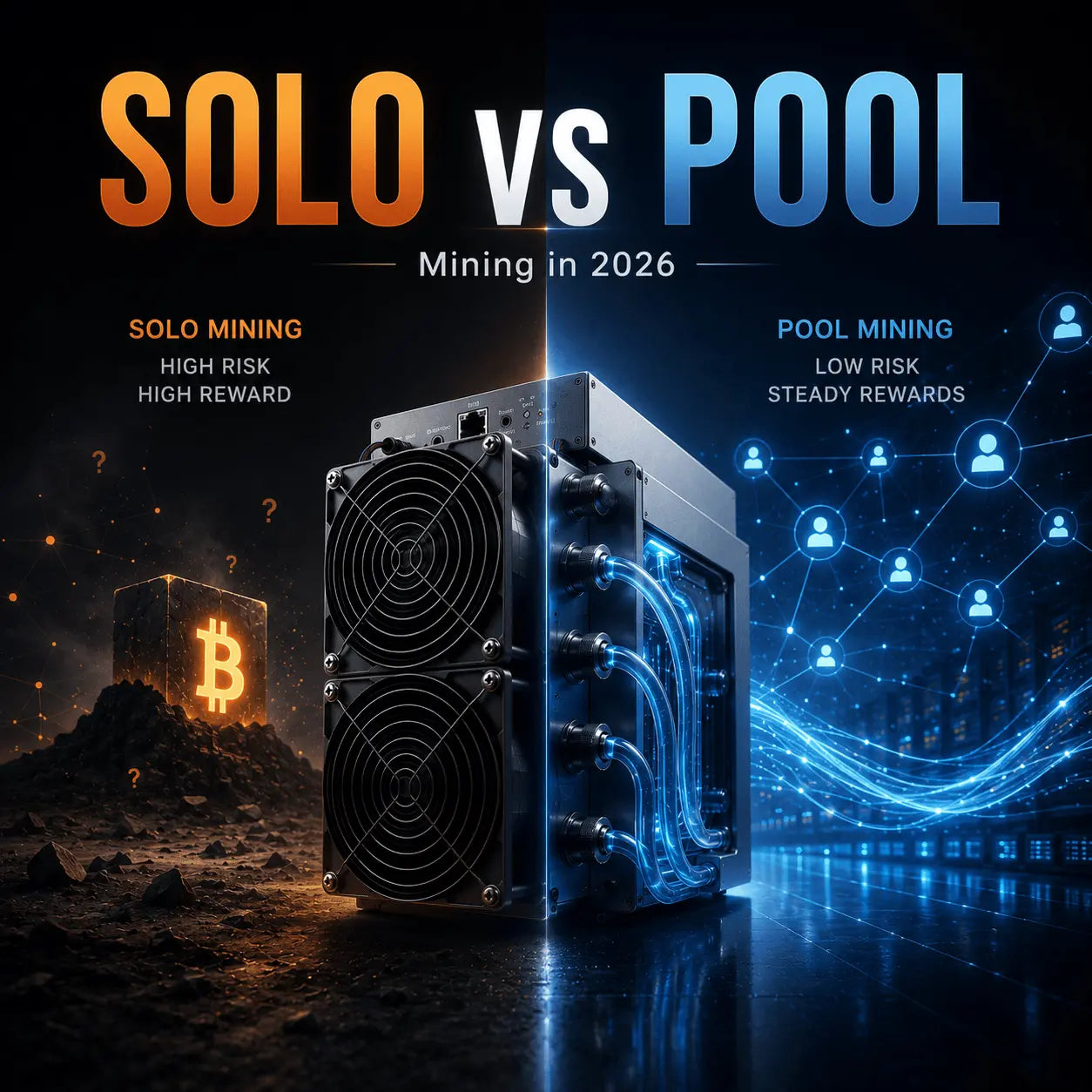
Solo-Mining vs. Mining-Pools
Welche Strategie macht im Jahr 2026 Sinn?
ASIC-Mining · Bitcoin-Blockbelohnungen · Pool-Auszahlungsmodelle · Varianzrisiko · Kompromisse bei der Dezentralisierung
Auf dieser Seite
1Schnelle Antwort
Für die meisten ASIC-Miner im Jahr 2026 ist Pool-Mining die richtige Primärstrategie. Die Blocksubvention von Bitcoin beträgt jetzt 3,125 BTC, die Netzwerkschwierigkeit bleibt äußerst wettbewerbsfähig und die Chance eines kleinen Miners, allein einen Block zu finden, ist so gering, dass sich Solo-Mining normalerweise eher wie ein Lottoschein als wie ein operatives Geschäft verhält. Pools wandeln diesen unvorhersehbaren Blockerkennungsprozess in regelmäßige Auszahlungen um, die die meisten Miner für Strom, Hosting, Reparaturen und Hardwarefinanzierung benötigen.
Solo-Mining spielt immer noch eine legitime Rolle, gehört aber zu einer engeren Gruppe von Fällen: sehr große Industriebetriebe, technisch begabte Miner, die maximale Protokollunabhängigkeit wollen, oder Hobby-Miner, die die Chancen verstehen und die Aktivität als ein Experiment betrachten, bei dem Souveränität an erster Stelle steht. Der Fehler liegt nicht im Solo-Mining selbst. Der Fehler besteht darin, zu erwarten, dass Solo-Mining mit nur einer Maschine, einem kleinen Rack oder sogar einer bescheidenen Farm stabile Einnahmen erzielt.
Nutzen Sie einen Pool für ein sicheres Einkommen. Ziehen Sie Solo-Mining nur dann in Betracht, wenn Sie lange Zeiträume ohne Einnahmen tolerieren können oder wenn die Solo-Allokation ein kleiner, bewusster Teil einer umfassenderen Strategie ist.
2Wie Solo-Mining und Pool-Mining funktionieren
Solo-Mining bedeutet, dass Ihre ASICs darauf hinarbeiten, einen vollständig gültigen Bitcoin-Block zu finden, ohne die Belohnung mit anderen Minern zu teilen. Normalerweise betreiben Sie Ihren eigenen Bitcoin-Knoten oder verbinden sich über eine Solo-Mining-Infrastruktur, richten Ihre Maschinen auf dieses Setup und warten. Wenn Ihr Miner einen Block findet, erhalten Sie die Blocksubvention plus Transaktionsgebühren. Wenn ein anderer Miner zuerst den nächsten Block findet, erhalten Sie für diese Runde nichts.
Pool-Mining verändert den Auszahlungsmechanismus. Tausende oder Millionen von ASICs reichen Arbeitsnachweise mit geringerem Schwierigkeitsgrad ein, sogenannte Shares. Diese Anteile erstellen selbst keine Bitcoin-Blöcke, sondern messen den Beitrag jedes einzelnen Miners. Wenn der Pool einen Block findet, verteilt der Pool Belohnungen gemäß seinen Auszahlungsregeln. Der Miner verzichtet auf eine Gebühr und eine gewisse Autonomie, erhält aber ein gleichmäßigeres Einkommen.
3Das Varianzproblem im Jahr 2026
Bergbau ist probabilistisch. Die erwartete Belohnung eines Miners basiert auf seinem Anteil an der gesamten Netzwerk-Hashrate, der tatsächliche Zeitpunkt der Belohnungen ist jedoch zufällig. Im heutigen Netzwerkmaßstab kann die Lücke zwischen „erwartetem Wert über einen sehr langen Zeitraum“ und „in diesem Monat erhaltenem Geld“ für kleine Bergleute enorm sein. Das ist der Hauptgrund für die Existenz von Pools.
Ein einzelner moderner ASIC mag im Vergleich zu älteren Heimgeräten leistungsstark sein, im Vergleich zum globalen Bitcoin-Netzwerk ist er jedoch winzig. Selbst bei einer kleinen kommerziellen Bereitstellung kann es zu einem erwarteten Solo-Block-Intervall kommen, das in Jahren oder Jahrzehnten gemessen wird. Der Bergmann könnte morgen Glück haben, aber ein Unternehmen kann diese Möglichkeit nicht sicher einkalkulieren. Stromversorger, Hosting-Sites und Kreditgeber warten nicht darauf, dass sich die Wahrscheinlichkeit ausgleicht.
Solo-Mining kann langfristig den gleichen erwarteten Wert vor Gebühren haben, das zeitliche Risiko ist jedoch sehr unterschiedlich. Pools reduzieren die Varianz; Sie erzeugen nicht auf magische Weise mehr Bitcoin pro Hash.
4Warum Mining-Pools für die meisten ASIC-Betreiber gewinnen
Das stärkste Argument für Pool-Mining ist der vorhersehbare Cashflow. Bergleute haben wiederkehrende Kosten: Strom, Hosting-Rechnungen, Wartung, Netzwerkservice, Personal, Firmware-Verwaltung und manchmal auch Schuldenzahlungen. Poolauszahlungen tragen dazu bei, die Einnahmen an diese Ausgaben anzupassen. Dies macht die Geschäftsplanung realistischer, insbesondere nach der Halbierung der komprimierten Blocksubventionseinnahmen.
Pools reduzieren auch die betriebliche Komplexität. Der Miner konfiguriert eine Stratum-URL, einen Worker-Namen und ein Passwort und überwacht dann Hashrate und Ablehnungsraten über ein Dashboard. Der Pool kümmert sich um die Aktienbuchhaltung, die Blockverteilung, die Auszahlungsberechnung und oft auch um die Glättung der Transaktionsgebühren. Dieser Komfort ist einer der Gründe, warum selbst erfahrene Betreiber weiterhin Pools nutzen.
| Faktor | Pool-Mining-Vorteil | Warum es wichtig ist |
|---|---|---|
| Cashflow | Tägliche oder häufige Auszahlungen | Hilft bei der Deckung der fixen Betriebskosten |
| Maßstab | Funktioniert von einem ASIC bis hin zu großen Farmen | Niedrige Hürde für die Teilnahme |
| Operationen | Einfache Miner-Konfiguration | Weniger zu wartende Knoten- und Auszahlungsinfrastruktur |
| Varianz | Die Belohnungen werden für alle Teilnehmer gleichmäßig verteilt | Reduziert die Wahrscheinlichkeit längerer Zeiträume ohne Einnahmen |
5Wenn Solo-Mining tatsächlich Sinn macht
Solo-Mining kann für sehr große Betreiber sinnvoll sein, die über genügend Hashrate verfügen, um regelmäßig Blöcke zu finden. In diesem Ausmaß kann es sinnvoll sein, Poolgebühren zu vermeiden, und die direkte Kontrolle über den Blockbau kann von Bedeutung sein. Große Miner verfügen möglicherweise auch über das erforderliche technische Personal, um Knoten zu betreiben, Blockvorlagen zu überwachen, Netzwerkkonnektivität zu verwalten und schnell auf Ausfälle zu reagieren.
Solo-Mining kann auch philosophisch sinnvoll sein. Einige Miner möchten die Abhängigkeit von großen Pools verringern, da eine konzentrierte Blockproduktion Bedenken hinsichtlich des Zensurdrucks, der Vorlagenkontrolle und der Netzwerkstabilität hervorrufen kann. Ein Miner, der Wert auf Dezentralisierung legt, kann sich für Solo-Mining oder einen kleineren Pool entscheiden, auch wenn die Dashboard-Auszahlung weniger bequem ist.
Schließlich kann Solo-Mining eine Hobbystrategie sein. Ein Home-Miner oder ein kleiner Betreiber kann sich bewusst für den Solo-Mining entscheiden, um die Chance auf eine seltene volle Blockauszahlung zu haben. Das gilt, solange das Budget den Strom als Hobbyausgabe und nicht als vorhersehbare Investitionsrendite behandelt.
6Pool-Auszahlungsmodelle: FPPS, PPS+ und PPLNS
Nicht jeder Mining-Pool zahlt gleich. FPPS, oder Full Pay Per Share, bezahlt Bergleute für gültige Aktien auf der Grundlage der erwarteten Blockbelohnungen und einer Schätzung der Einnahmen aus Transaktionsgebühren. Es ist beliebt, weil es gleichmäßigere Einnahmen bietet, aber der Pool erhebt normalerweise eine höhere Gebühr, weil es ein höheres Varianzrisiko absorbiert.
PPS+ trennt einen Teil der Auszahlungslogik und behandelt die Blocksubventions- und Transaktionsgebührenkomponente oft unterschiedlich. PPLNS (Pay Per Last N Shares) zahlt basierend auf einem rollierenden Fenster der eingebrachten Aktien, wenn ein Block gefunden wird. PPLNS kann niedrigere Gebühren haben, aber die Auszahlungen schwanken stärker, je nach Poolglück und Miner-Verfügbarkeit.
| Modell | Am besten für | Hauptkompromiss |
|---|---|---|
| FPPS | Kleine und mittlere Bergleute benötigen ein vorhersehbares Einkommen | Höhere Gebühren im Austausch für reibungslosere Auszahlungen |
| PPS+ | Bergleute vergleichen die Behandlung von Gebühren und Transaktionsgebühren | Die Bedingungen variieren je nach Pool. Lesen Sie daher die Auszahlungsrichtlinien sorgfältig durch |
| PPLNS | Größere, stabile Bergleute, die mit Varianz zufrieden sind | Niedrigere Gebühren können zu größeren Auszahlungsschwankungen führen |
| Solo-Pool | Solo-Miner im Lotterie-Stil | Keine regelmäßige Auszahlung, es sei denn, Ihr Mitarbeiter findet einen vollständigen Block |
7Die Hybridstrategie
Bei einer Hybridstrategie wird der Großteil der Hashrate an einen Pool weitergeleitet, während ein kleiner Teil dem Solo-Mining gewidmet wird. Beispielsweise könnte ein Betreiber 90 bis 95 % der Maschinen in einem zuverlässigen FPPS-Pool belassen und 5 bis 10 % an ein Solo-Setup senden. Die Poolzuteilung zahlt die Rechnungen. Die Einzelallokation schafft ein Aufwärtsrisiko, ohne den Cashflow des gesamten Betriebs zu gefährden.
Dieser Ansatz ist keine Zauberei. Die Solo-Automaten haben immer noch extrem niedrige Gewinnchancen, es sei denn, die Zuteilung ist groß. Aber es kann psychologisch und strategisch sauberer sein, als auf beiden Seiten All-In zu gehen. Es kann auch die Dezentralisierung unterstützen, wenn der Miner es vermeidet, jeden Hash an die größten Pools zu senden.
Für Bergleute, die sich für Solo-Mining interessieren, ist eine kleine Zuteilung in der Regel sinnvoller, als eine ganze Farm von den Pooleinnahmen wegzuziehen.
8Entscheidungscheckliste für ASIC-Miner
Die richtige Strategie hängt weniger von der Ideologie als vielmehr von Ihren betrieblichen Einschränkungen ab. Wenn Sie ein monatliches Einkommen benötigen, wählen Sie einen Pool. Wenn Ihre Stromkosten hoch sind, wählen Sie einen Pool und konzentrieren Sie sich auf die Effizienz, bevor Sie experimentieren. Wenn Ihr Betrieb groß genug ist, dass die Blockerkennung häufig vorkommt, verdient Solo-Mining ein seriöses Modell.
- Wählen Sie Pool-Mining wenn Sie einen ASIC, eine kleine Farm oder einen Betrieb mit festen monatlichen Rechnungen betreiben.
- Betrachten Sie FPPS wenn vorhersehbare Auszahlungen wichtiger sind als die Minimierung des letzten Bruchteils der Poolgebühren.
- Betrachten Sie PPLNS wenn Sie eine stabile Betriebszeit haben und Belohnungsschwankungen tolerieren können.
- Gehen Sie beim Solo-Mining vorsichtig vor wenn Sie die Unterschiede verstehen und sich lange Zeiträume ohne Einnahmen leisten können.
- Achten Sie auf die Poolkonzentration denn die Gesundheit von Bitcoin hängt von einer breiten, belastbaren Blockproduktion ab.
9FAQ: Solo-Mining vs. Mining-Pools
Ist Solo-Mining im Jahr 2026 profitabel?
Für sehr große Miner oder glückliche kleine Miner kann es profitabel sein, für die meisten ASIC-Betreiber ist es jedoch nicht vorhersehbar. Pool-Mining ist normalerweise die praktische Einkommensstrategie.
Zahlen Mining-Pools weniger als Solo-Mining?
Pools erheben Gebühren, sodass der erwartete Umsatz pro Hash vor Berücksichtigung der Varianz etwas niedriger sein kann. Der Vorteil sind reibungslosere und häufigere Auszahlungen.
Welches Auszahlungsmodell eignet sich am besten für kleine Miner?
FPPS ist oft das einfachste Modell für kleine Bergleute, da es die Auszahlungsabweichung verringert und die Cashflow-Planung einfacher macht.
Kann ich die Hashrate zwischen einem Pool und Solo-Mining aufteilen?
Ja. Viele Bergleute können verschiedene Arbeiter an unterschiedliche Ziele verweisen und so ein Hybrid-Setup mit Pool-Einnahmen und einer kleinen Solo-Zuteilung schaffen.
Schadet Pool-Mining der Dezentralisierung von Bitcoin?
Die Konzentration von Pools kann Bedenken hinsichtlich der Dezentralisierung aufwerfen, da eine kleine Anzahl von Pools die Blockproduktion beeinflussen kann. Bergleute können dieses Risiko reduzieren, indem sie Poolgröße, Richtlinien und Auszahlungsbedingungen vergleichen.
10Referenzen und Datenquellen
Die folgenden Quellen wurden aufgrund ihrer Protokollautorität, breiten Branchennutzung und direkten Relevanz für Mining-Daten ausgewählt. Links werden in einem neuen Tab geöffnet und sind mit „nofollow“ gekennzeichnet.
- Bitcoin-Entwicklerhandbuch: BlockchainTechnische Referenz für Bitcoin-Proof-of-Work, Blöcke, Bestätigungen und Kettenmechanik.
- Bitcoin.org: Wie Bitcoin funktioniertWeit verbreitete pädagogische Erklärung von Bitcoin-Transaktionen, Mining und Netzwerkvalidierung.
- Mempool.space Mining-Hashrate- und SchwierigkeitsdiagrammeÖffentliche Datenressource des Bitcoin-Netzwerks zur Überprüfung von Hashraten- und Schwierigkeitstrends.
- Cambridge Bitcoin-StromverbrauchsindexInstitutionelle Forschungsressource für den Energiekontext des Bitcoin-Minings und die Stromanalyse im Industriemaßstab.
- arXiv: RPPLNS und Mining-Pool-AuszahlungsdesignWissenschaftliche Referenz zur Erörterung von Pay-per-Last-N-Shares, Varianzreduzierung, Fairness und Miner-Anreizen in Proof-of-Work-Mining-Pools.
Endgültiges Urteil
Pool-Mining sollte für die meisten ASIC-Miner im Jahr 2026 die Standardstrategie sein, da es die Entdeckung seltener Blöcke in nutzbare Betriebseinnahmen umwandelt. Die Gebühr lohnt sich in der Regel, wenn jeden Monat Strom- und Hosting-Rechnungen eingehen.
Solo-Mining ist immer noch wichtig, aber hauptsächlich für große Betreiber, auf Dezentralisierung ausgerichtete Miner und Hobbyisten, die Abweichungen auf Lotterieniveau akzeptieren. Der seltene Solosieg ist aufregend; Die Poolauszahlung hält die meisten Maschinen am Laufen.


Hinterlassen Sie einen Kommentar
Diese Website ist durch hCaptcha geschützt und es gelten die allgemeinen Geschäftsbedingungen und Datenschutzbestimmungen von hCaptcha.