
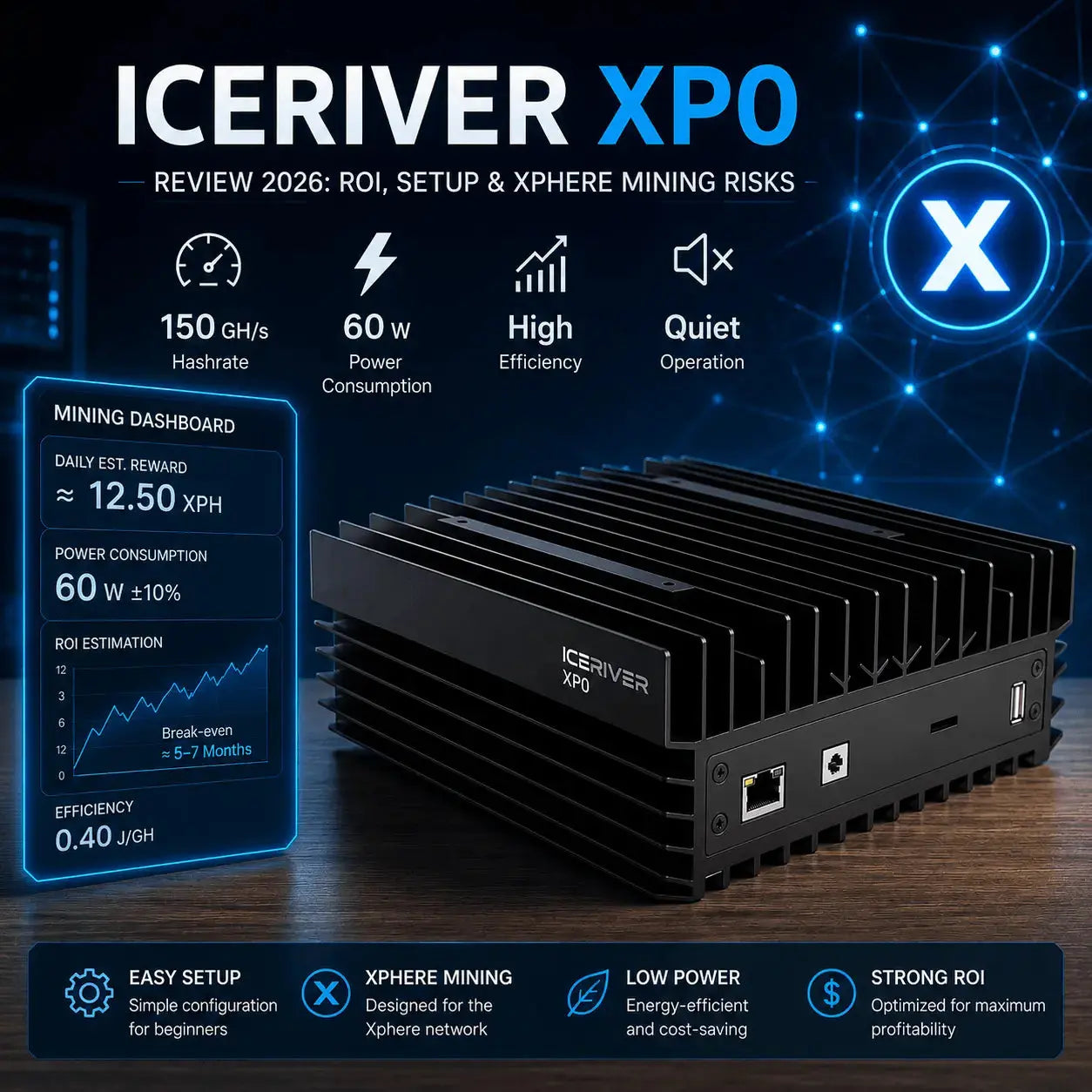
IceRiver XP0 レビュー 2026
収益性、セットアップ、ROI のリスク
150 GH/s · 60W · XPHash · Xphere Mining · ホーム ASIC 購入者ガイド
1簡単な結論: IceRiver XP0 は 2026 年に価値があるか?
の アイスリバー XP0 は、低消費電力、シンプルな操作、および直接の危険にさらされることを望むマイナー向けに構築されたコンパクトな XPHash ASIC です。 Xphere (XP) マイニング。リストされたハッシュレートでは、 150GH/秒 そして周囲に電力が引き込まれます 60W, XP0は、高騒音農機ではなく、エントリーレベルの家庭用マイナーとして位置付けられています。
ハードウェアのプロファイルは魅力的ですが、収益性は保証されていません。実際の結果は、XP 価格、ネットワークの難易度、プール料金、稼働時間、送料、ハードウェアの価格、地域の電気料金によって異なります。つまり、XP0 は規律あるホームマイナーにとっては意味のあるものですが、単純な総収益のスクリーンショットではなく純利益モデルで評価されるべきです。
IceRiver XP0 は、低電力の Xphere マイニング テスト マシンが必要で、マイニングのパフォーマンスを毎週監視でき、XP の価格やネットワークの難易度が変動すると ROI が変化することを理解している購入者に最適です。
2収益性を左右する IceRiver XP0 の仕様
電力やハッシュレートの仮定における小さな誤差が ROI を歪める可能性があるため、仕様は重要です。 XP0 の最大の利点は、生の出力ではありません。これは、低ワット数、コンパクトなサイズ、簡素化された ASIC 操作の組み合わせです。これにより自宅での運用が容易になりますが、購入者は支払い前に PSU の付属品、保証条件、発送時期、出品の正確な状態を確認する必要があります。
| パラメータ | 最適化されたバイヤーノート |
|---|---|
| モデル | IceRiver XP0 カスタム エディション |
| アルゴリズム | XPHash、Xphere マイニング用に設計 |
| 定格ハッシュレート | 150 GH/s、リストの許容誤差とプール側の変動の影響を受ける |
| 定格電力 | 60W、年中無休で稼働した場合、1 日あたり約 1.44 kWh に相当 |
| 効率 | ヘッドラインのハッシュレートとパワーに基づくと約 0.4 J/GH |
| ネットワーク | Wi-Fi ワークフローよりも安定したマイニングのためのイーサネット接続 |
| 電源入力 | 購入前に PSU パッケージの詳細を確認してください。バッチとリストは異なる場合があります |
| 操作時のフィット感 | 換気と安定した LAN アクセスを提供できるホームマイナーに最適 |
| 保証に関する信号 | 出荷から 180 日は通常、出品文言に示されます。販売者のポリシーを確認する |
PSU が含まれているかどうか、関税や税金が除外されているかどうか、お住まいの地域で保証サービスが適用されるかどうかを確認してください。これらの詳細により、実際の購入コストと ROI ウィンドウが変化する可能性があります。
3IceRiver XP0 の日、月、年あたりの電気料金
電力は、XP0 収益性モデルの中で計算するのが最も簡単な部分です。一定に 60W、XP0は使用します 0.06 kW x 24 時間 = 1.44 kWh/日。これにより、ホームマイナーは、XP 報酬、価格、プール料金を考慮する前に、予測可能な運用コストのベースラインを得ることができます。
| 電気料金 | 1 日あたりのコスト | 月額料金(30日) | 年間コスト |
|---|---|---|---|
| 0.07ドル/kWh | $0.10 | $3.02 | $36.79 |
| 0.10ドル/kWh | $0.14 | $4.32 | $52.56 |
| 0.15ドル/kWh | $0.22 | $6.48 | $78.84 |
| 0.20ドル/kWh | $0.29 | $8.64 | $105.12 |
この低電力プロファイルが、XP0 がホームマイナーを引き付ける主な理由です。ただし、電力コストが低いからといって、自動的に ROI が高いというわけではありません。マシンの実行コストが安くても、XP 報酬が低下したり、プールのパフォーマンスが弱かったり、エントリー価格が高すぎたりすると、期待はずれになります。
4IceRiver XP0 の収益性の計算方法
XP0 を評価する最も強力な方法は、総収益と純利益を分離することです。購入者は 1 日に採掘される推定コインのみに注目し、電力、手数料、拒否された株式、ダウンタイム、および価格のスリッページを無視するため、マイニングの決定の多くは間違っています。
XP0 純利益計算式
- 1 日あたりの総収益 = 1 日に採掘される XP x XP の市場価格
- 1日あたりの電気代 = 1.44 kWh x 地域の電気料金
- 営業控除 = プール料金 + 拒否された株式 + ダウンタイム + 支払いの摩擦
- 1日あたりの純利益 = 総収益 - 電力コスト - 営業控除
- 回収期間 = ハードウェアの総コスト / 1 日あたりの純利益
| シナリオ | 1 日あたりの総収益 | 1 日あたりの電力量は 0.10 ドル | 手数料 + 摩擦 | 推定正味/日 |
|---|---|---|---|---|
| 保守的 | $1.20 | $0.14 | $0.05 | $1.01 |
| 基本ケース | $2.20 | $0.14 | $0.07 | $1.99 |
| 楽観的 | $3.80 | $0.14 | $0.10 | $3.56 |
これらはシナリオ例であり、約束するものではありません。購入を決定する前に、収益の仮定をライブプール統計と現在の XP 市場データに置き換えてください。保守的な仮定を適用した後でも、適切な購入決定は合理的であるように見えるはずです。
5Xphere マイニング用に IceRiver XP0 をセットアップする方法
ほとんどの初心者にとって、プールマイニングはソロマイニングよりも支払いが予測しやすいため、現実的なルートです。設定フローは簡単ですが、正確さが重要です。ウォレットのキャラクターやプールの設定が 1 つ間違っていると、収益が失われる可能性があります。
XP0 コントロール パネルを公共のインターネットに公開しないでください。信頼できるローカル ネットワーク上に保管し、デフォルトの認証情報を変更し、ウォレット シード フレーズをプレーン テキストのクラウド メモに保存しないでください。
6新しいマイナーのための XP0 トラブルシューティング チェックリスト
XP0 ハッシュレートが低いように見える場合、報酬が遅れている場合、または拒否された株式が上昇している場合は、固定された順序でトラブルシューティングを行ってください。本当の原因を特定することが難しくなるため、一度に多くの設定を変更しないでください。
- ウォレット アドレスが完全であり、正しいネットワークに属していることを確認します。
- プール URL、ワーカー名、およびパスワードのフィールドに余分なスペースやタイプミスがないか確認してください。
- ランプアップ期間後のデバイスのハッシュレートとプール側の実効ハッシュレートを比較します。
- 古い共有または拒否された共有が多い場合は、待ち時間の短いプール エンドポイントに切り替えます。
- マイナーが不安定になった場合は、空気の流れと周囲温度を検査してください。
- 現在の設定を保存し、症状を記録した後でのみ再起動してください。
7IceRiver XP0 と自宅での GPU マイニングの比較
XP0 および GPU リグは、異なる戦略に対応します。 XP0 は XPHash 専用の ASIC ですが、GPU によりマイナーはアルゴリズムと非マイニング再販市場全体でより柔軟な対応が可能になります。どちらの選択肢がより良いかは、効率性を重視するか、柔軟なハードウェア ユーティリティを重視するかによって異なります。
| カテゴリ | IceRiver XP0 ASIC | 家庭用GPUリグ |
|---|---|---|
| マイニングの焦点 | 専用のXPHashマイニング | マルチアルゴリズムの柔軟性 |
| 電力プロファイル | 約 60W と低く予測可能 | より高く、より変化しやすい |
| セットアップスタイル | プール構成後の簡素化 | さらなるチューニング、ドライバー、メンテナンス |
| ハードウェアの柔軟性 | XPHashの需要に結びついたニッチな再販 | 幅広い再販と非採掘用途 |
| ベストバイヤー | 低電力エクスポージャーを求めるホームマイナー | 戦略の柔軟性を求めるユーザー |
8IceRiver XP0 購入前の主なリスク
最大のリスクはハードウェアのリスクだけではなく、市場のリスクです。 XP0 は記載されているとおりに正確に動作する可能性がありますが、購入後に Xphere の経済状況が変化した場合には ROI が低下する可能性があります。
- XPの価格変動性: トークンの価格は、回収スケジュールよりも早く変動する可能性があります。
- ネットワークの難易度の増加: マイナーが増えるとマシンごとの報酬が減る可能性があります。
- 流動性とスプレッド: 小規模な市場では撤退の摩擦が大きくなる可能性があります。
- 配信タイミング: 配信が遅れると、初期のマイニングの仮定の価値が低下する可能性があります。
- 再販圧縮: マイニングマージンが低下すると、ニッチな ASIC の再販価値が低下する可能性があります。
- 運用上の無視: 稼働時間の低下、プールの選択の誤り、または不良品の多さにより、純利益が静かに減少する可能性があります。
電気代、プール料金、ダウンタイム、送料、税金、現実的な難易度調整を考慮した上で、基本ケースの ROI がプラスのままである場合にのみ購入を検討してください。
9誰が XP0 を購入すべきで、誰がスキップすべきでしょうか?
XP0がぴったりです 安定した電力、信頼できるホーム ネットワーク、適度なリスク許容度、プールのパフォーマンスを定期的にレビューする意欲のあるマイナー向けです。これは、大規模な GPU や ASIC セットアップを構築せずに Xphere マイニングをテストしたい購入者にとっても役立ちます。
XP0は合わない 保証された月収を期待する購入者、パフォーマンスを監視できないユーザー、または幅広い再販の柔軟性を備えたハードウェアを必要とするユーザー向けです。あなたのモデルが楽観的なケースでのみ機能する場合、購入はおそらく強すぎるでしょう。
10FAQ: IceRiver XP0 の収益性、セットアップ、マイニングのリスク
IceRiver XP0 は 2026 年に利益をもたらしますか?
収益性は、XP 価格、ネットワークの難易度、電気代、プール料金、稼働時間によって決まります。 XP0 は 60 W で電力コストが低くなりますが、ROI には依然として現在の市場データとプール データが必要です。
IceRiver XP0 は 1 日にどのくらいの電力を使用しますか?
60 W の連続消費時、IceRiver XP0 は 1 日あたり約 1.44 kWh を消費します。
XP0 の電力コストは $0.10/kWh でいくらですか?
XP0 の電力コストは、0.10 ドル/kWh で、1 日あたり約 0.14 ドル、30 日の月あたり 4.32 ドル、または年間で 52.56 ドルとなります。
IceRiver XP0 には PSU が含まれていますか?
PSU の包含は、リスト、販売者、およびバッチによって異なる場合があります。ご注文前にパッケージ内容をご確認ください。
XP0 は GPU マイニングよりも優れていますか?
XP0 は、低消費電力の専用 XPHash マイニングに適している可能性があります。 GPU マイニングは、マルチアルゴリズムの柔軟性と幅広い再販オプションを求めるユーザーに適しています。
初心者でも IceRiver XP0 をセットアップできますか?
はい。初心者は通常、XP ウォレットを作成し、マイニング プールを選択し、イーサネットに接続し、プールの詳細を入力し、受け入れられたシェアを確認することで XP0 をセットアップできます。
XP0 セットアップ後は何を監視すればよいですか?
稼働時間、プールサイドのハッシュレート、受け入れられた株式、拒否された株式または期限切れの株式、温度、支払い頻度、および毎日の純結果を監視します。
IceRiver XP0 の最大のリスクは何ですか?
主なリスクは、XP 価格の変動性、ネットワークの難易度の上昇、プールのパフォーマンス、流動性、納品のタイミング、再販価値の圧縮です。
最終評決
IceRiver XP0 は、低消費電力、コンパクトな操作、Xphere の集中的なマイニング方法を求めるユーザー向けの実用的なホームマイニング ASIC です。 60W プロファイルにより、特に大型の ASIC や GPU リグと比較して、電気コストの管理が容易になります。
購入の決定は依然として保守的でなければなりません。 XP0 は、電力コスト、料金、ダウンタイム、配送、リスクの想定を考慮した上で基本ケース モデルが機能する場合に最も強力になります。固定収入の手段ではなく、変動収益を伴うニッチなマイニング投資として扱ってください。


コメントを残す
このサイトはhCaptchaによって保護されており、hCaptchaプライバシーポリシーおよび利用規約が適用されます。