
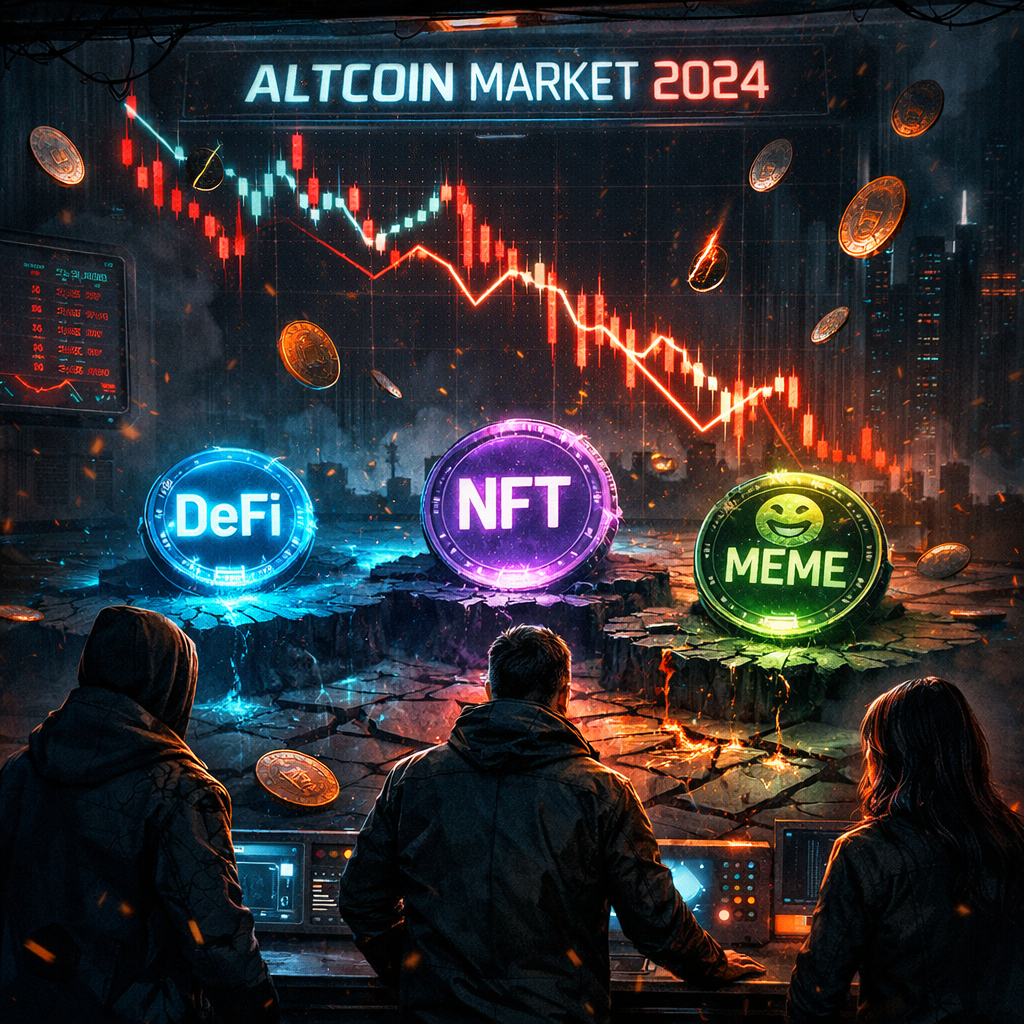
In the vast and ever-evolving world of cryptocurrency, the altcoin market remains one of the most captivating yet volatile segments. As an essential part of the crypto ecosystem, altcoins are known for their extreme price fluctuations—offering both immense opportunities and significant risks. Compared to major cryptocurrencies like Bitcoin and Ethereum, altcoins tend to experience even more dramatic swings, and behind this volatility lies a crucial factor: liquidity.
Liquidity directly impacts market activity, price stability, and investor confidence. In this article, we analyze the altcoin market from both macroeconomic and internal market perspectives to answer the question: “Why is there no altcoin season?”
The Altcoin Boom of 2020-2021
Macro Liquidity: The Driving Force
At the start of 2020, the outbreak of COVID-19 caused massive disruptions to the global economy. In response, governments and central banks implemented aggressive stimulus measures, including large-scale monetary easing and fiscal programs. These policies significantly increased global liquidity, providing ample financial support for the cryptocurrency market.
In the U.S., the Federal Reserve slashed the federal funds rate to near-zero in March 2020 and launched extensive quantitative easing programs, injecting trillions of dollars into the financial system. Similarly, the European Central Bank, Bank of Japan, and other major central banks adopted comparable measures, creating a global environment of abundant liquidity.
This loose monetary environment encouraged investors to seek high-risk, high-reward opportunities, with the cryptocurrency market—especially volatile altcoins—becoming a prime destination. Supply chain disruptions and rising inflation during the pandemic further reduced expected returns from traditional assets like stocks and bonds, increasing demand for alternative assets.
By the second half of 2020, economic recovery signs and growing market confidence further strengthened investors’ risk appetite, benefiting the altcoin market significantly. Low interest rates not only incentivized investment but also shaped market sentiment: holding cash yielded almost zero return, pushing funds toward high-growth potential assets, including cryptocurrencies.
Innovation-Driven Narratives
Unlike the 2017 bull run, the 2021 crypto market narrative was far more diversified. From DeFi to NFTs and the Metaverse, these new narratives attracted investors and developers alike, driving altcoin market growth.
-
DeFi Summer (2020): DeFi projects such as Uniswap, Compound, and Aave introduced decentralized lending, trading, and insurance services, rapidly accumulating massive TVL (Total Value Locked). Governance tokens like UNI saw rapid price surges, drawing investor attention and establishing a new wave of market activity.
-
NFT Boom (2021): Non-fungible tokens (NFTs) transformed digital ownership in art, music, and gaming. Projects like CryptoPunks and NBA Top Shot not only attracted celebrities but also mainstream investors, further boosting altcoin market capitalization.
Together with macro liquidity, these internal innovations created a fertile environment for the altcoin bull market. Institutional participation added maturity and stability, resulting in a unique wealth-creating phenomenon.
Why the Recent Altcoin Market Has Underperformed
Fast forward to today, and the situation has changed dramatically. The altcoin market has shown muted performance compared to 2021, and several factors explain why a new “altcoin season” has yet to emerge.
1. Tightening Global Liquidity
In 2021, global central banks flooded markets with liquidity, enabling altcoin prices to soar. By 2024, however, liquidity conditions have tightened. Persistent inflation pressures have forced central banks to be more cautious in monetary policy, and fiscal stimulus options remain limited due to high global debt levels. Slower economic growth, geopolitical risks, and heightened uncertainty have reduced risk appetite, with capital favoring safer assets over high-risk altcoins.
2. Liquidity Transmission and Risk Hierarchy
Liquidity flows in markets often follow a clear hierarchy: from low-risk assets (e.g., government bonds, gold) to medium-risk assets (e.g., equities) and finally to high-risk assets like altcoins. Only when liquidity is abundant and investors’ risk tolerance peaks does significant capital enter the altcoin market. In periods of tight liquidity or rising risk aversion, altcoins are usually the first to experience capital outflows and sharp price declines.
Historical data confirm this pattern: the 2021 altcoin bull run coincided with excessive global liquidity, while the liquidity tightening in 2022 led to sharp market corrections, highlighting altcoins’ vulnerability.
3. Market Focus on Short-Term Fads
Recently, meme tokens (MEME) have been the brightest spot in the altcoin market, experiencing massive short-term gains fueled by community-driven hype and viral marketing. However, most MEME tokens lack intrinsic value, and many have already lost 90% of their peak value. Non-MEME sectors, including DeFi, Layer 1/2 projects, and NFTs, have struggled to attract significant capital due to limited new narratives and growth drivers. As a result, the overall altcoin market remains subdued.
Conclusion: Altcoins Depend on Macro and Micro Drivers
The altcoin market is highly sensitive to global liquidity conditions and investor risk appetite. The 2020-2021 bull run was powered by abundant liquidity, low interest rates, and innovative market narratives. In contrast, current liquidity constraints, cautious monetary policy, and risk-averse investor behavior limit capital inflows, resulting in muted altcoin performance.
While short-term surges in MEME tokens inject temporary excitement, their speculative nature prevents systemic market growth. Altcoins, as the riskiest tier in the investment hierarchy, require extremely favorable liquidity conditions to thrive.
Looking ahead, the altcoin market’s recovery and long-term growth depend on:
-
Improvement in global liquidity conditions
-
Clear and favorable regulatory frameworks
-
Continued innovation and value creation within the ecosystem
Investors should remain mindful of the high risks inherent to altcoins, balancing macroeconomic awareness with project-level analysis to navigate this volatile market effectively.








Lascia un commento
Questo sito è protetto da hCaptcha e applica le Norme sulla privacy e i Termini di servizio di hCaptcha.