
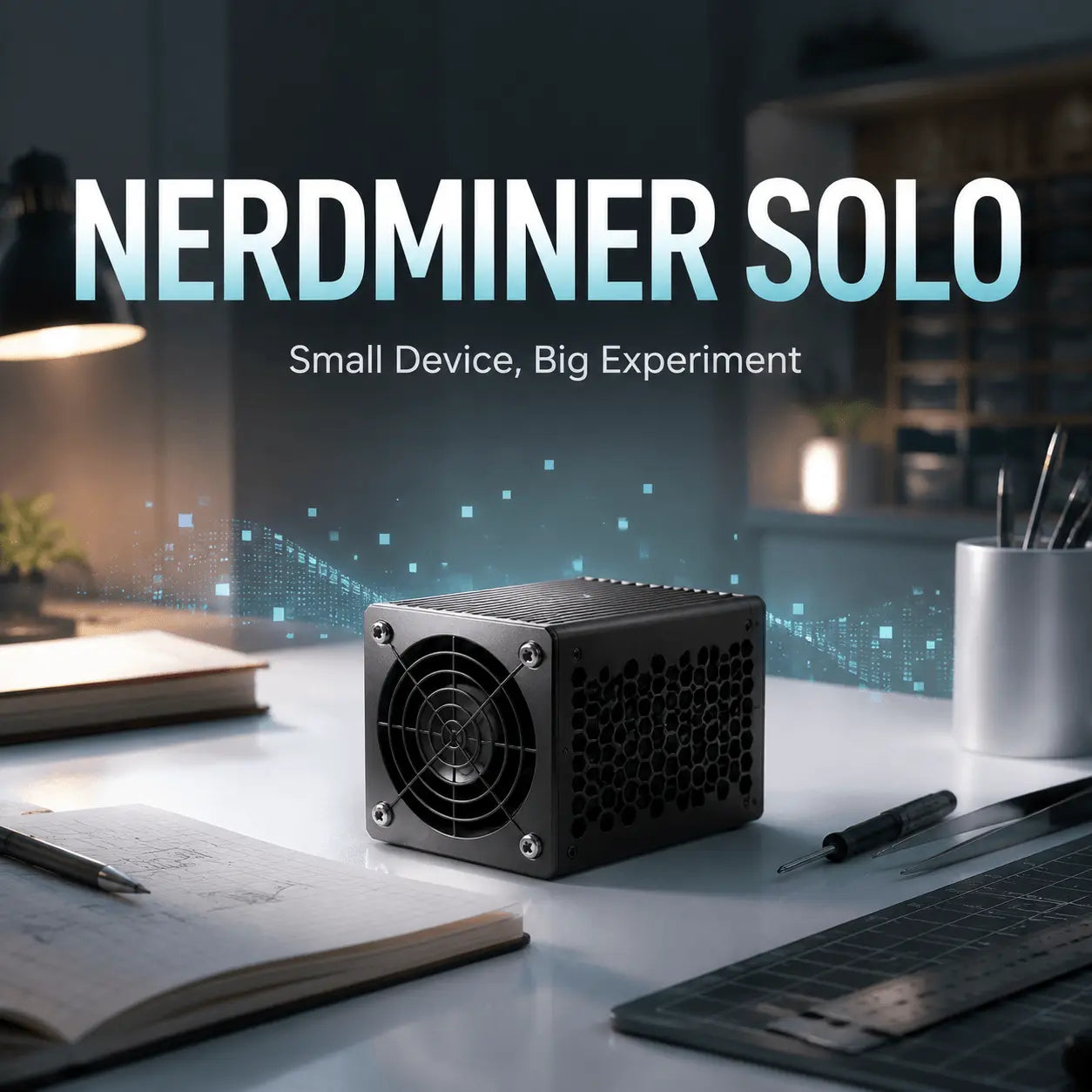
I migliori minatori singoli di NerdMiner
Specifiche e realtà della redditività
Mining della lotteria · Dispositivi SHA-256 a basso consumo · Minatori di classe Bitaxe · Costi di gestione · Quote per blocco singolo
In questa pagina
1Cosa significa in realtà NerdMiner Solo Mining
I dispositivi in stile NerdMiner sono minuscoli minatori SHA-256 utilizzati principalmente per l'estrazione di Bitcoin in solitaria, l'istruzione e la sperimentazione hobbistica. Non sono costruiti per competere con le aziende agricole ASIC industriali con entrate costanti. Il loro fascino è diverso: basso consumo energetico, funzionamento silenzioso, semplice configurazione Wi-Fi, cultura open source e possibilità, per quanto remota, di trovare un blocco Bitcoin completo.
La parola importante è solista. In un normale mining pool, i premi vengono distribuiti tra i partecipanti in base all'hashrate contribuito, creando pagamenti piccoli e prevedibili. Nel mining in solitario, un minatore non riceve nulla a meno che non trovi personalmente un blocco valido. Se lo fa, la ricompensa può essere enorme: l’attuale sussidio Bitcoin è di 3.125 BTC per blocco, più le commissioni di transazione. La possibilità che ciò accada con un piccolo minatore domestico è estremamente bassa.
I dispositivi di classe NerdMiner dovrebbero essere trattati come hardware di mining in stile lotteria, non come macchine da reddito affidabili. Acquistali per imparare, armeggiare e ottenere vantaggi a lungo termine.
2Confronto tra i migliori minatori singoli di classe NerdMiner
I dispositivi di seguito rappresentano diversi livelli della categoria di mining solista di consumo: miner didattici basati su display, dispositivi open source in stile Bitaxe e build per appassionati con hashrate più elevato. Le specifiche possono variare in base alla revisione della scheda, al firmware, al contenitore del chip, alla configurazione di raffreddamento e al pacchetto del venditore, quindi conferma i dati esatti prima dell'acquisto.
| Classe modello | Classe Hashrate | Classe di potenza | Ideale per | Inquadramento del profitto |
|---|---|---|---|---|
| NerdMiner TV/unità display | kH/s fino a bassi MH/s | ~5 W | Cruscotti visivi e di apprendimento | Educativo, non basato sul ROI |
| Classe Bitaxe Gamma | ~1 TH/s classe | Classe ~15 W | Efficiente mining solista open source | Biglietto della lotteria a basso costo |
| Classe idroelettrica NerdQaxe++ | ~6 TH/s classe | Classe ~100 W | Hobby minerario equilibrato | Migliori probabilità con una potenza modesta |
| Classe NerdOctaxe Hydro | Classe 10+ TH/s | Classe 200+ W | Probabilità massima di un minatore domestico | Quote più alte, ancora come una lotteria |
La diffusione dell’hashrate è enorme. Un dispositivo di classe TH/s ha probabilità di gran lunga migliori rispetto a un display miner misurato in kH/s o MH/s. Eppure tutti questi dispositivi rimangono piccoli rispetto alla rete Bitcoin, che viene misurata in exahash al secondo. Questa differenza di scala rappresenta l’intera storia economica.
3Ripartizione del modello individuale
NerdMiner TV / display minatore: questa categoria è la migliore per le persone che vogliono comprendere visivamente il mining di Bitcoin. Il dispositivo può mostrare hashrate, dati di rete e stato di mining in solitario utilizzando una potenza trascurabile. È una scelta sbagliata per chiunque si aspetti una probabilità di blocco significativa.
Classe Bitaxe Gamma: I dispositivi Bitaxe sono minatori Bitcoin open source a chip singolo con una forte comunità attorno a firmware, revisioni hardware e mining educativo. Un'unità di classe Gamma offre un livello di hashrate molto più elevato rispetto ai piccoli display miner, pur mantenendo un consumo sufficientemente basso per un uso domestico continuo.
Classe Hydro NerdQaxe++: questa categoria si rivolge agli utenti che desiderano un significativo incremento nella probabilità di blocco senza passare al rumore e alla potenza degli ASIC industriali. Il raffreddamento idroassistito o potenziato può aiutare a stabilizzare i tempi di funzionamento lunghi, ma gli acquirenti devono verificare i dettagli della pompa, della ventola, del liquido di raffreddamento e del rischio di perdite prima dell'acquisto.
Classe NerdOctaxe Hydro: gli appassionati di multi-chip inseguono la più alta probabilità nella nicchia del solo mining di consumo. Potrebbero essere ancora silenziosi rispetto ai minatori industriali, ma consumano abbastanza energia da far sì che l’elettricità, il riscaldamento e il posizionamento meritino una vera pianificazione.
4Realtà della redditività: valore atteso vs Block Win
La redditività del mining tradizionale chiede se le entrate giornaliere superano i costi giornalieri. Il mining solista di NerdMiner non si comporta in questo modo. La maggior parte dei giorni, le entrate sono pari a zero. L'intero vantaggio deriva dal raro evento di trovare un blocco Bitcoin valido. Ciò crea una discrepanza tra il fascino emotivo e la realtà statistica.
La probabilità di vincita corrisponde approssimativamente al tuo hashrate diviso per l'hashrate totale della rete Bitcoin, ripetuto nel tempo. Poiché la rete è enorme, anche un minatore domestico da 10 TH/s possiede solo una frazione microscopica dell’hashrate globale. Correre più a lungo migliora le possibilità cumulative, ma non garantisce un risultato.
Non chiedere: "Quanto guadagnerà al giorno?" Chiedi: "Quanto sono disposto a spendere ogni giorno per una piccola possibilità di ottenere una ricompensa per un blocco intero?"
Questo è il motivo per cui chiamare qualsiasi NerdMiner un "minatore redditizio" può essere fuorviante. Un minatore può essere un hardware eccellente e avere comunque un pagamento giornaliero previsto vicino allo zero in termini pratici. L'acquirente giusto comprende che il valore dell'intrattenimento, dell'istruzione e del decentramento può far parte del rendimento.
5Costo di gestione giornaliero a casa
Il costo dell’elettricità è l’unica parte di questa categoria che rimane amichevole. Questi dispositivi consumano molta meno energia rispetto agli ASIC industriali, quindi il funzionamento continuo è realistico per molte famiglie. La formula è semplice: watt divisi per 1.000, moltiplicati per 24 ore, moltiplicati per la tariffa elettrica.
| Assorbimento di potenza | kWh giornalieri | Costo a $ 0,12 / kWh | Nota di pianificazione |
|---|---|---|---|
| 5 W | 0,12 kWh | Circa $ 0,01 al giorno | Effettivamente trascurabile per la maggior parte degli utenti |
| 15 W | 0,36kWh | Circa $ 0,04 al giorno | Abbastanza basso per un uso hobbistico non presidiato |
| 100 W | 2,4 kWh | Circa $ 0,29 al giorno | Notevole ma pur sempre modesto |
| 230 W | 5,52 kWh | Circa $ 0,66 al giorno | Pianificare il calore e il posizionamento |
La bassa potenza non crea di per sé un profitto atteso elevato. Rende semplicemente economico il biglietto della lotteria per continuare a correre. Se il costo dell’hardware è elevato, il rimborso dipende ancora quasi interamente da una rara vincita del blocco.
6Quale Solo Miner si adatta a quale utente?
Per la maggior parte degli utenti, il dispositivo migliore è quello che utilizzeranno comodamente per anni. Un’unità con un hashrate leggermente più alto che diventa fastidiosa, rumorosa, calda o inaffidabile potrebbe essere peggiore di un miner più piccolo che rimane online senza attriti.
7Lista di controllo per la configurazione del Solo Mining
La configurazione del mining in solitario è generalmente semplice, ma piccoli errori possono sprecare tutto il tempo di esecuzione. Prima di iniziare, conferma il firmware del dispositivo, la stabilità Wi-Fi, l'indirizzo del portafoglio, l'endpoint del pool solo, i requisiti di tensione, il raffreddamento e la sincronizzazione dell'ora. Registrare la configurazione originale prima di modificare il firmware.
- Utilizza un indirizzo Bitcoin dedicato: mantieni i premi per l'estrazione in solitario facili da identificare se un blocco viene mai trovato.
- Verifica l'endpoint del pool: utilizza un pool solista affidabile o la tua configurazione supportata dal nodo.
- Guarda l'hashrate locale e a bordo piscina: un minatore è utile solo se il lavoro inviato viene accettato.
- Proteggi credenziali: modificare le password predefinite ed evitare di esporre pubblicamente le dashboard.
- Pianificare alimentazione e raffreddamento: i piccoli dispositivi necessitano ancora di flusso d'aria per la stabilità a lungo termine.
Le prime 24 ore dovrebbero essere trattate come un test di stabilità. Controlla le condivisioni rifiutate, la temperatura, i riavvii, le interruzioni del Wi-Fi e i report a bordo piscina prima di presumere che il dispositivo funzioni correttamente.
8Rischi e avvertenze per l'acquirente
Il rischio più grande è fraintendere la categoria del prodotto. Un dispositivo di classe NerdMiner non sostituisce un ASIC industriale e non dovrebbe essere commercializzato all'acquirente come reddito passivo affidabile. È un piccolo minatore solitario con una probabilità minima e un rialzo asimmetrico.
Altri rischi includono il pagamento eccessivo di hardware in edizione limitata, la fiducia in dichiarazioni di hashrate gonfiate, l'utilizzo di firmware non verificato, l'inserimento di un indirizzo di pagamento errato e il presupposto che la difficoltà della rete rimarrà stabile. La difficoltà del Bitcoin e l'hashrate della rete cambiano continuamente e ogni aumento riduce una piccola quota del minatore della probabilità totale.
Se il costo dell'hardware, il calore o la frustrazione ti disturbano senza vincere un blocco, scegli un minatore più piccolo. Il mining da solo dovrebbe essere conveniente anche se non ripaga mai.
9Domande frequenti sull'estrazione mineraria in solitario di NerdMiner
Un NerdMiner può generare entrate giornaliere in Bitcoin?
Di solito no. Il mining in solitario in stile NerdMiner non produce pagamenti regolari a meno che il dispositivo non trovi un blocco Bitcoin completo.
Cosa succede se un minatore solitario trova un blocco?
Il minatore può ricevere l'intero sussidio per il blocco più le commissioni di transazione, a seconda della configurazione del pool singolo o del nodo e della configurazione del pagamento.
Un hashrate più alto è sempre meglio?
Un hashrate più elevato migliora la probabilità di blocco, ma il prezzo dell’hardware, il calore, l’affidabilità e il costo energetico continuano a contare.
I dispositivi Bitaxe e NerdMiner sono uguali?
Appartengono alla stessa cultura di mining solista a basso consumo, ma Bitaxe è un progetto minatore ASIC open source mentre NerdMiner si riferisce spesso a minatori solitari educativi in stile ESP32.
Chi dovrebbe comprare un mini minatore solista?
Un acquirente che vuole imparare il mining di Bitcoin, utilizzare hardware a basso consumo, supportare la decentralizzazione e accettare che il pagamento potrebbe non avvenire mai.
10Riferimenti e fonti di dati
Queste fonti sono state selezionate per la documentazione ufficiale del progetto, i riferimenti ai minatori open source, il contesto del protocollo Bitcoin e l'infrastruttura di mining solista. Si aprono in una nuova scheda e sono contrassegnati come nofollow.
- Repository GitHub di NerdMiner v2Riferimento al progetto open source per il firmware di mining solista NerdMiner basato su ESP32 e il contesto di installazione.
- Repository GitHub BitaxeProgetto di mining ASIC Bitcoin open source che copre hardware Bitaxe, ecosistema firmware e sviluppo della comunità.
- Repository firmware ESP-MinerRiferimento al firmware utilizzato nei minatori open source in stile Bitaxe.
- Guida per gli sviluppatori Bitcoin: catena di blocchiRiferimento a livello di protocollo per blocchi, prova di lavoro, conferme e selezione della catena.
- Mining in piscina pubblicaInterfaccia di pool di mining solista ampiamente utilizzata per minatori solitari Bitcoin a basso consumo e monitoraggio dell'hashrate.
Verdetto finale
I minatori solisti di classe NerdMiner e Bitaxe sono meglio intesi come dispositivi di mining Bitcoin educativi, open source e in stile lotteria. Sono economici da gestire, divertenti da monitorare e tecnicamente significativi per apprendere come funziona la prova di lavoro.
Non sono hardware di reddito affidabili. La scelta migliore è il dispositivo che puoi permetterti di utilizzare indefinitamente senza bisogno di un pagamento: un piccolo NerdMiner per l'apprendimento, un'unità di classe Bitaxe per l'efficienza open source o una build multi-chip più grande per la massima probabilità hobbista.



Lascia un commento
Questo sito è protetto da hCaptcha e applica le Norme sulla privacy e i Termini di servizio di hCaptcha.