Aleo Mainnet Upgrades in 2026:
Mining and Ecosystem Impact
mainnet history · snarkOS 4 · prover staking · protocol economics · private applications
On This Page
1What Is the Aleo Mainnet Upgrade Story in 2026?
Aleo's 2026 upgrade story is not one scheduled event or one speculative token catalyst. It is the cumulative effect of a production mainnet launched in September 2024, economic changes approved through the Aleo Request for Comments process, the major snarkOS 4.0 release in July 2025, prover staking under ARC-46, and a 2026 application push centered on programmable private payments.
The original version of this article focused on a supposed March upgrade and asked whether new mining-chip vendors could raise the ALEO price. That framing is now too narrow. Network software, prover economics, specialized hardware, application demand, exchange liquidity, and token supply interact, but none provides a direct price guarantee. A useful update must separate what has shipped from what is proposed and what remains a market expectation.
For miners and infrastructure operators, the material questions are software compatibility, prover staking, reward distribution, network difficulty, hardware efficiency, and uptime. For investors and builders, the larger question is whether upgrades produce sustained private-application usage rather than a short-lived announcement cycle.
2Aleo Mainnet Upgrade Timeline
| Date | Confirmed Milestone | Why It Matters |
|---|---|---|
| September 18, 2024 | Aleo mainnet officially launched with programmable privacy, AleoBFT, and Proof-of-Succinct-Work incentives. | Established the production network that later upgrades build upon. |
| December 9, 2024 | ARC-42 economic changes took effect, including a lower staking emission rate and reduced finalize fees. | Changed validator economics and the cost profile of application execution. |
| July 23, 2025 | snarkOS 4.0 delivered the largest post-mainnet software upgrade, including record-model changes, ARC-46, and faster confirmations. | Affected wallets, applications, nodes, and prover participation rules. |
| 2026 | Aleo expanded hardware-wallet support and private stablecoin and payment initiatives. | Shifted the growth test from protocol readiness toward real application usage. |
This timeline is deliberately conservative. Aleo governance proposals can move from discussion to voting, acceptance, implementation, and final status. A proposal number alone does not prove that code is active on mainnet. Operators should verify the ARC repository, governance result, software release notes, and activation instructions before changing hardware or financial plans.
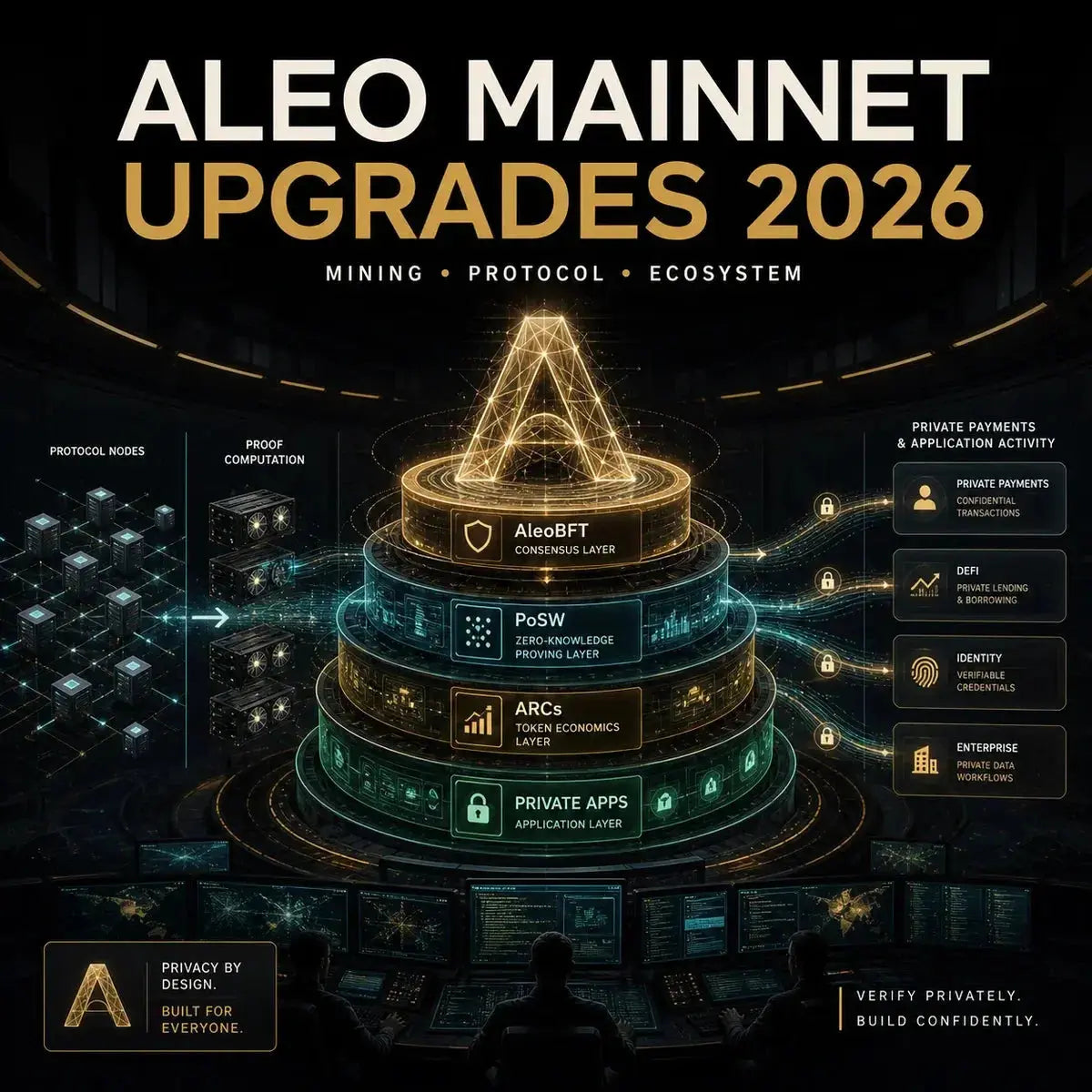
3The Four Layers of an Aleo Upgrade
These layers should not be blended into one headline. A faster confirmation path may improve user experience without changing the prover puzzle. A new ASIC may raise network competition without changing consensus. A stablecoin integration may increase transactions without immediately improving miner revenue. Accurate analysis follows each transmission channel separately.
4What the Upgrades Mean for Aleo Miners and Provers
Aleo provers solve synthesis puzzles and broadcast solutions. They do not produce blocks or participate directly in consensus; validators perform those functions through AleoBFT. Prover rewards are proportional to contributed proof target rather than a winner-takes-all payout. That distinction is central when comparing Aleo mining with Bitcoin-style block mining.
ARC-46 added a capital requirement to the operating model. Official documentation says provers must stake ALEO credits to submit solutions, with the required amount increasing on a schedule from 100,000 ALEO at activation toward 2.5 million by month 24. For a solo operator, the key issue is not only hashrate or energy consumption. It is whether the chosen pool or proving arrangement supports the current staking and submission rules, how rewards are distributed, and who bears locked-capital and slashing-related operational risk.
- Software compatibility: pools, nodes, monitoring tools, and firmware must support the active snarkOS protocol.
- Effective output: accepted work and payout history matter more than dashboard hashrate alone.
- Capital efficiency: electricity, hardware cost, stake requirements, pool fees, and downtime belong in the same model.
- Upgrade discipline: changing firmware or pool endpoints without a rollback plan can erase the advantage of a nominal performance gain.
For a broader setup and profitability framework, use our Aleo mining guide for beginners and operators. It is a better place for current hardware and pool comparisons than a protocol-upgrade article.
5Will Chipmakers and Aleo ASICs Change the Network?
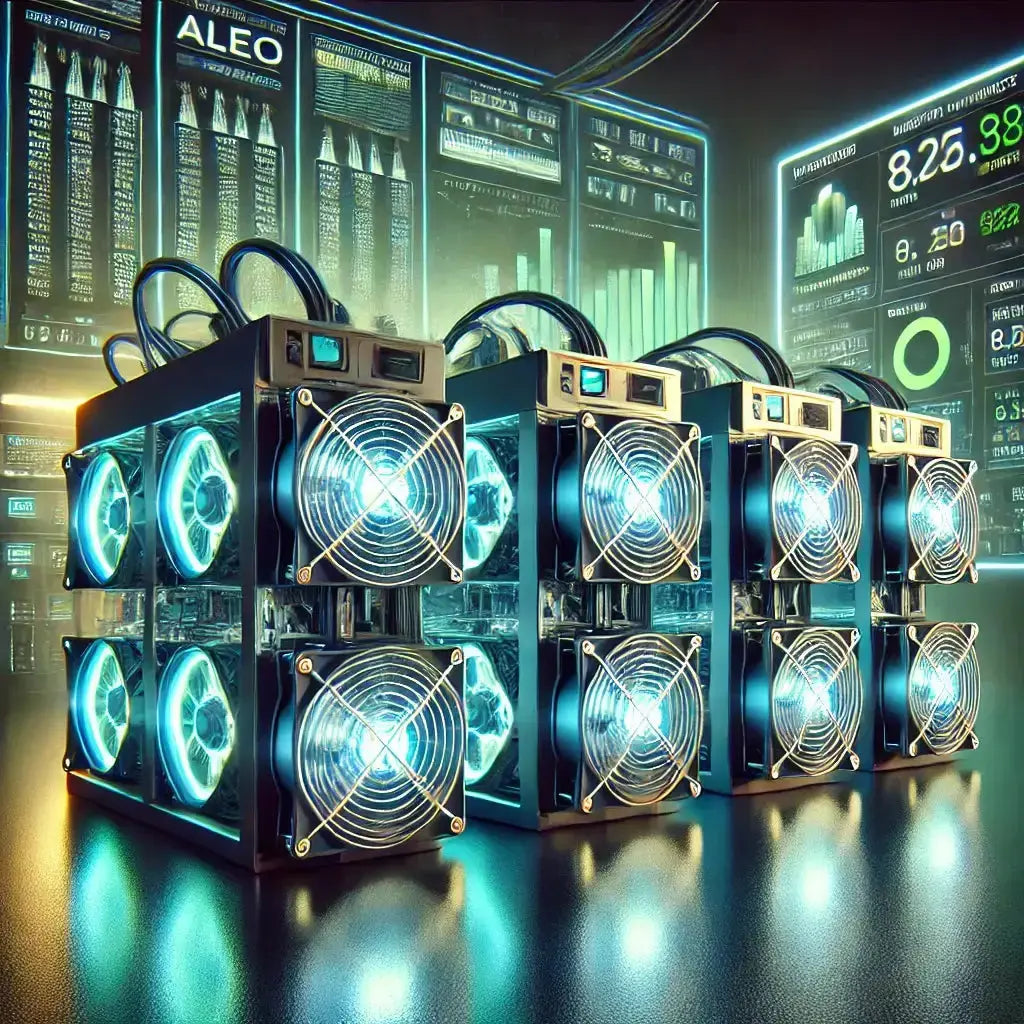
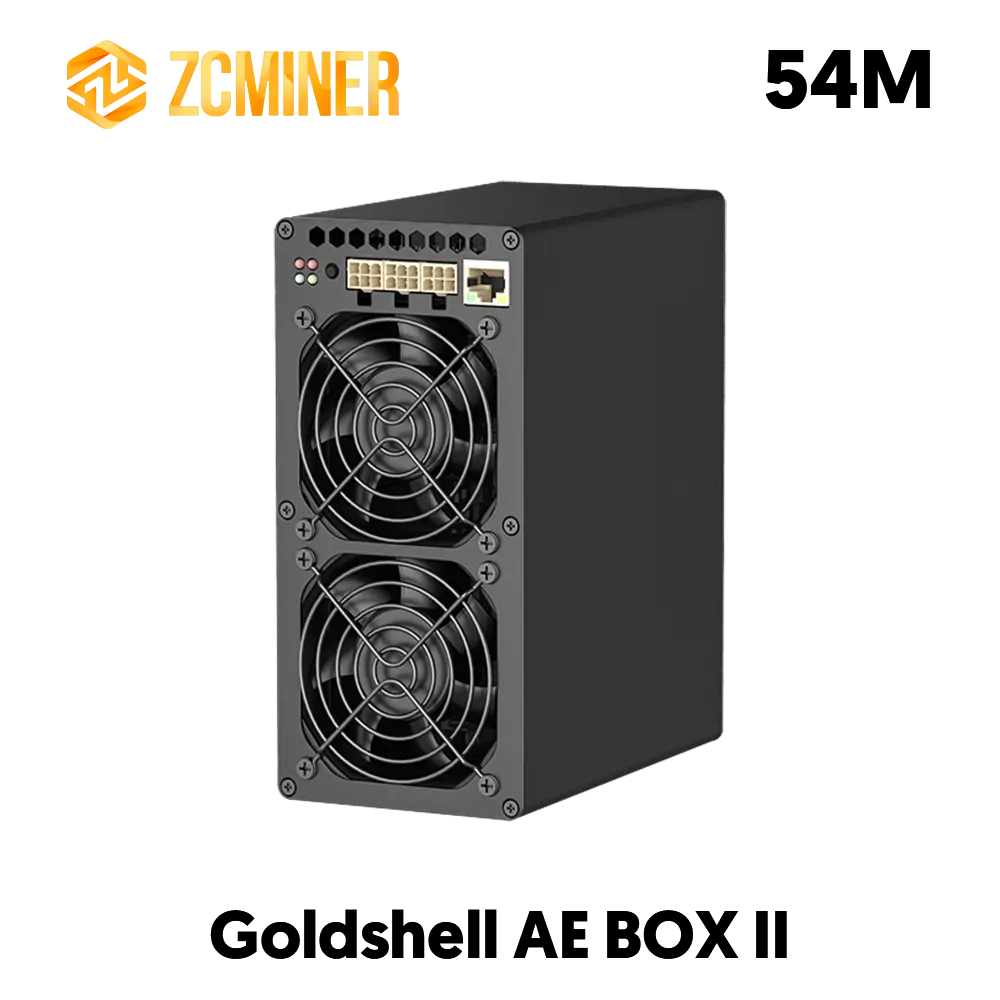
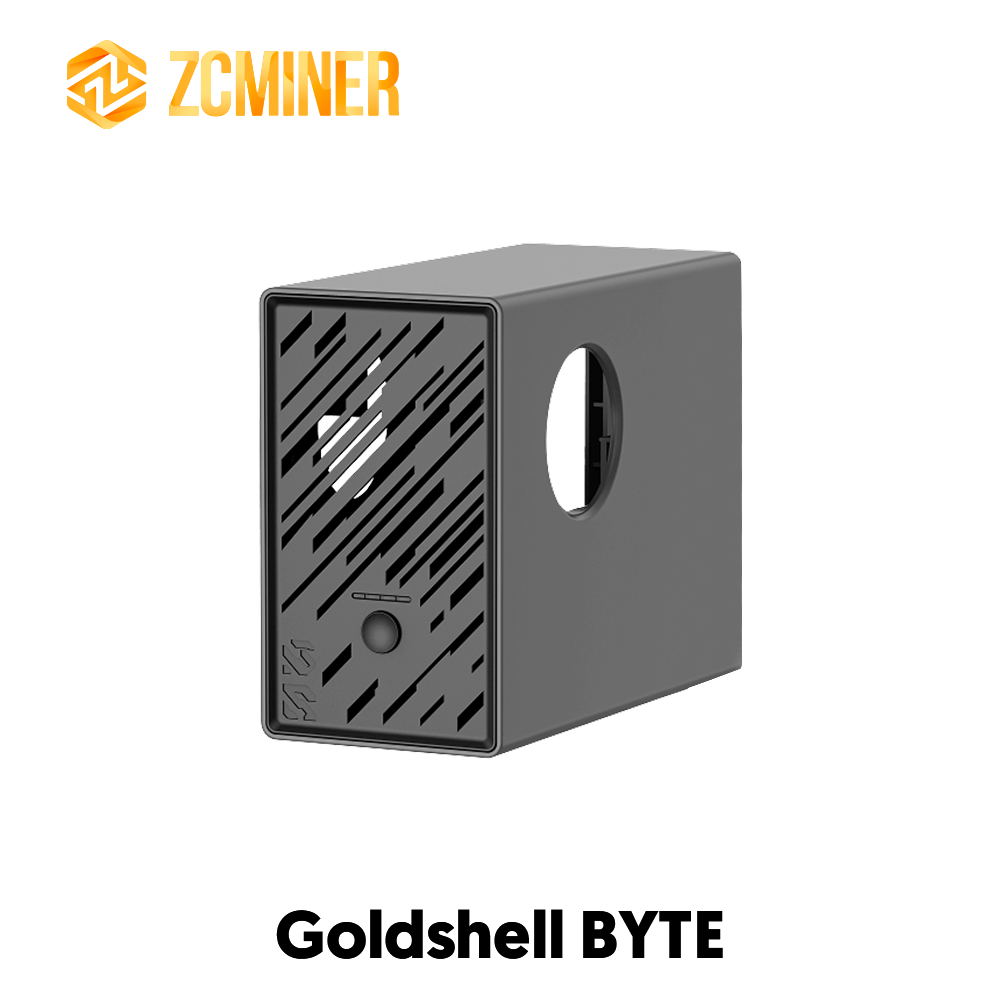
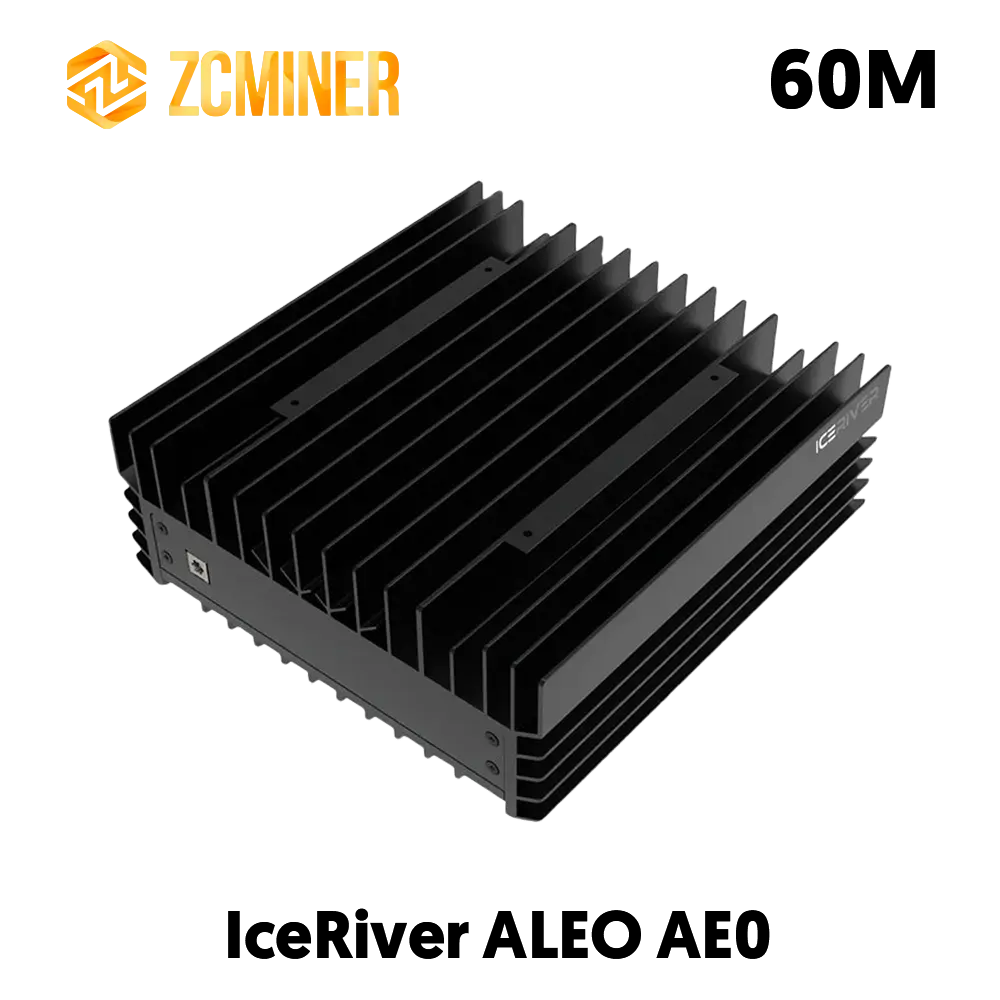
Specialized hardware can improve proof throughput per watt and lower the cost of submitting competitive work. It can also accelerate total network capacity, raise difficulty or competition, shorten the useful life of older equipment, and concentrate participation among operators with access to efficient machines and sufficient stake. The result is an efficiency race, not automatically higher profit for every miner.
The appearance of additional chipmakers can be constructive when it broadens supply, improves firmware support, and reduces dependence on a single vendor. Yet vendor announcements should be tested against delivered units, pool-side accepted performance, power draw at the wall, failure rates, warranty terms, and resale liquidity. Marketing specifications are inputs, not operating results.
Fixed daily earnings and 80- or 100-day payback claims from early Aleo ASIC articles are not durable. Token price, puzzle difficulty, reward emissions, stake requirements, pool fees, and uptime can all change before hardware is delivered. Recalculate with current network and market data.
6Can a Mainnet Upgrade Raise the ALEO Token Price?
An upgrade can improve the probability of long-term value creation, but it cannot set a reliable price target. The useful framework is to ask whether the upgrade changes demand, supply, security, or execution quality.
| Channel | Potential Positive Effect | Counterweight |
|---|---|---|
| Application demand | More private payments and programs may increase transaction and fee activity. | Partnership announcements may not become sustained on-chain usage. |
| Prover staking | Locked ALEO can align operators with network security and reduce spam. | Higher capital requirements can reduce accessibility and increase concentration. |
| Software performance | Faster confirmations and better records can improve user and institutional experience. | Execution improvements do not guarantee users, liquidity, or revenue. |
| Hardware competition | More efficient proving can strengthen capacity and professionalize operations. | Rapid efficiency gains can compress margins and obsolete earlier machines. |
Monitor active addresses, transactions, program deployments, stablecoin usage, fees, prover participation, validator concentration, circulating supply, unlocks, and exchange liquidity together. A single price candle after an upgrade announcement cannot establish causation. Our Aleo network and market outlook provides the wider ecosystem context.
7Why the 2026 Ecosystem Layer Matters More
By 2026, Aleo's most important test is no longer whether the mainnet can launch. It is whether programmable privacy becomes useful in products. Official ecosystem updates highlight shielded hardware-wallet transactions, private stablecoin architecture, global payroll, humanitarian payments, and enterprise risk controls. These applications connect the protocol's record model and zero-knowledge execution to needs that transparent ledgers handle poorly.
This does not make adoption automatic. Private finance must balance confidentiality, selective disclosure, issuer controls, wallet safety, regulation, liquidity, and user experience. But real payment flows are more meaningful than repeating that a chain supports privacy in theory. For miners, durable application demand can support network relevance; it does not remove the need to manage difficulty, emissions, and costs.
8Aleo Upgrade Checklist for Operators
- Confirm the release. Read official Aleo, Provable, snarkOS, and ARC sources. Record the version, activation height or date, and required migration steps.
- Check the pool. Verify supported firmware, payout method, stake handling, fees, minimum payout, and maintenance notices.
- Use a canary device. Upgrade one machine first and compare accepted work, rejected shares, temperature, power, and stability for at least 24 hours.
- Keep rollback assets. Preserve the previous firmware, configuration, wallet information, pool credentials, and a tested recovery procedure.
- Rebuild profitability. Use current ALEO price, reward schedule, network competition, measured watts, fees, stake cost, and expected uptime.
- Review security. Download binaries from official locations, verify hashes or signatures where provided, restrict management access, and avoid unknown firmware.
9Risks and Signals to Monitor
- Governance ambiguity: do not treat a Draft or Accepted ARC as fully active until implementation and activation are confirmed.
- Centralization pressure: rising stake requirements and specialized hardware may favor larger operators.
- Protocol transition risk: incompatible software can produce rejected work, lost uptime, or wallet and pool errors.
- Demand risk: partnerships and developer announcements may not translate into recurring transactions.
- Market risk: token price and liquidity can move independently of engineering progress.
- Security risk: private applications still depend on correct circuits, wallets, keys, bridges, and operational controls.
Mainnet launch dates, software releases, implemented ARCs, and documented staking rules are verifiable facts. Future adoption, miner profitability, and token price are scenarios. Mixing them is the fastest way to turn a useful infrastructure update into speculation.
10Aleo Mainnet Upgrade FAQ
When did Aleo mainnet launch?
Aleo mainnet officially launched on September 18, 2024. Later changes are post-mainnet protocol, economic, and ecosystem upgrades.
What was the biggest Aleo upgrade after mainnet?
Aleo described snarkOS 4.0, released in July 2025, as its biggest upgrade since mainnet. It changed the record model, implemented ARC-46 prover staking, and improved confirmations.
Do Aleo provers produce blocks?
No. Provers solve and submit puzzle solutions for proportional rewards. Validators participate in AleoBFT consensus and produce or finalize blocks.
Does an Aleo upgrade guarantee higher mining profits?
No. Profit depends on reward emissions, network competition, accepted performance, power cost, pool fees, staking requirements, uptime, hardware price, and ALEO market value.
How can I tell whether an ARC is active?
Check the official ARC status, governance result, implementation repository, release notes, and activation instructions. A discussion or proposal number alone is not proof of mainnet activation.
11References
These official and primary sources were reviewed before inclusion. External links open in a new tab and are marked nofollow.
- Aleo Network Foundation: Aleo Mainnet Is HereOfficial September 2024 mainnet announcement and overview of AleoBFT, PoSW, Leo, and private applications.
- Aleo Network Foundation: Biggest Upgrade Since MainnetOfficial July 2025 summary of snarkOS 4.0, record-model changes, ARC-46, and faster confirmations.
- Aleo Network Foundation: ARC-42 Sustainability ChangesOfficial explanation of the December 2024 staking-emission and finalize-fee adjustments.
- Aleo Documentation: Prover Role, Rewards, and StakingCurrent documentation for proportional prover rewards, consensus separation, and ARC-46 staking requirements.
- ProvableHQ: Aleo Request for Comments RepositoryPrimary source for ARC statuses and the progression from Draft through governance, implementation, and Final or Living status.
- ProvableHQ: snarkOS Source RepositoryPrimary software repository for Aleo node releases, code, and operational documentation.
- Aleo Network Foundation: Stablecoin Privacy in 2026Official 2026 application update covering private stablecoins, payments, payroll, and risk-control architecture.
Final Verdict
Aleo's upgrade path has moved from launching a privacy-focused mainnet to improving records, confirmations, prover incentives, and real payment applications. The most important post-mainnet milestone was snarkOS 4.0, while ARC-46 materially changed the economics of proving.
For miners, the correct response is operational: verify active rules, measure accepted performance, account for stake and electricity, and plan upgrades carefully. For market analysis, judge whether private applications create durable network activity. Neither a software release nor new ASIC supply can guarantee ALEO price or miner ROI.



Leave a comment
This site is protected by hCaptcha and the hCaptcha Privacy Policy and Terms of Service apply.