
Aleo Network Outlook 2026:
Decentralization, Privacy, and Mining
Mainnet progress · validator expansion · private computation · prover incentives · mining risk framework
On This Page
1Aleo in 2026: The Practical View
Aleo is a privacy-focused Layer 1 network built around zero-knowledge proofs. Applications can prove that computation was executed correctly without revealing every input or intermediate step. That makes the network relevant to private payments, identity, games, and business workflows that need selective disclosure.
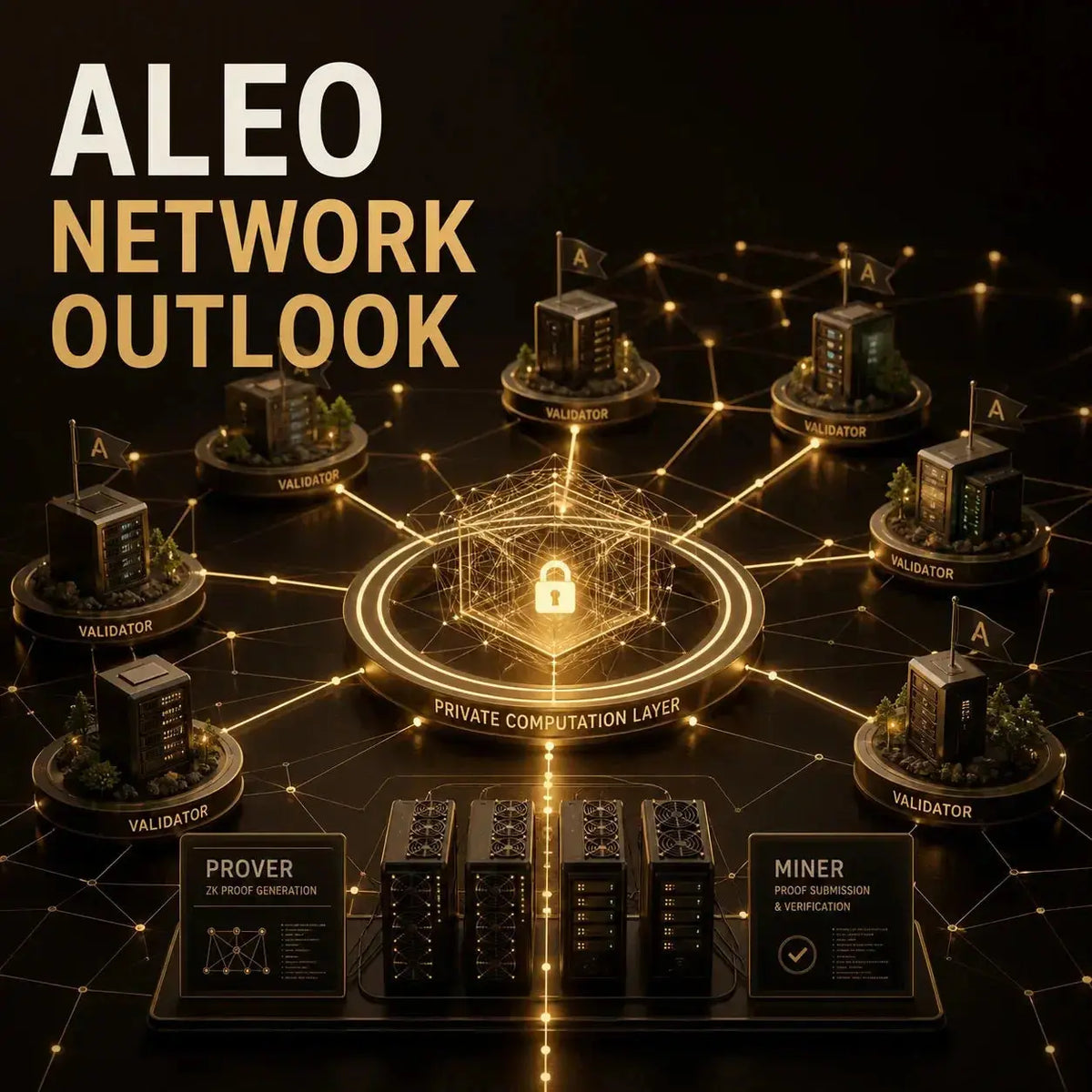
Aleo separates several jobs. Validators maintain consensus and produce blocks, provers solve synthesis puzzles, developers combine private off-chain execution with public on-chain state, and token holders can delegate to validators. For miners, the useful question is whether network demand, proof competition, reward rules, hardware efficiency, liquidity, and operating cost support a durable deployment.
Aleo's opportunity comes from useful private computation. Its mining opportunity depends on how efficiently provers can compete for a declining and dynamically adjusted reward pool.
2What Changed After Mainnet
Aleo announced mainnet in September 2024 after several testnet phases. The launch announcement cited 350 deployed applications, so the network entered production with an existing developer base. Mainnet turned Aleo from a testnet mining story into a live system with fees, staking, validators, provers, and real operating tradeoffs.
Post-launch software changes now move through staged environments, validators must remain compatible with current snarkOS releases, and applications must handle real state, fees, privacy keys, and upgrades. Progress should be measured through network stability, consensus distribution, prover participation, developer activity, and application use rather than token price alone.
3How Aleo Is Expanding Decentralization
In 2025, Aleo expanded the mainnet validator set from 16 to 25 at block 4,900,000. The official announcement said the change distributed consensus power more widely and improved tested throughput to roughly 50 transactions per second. It was meaningful progress, not a finish line.
Current documentation describes a validator committee capped at 200 members, selected by total stake. Because voting power remains stake-weighted, decentralization also depends on stake distribution, independent operator viability, delegator choice, and infrastructure diversity.
Delegation lets token holders support validators without running one, but it can also reinforce the largest operators. Users should compare commission, uptime, ownership, and infrastructure diversity instead of choosing only by size.
4Why Aleo's Privacy Architecture Matters
Aleo programs support private and public state. Private records are encrypted and executed off-chain before a proof is submitted. Public mappings are readable and updated on-chain. Developers can combine both models, allowing privacy to be selective rather than absolute.
A payment can hide balances while exposing a required compliance result, and a credential can prove eligibility without publishing the underlying data. Leo is the language used to build these programs. Zero-knowledge proofs protect specified data, but they do not automatically make every application secure or every user anonymous.
5Validators, Provers, and Miners Are Not the Same
The older articles sometimes treated validators, provers, and mining hardware as if they performed the same job. They do not. The distinction matters when evaluating decentralization, rewards, and hardware demand.
| Participant | Primary Role | How It Contributes | Economic Requirement | Main Risk |
|---|---|---|---|---|
| Validator | Consensus and block production | Verifies proofs, maintains state, produces blocks, and participates in AleoBFT | Large bonded stake and reliable node infrastructure | Downtime, concentration, software incompatibility |
| Delegator | Supports validator security | Bonds ALEO credits to an active validator and shares eligible rewards | Minimum delegation and unbonding rules | Validator commission, performance, and concentration |
| Prover | Proof-oriented computation | Solves synthesis puzzles and submits valid solutions | Compute resources plus the current prover staking requirement | Competition, efficiency loss, reward changes |
| Node Operator | Independent network access | Runs a client, verifies data, and serves applications or internal services | Server and network resources | Maintenance and outdated software |
Official documentation states that provers do not participate in consensus or produce blocks. They solve a changing synthesis puzzle and receive rewards proportionally to their proof-target contribution rather than through a winner-takes-all race. This is the activity most closely associated with Aleo mining hardware.
6Tokenomics and Network Incentives
Aleo launched with 1.5 billion credits. New issuance comes from block and coinbase rewards, with current documentation assigning two-thirds of coinbase rewards to provers and one-third to validators. Coinbase rewards decline over ten years, while dynamic targets prevent miners from assuming a fixed reward per unit of compute.
The design includes a 5 billion credit hard cap under ARC-0047. The cap improves long-term predictability but does not remove dilution, unlock, liquidity, or demand risk before that limit is reached.
7Aleo Mining Outlook Without Stale ROI Claims
The old articles quoted fixed daily earnings and payback periods. Those figures should not be reused because price, proof difficulty, competition, firmware, uptime, pool terms, electricity, and hardware cost change quickly. A responsible outlook uses scenarios instead of promises.
Estimate ALEO earned per day, planning price, wall power, and delivered hardware cost, then subtract electricity, pool fees, cooling, downtime, and maintenance. Test conservative, base, and optimistic cases. A purchase that works only in the optimistic case is speculation.
| Variable | Why It Changes | What to Verify |
|---|---|---|
| Proof output | Firmware, clocks, temperature, and pool reporting affect realized performance | 24-hour accepted work, rejected work, and wall power |
| Network competition | New ASIC batches and more provers dilute each machine's share | Current network and pool statistics |
| Reward rules | Emission schedules, target adjustment, and protocol changes affect payout | Current Aleo documentation and release notes |
| Operating cost | Electricity, cooling, tax, and hosting vary by location | Your invoice rate and measured total power |
| Liquidity | Exchange access and market depth affect realized value | Available markets, fees, and withdrawal conditions |
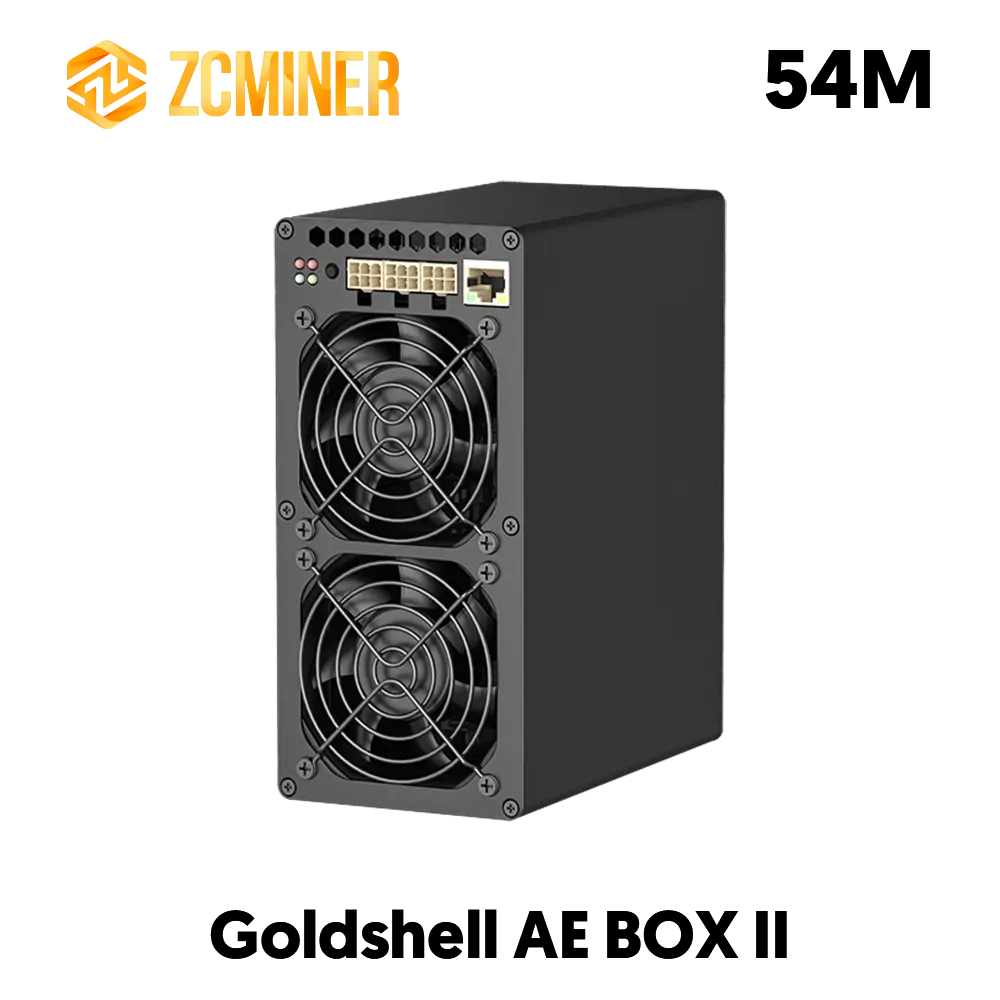
Operators should check the current ARC-46 prover staking schedule because it changes the capital needed to submit solutions. It may determine whether a small operator mines directly, uses a pool, or does not deploy. For hardware and setup details, use the Aleo mining guide with current manufacturer and network documentation.
82026 Opportunity and Risk Framework
Aleo's strongest opportunity is that private computation can serve applications beyond transfers. Recurring use could support demand for execution, proofs, fees, validator services, and infrastructure. Broader validator participation can also deepen economic security.
The risks are concrete: application use may lag infrastructure supply, stake-weighted governance may remain concentrated, prover competition can age hardware quickly, and privacy technology can face regulatory scrutiny.
Do not buy because a historical screenshot showed fast payback. Buy only when conservative revenue, measured power cost, staking or pool access, hardware support, and a realistic exit value all work together.
Network confidence and machine quality are separate. A promising protocol does not guarantee reliable firmware, parts, warranty support, or resale liquidity, while an efficient miner cannot fix weak demand or sharply higher competition.
9What to Watch Next
- Validator distribution: Track active validator count, stake concentration, commission, and geographic or hosting diversity.
- Prover economics: Monitor reward rules, staking requirements, target changes, accepted work, and the arrival of more efficient hardware.
- Developer adoption: Look for maintained applications and recurring users, not only hackathon announcements or deployment counts.
- Leo and snarkOS releases: Confirm compatibility before upgrading nodes, applications, pools, or mining firmware.
- Private-state usability: Watch wallet record scanning, selective disclosure, account recovery, and application security.
- Market liquidity: Evaluate exchange access and depth separately from quoted token price.
These indicators create a better update cycle for this article. The page can be refreshed when consensus participation, protocol economics, developer tooling, or network usage changes materially, rather than publishing a separate news post for every short-term milestone.
10FAQ
Is Aleo fully decentralized?
Aleo has expanded validator participation and supports independent nodes, provers, and delegation, but decentralization is not a binary status. Validator count, stake distribution, infrastructure diversity, governance, and software control should all be reviewed together.
Do Aleo provers produce blocks?
No. Provers solve synthesis puzzles and submit solutions. Validators verify proofs, participate in AleoBFT consensus, maintain state, and produce blocks.
Is Aleo mining still profitable in 2026?
It may be profitable for some operators, but there is no universal answer. Use current proof output, reward data, token price, pool terms, wall power, electricity cost, uptime, and hardware cost. Historical daily-income figures should not be used for a purchase decision.
Why does Aleo need both validators and provers?
Validators secure consensus and commit the chain, while provers contribute specialized computation through the network puzzle. The separation lets Aleo combine stake-based consensus with proof-oriented computational incentives.
Does zero-knowledge technology make every Aleo transaction private?
No. Aleo supports both private records and public mappings. Privacy depends on the program design, the function used, wallet behavior, and what users choose or are required to disclose.
11References and Data Sources
- Aleo Network Foundation: Aleo Mainnet Is HereOfficial mainnet launch background and ecosystem context.
- Aleo Network Foundation: Expanding the Validator SetOfficial details on the expansion from 16 to 25 validators and the staged deployment.
- Aleo Documentation: ValidatorsCurrent validator roles, committee rules, staking parameters, and delegation mechanics.
- Aleo Documentation: ProversCurrent synthesis puzzle, prover rewards, target adjustment, and staking framework.
- Aleo Documentation: TokenomicsGenesis supply, block and coinbase rewards, reward split, emission schedule, and supply cap.
- Aleo Documentation: Public and Private StateTechnical explanation of encrypted records, public mappings, off-chain execution, and proof verification.
- Aleo Documentation: Native StakingOfficial guidance for evaluating validators and delegating ALEO credits.
Final Verdict
Aleo has moved beyond its launch phase. Its long-term case now depends on whether private applications become useful, validator and stake distribution continue to broaden, and prover incentives support efficient but not excessively concentrated computation.
For miners, Aleo can remain an opportunity, but only under current measured economics. Replace fixed ROI claims with scenario planning, verify current protocol requirements, and treat decentralization, application demand, hardware efficiency, and liquidity as connected parts of the same decision.



Leave a comment
This site is protected by hCaptcha and the hCaptcha Privacy Policy and Terms of Service apply.