
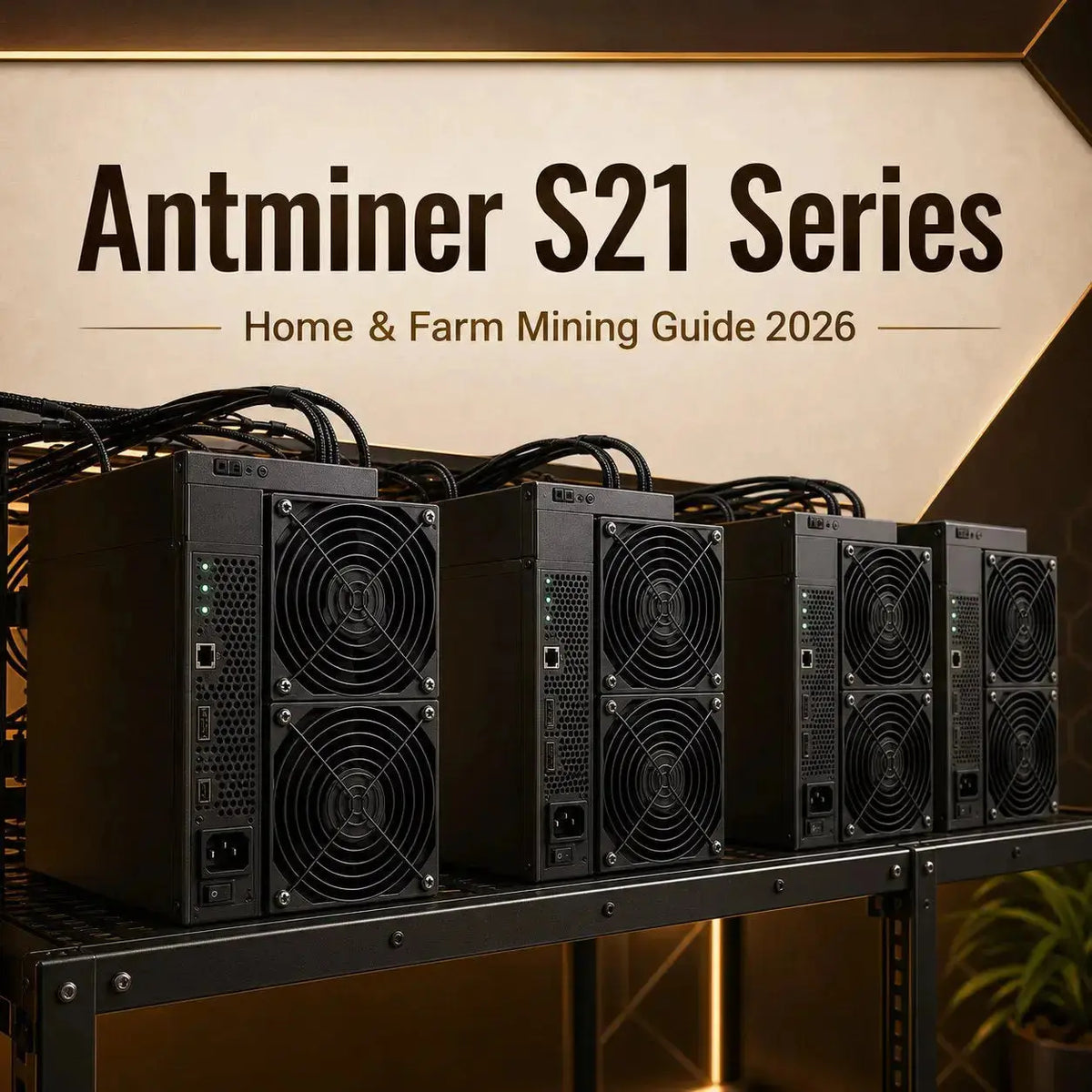
Bitmain Antminer S21 시리즈:
가정 및 채굴장 채굴 가이드
S21 모델 비교 · 전력 계획 · 채굴장 배포 · ROI 계산 · 채굴 풀 및 유지보수 체크리스트
이 페이지 내용
1시리즈 개요
Bitmain Antminer S21 시리즈는 2026년에 하드웨어를 계획하는 비트코인 채굴자들에게 가장 중요한 SHA-256 ASIC 라인업 중 하나로 남아 있습니다. 그 이유는 모든 S21 모델이 모든 현장에 적합해서가 아닙니다. 이 라인업은 채굴자들에게 낮은 진입 비용, 더 높은 출력, 더 나은 효율성, 더 강력한 함대급 밀도 등 여러 가지 절충안을 제공하기 때문입니다.
가정 채굴자들에게 올바른 질문은 단순히 어떤 모델이 가장 높은 해시레이트를 가지고 있느냐가 아닙니다. 가정 현장은 집을 산업 공간으로 바꾸지 않으면서 열, 소음, 전기 부하 및 유지보수를 견뎌야 합니다. 소규모 채굴장의 경우, 질문은 전기 밀도, 가동 시간, 서비스 접근성, 예비 부품, 그리고 각 회로, 패널, 랙 및 냉각 경로 뒤에 얼마나 많은 테라해시를 배치할 수 있는지로 바뀝니다.
S21은 더 간단한 진입점이며, S21+와 S21 Pro는 중간급 선택이고, S21 XP는 전력 비용과 열을 제어할 수 있는 운영자를 위한 고출력 공랭식 옵션입니다.
2Antminer S21 모델 비교
사양은 배치, 펌웨어 및 지역 목록에 따라 다를 수 있으므로, 모든 표를 구매 계약이 아닌 계획의 기준선으로 취급하십시오. 구매하기 전에 판매자와 정확한 하위 모델, 정격 해시레이트, 전력 소모량, 입력 전압, 보증 상태 및 배송 조건을 확인하십시오.
| 모델 | 해시레이트 | 전력 | 효율성 | 최적 적합성 |
|---|---|---|---|---|
| Antminer S21 | 약 200 TH/s | 약 3,500 W | 약 17.5 J/TH | 가정용 채굴 입문, 테스트 랙, 저비용 배포 |
| Antminer S21+ | 약 216 TH/s | 약 3,564 W | 약 16.5 J/TH | 기본 S21보다 더 많은 출력을 원하는 중급 설정 |
| Antminer S21 Pro | 약 234 TH/s | 약 3,510 W | 약 15 J/TH | 장비 비용, 출력 및 효율성의 균형을 맞추는 소규모 채굴장 |
| Antminer S21 XP | 약 270 TH/s | 약 3,645 W | 약 13.5 J/TH | 고밀도 채굴장 및 저비용 전기 현장 |
기본 S21은 일반적으로 최초의 진지한 ASIC 구매에 가장 쉽게 정당화될 수 있는 모델입니다. 왜냐하면 최고 장비 가격대에 속하지 않으면서도 강력한 해시레이트 수준을 제공하기 때문입니다. S21+는 출력을 약간 높입니다. S21 Pro는 XP에 전념하지 않고 더 강력한 효율성 프로필을 원하는 채굴자들에게 더 균형 잡힌 선택입니다. S21 XP는 성능 모델이지만, 현장이 전력, 열 및 구매 비용을 지원할 수 있을 때만 의미가 있습니다.
3가정 채굴 vs. 소규모 채굴장 적합성
단일 S21 시리즈 채굴기는 기술적으로 많은 주거 공간에서 작동할 수 있지만, 모든 가정이 좋은 채굴 현장이 되는 것은 아닙니다. 이 기계들은 시끄럽고, 뜨겁고, 전기적으로 까다롭습니다. 차고, 작업장, 지하실 유틸리티 공간 또는 단열된 별채가 침실이나 사무실보다 보통 더 현실적입니다.
가정용으로는 기본 S21이 일반적으로 가장 깔끔한 시작점입니다. 심각한 해시레이트 수준을 제공하면서도 최고 모델보다 구매 비용과 운영 복잡성을 더 관리하기 쉽게 유지합니다. 가정 채굴자는 최고의 TH/s 숫자를 쫓기 전에 안전한 전력 공급, 배기 경로, 먼지 제어 및 소음 차단에 우선순위를 두어야 합니다.
소규모 채굴장의 경우, S21 Pro 또는 S21 XP가 더 매력적입니다. 운영자가 여러 장치에 걸쳐 환기, 네트워크 모니터링, 예비 부품 및 전기 인프라를 분산할 수 있기 때문입니다. 이러한 환경에서는 몇 퍼센트의 효율성 차이가 약간 낮은 하드웨어 가격보다 더 중요할 수 있습니다.
4전력, 냉각 및 현장 계획
S21 시리즈는 단순히 꽂으면 되는 가전제품이 아닙니다. 3,500W에서 3,645W의 지속적인 부하는 심각한 전기 수요입니다. 많은 지역에서 이는 전용 200-240V 회로, 적절한 케이블 크기, 적합한 차단기, 그리고 안전한 PDU 또는 콘센트 구성을 필요로 합니다. 확실하지 않은 경우, 추측하기보다는 자격을 갖춘 전기 기술자를 이용하십시오.
냉각은 동일한 문제의 후반부입니다. 채굴기가 소비하는 모든 와트는 실내를 떠나야 하는 열이 됩니다. 채굴기가 3.5kW를 소비한다면, 실내는 지속적으로 3.5kW의 열을 제거해야 합니다. 흡입 공기, 배기 방향, 주변 온도 및 먼지는 채굴기가 정격 성능을 유지하는지 아니면 스로틀링, 재부팅 또는 팬 마모가 조기에 시작되는지에 영향을 미칩니다.
- 여러 장치를 주문하기 전에 전기 용량을 계획하십시오.
- 흡입 공기와 배기 공기를 재순환시키지 않고 분리하십시오.
- 생산 채굴에는 불안정한 Wi-Fi 대신 이더넷을 사용하십시오.
- 팬 청소 및 케이블 점검을 위해 각 장치 주변에 서비스 공간을 두십시오.
- 첫날부터 온도, 거부된 공유, 해시레이트 및 가동 시간을 추적하십시오.
52026년 ROI 프레임워크
비트코인 채굴에 대한 고정된 회수 기간 주장은 신중하게 다루어야 합니다. 일일 수익은 비트코인 가격, 네트워크 해시레이트, 거래 수수료, 풀 운, 풀 수수료 및 난이도 조정에 따라 변동합니다. S21 시리즈를 평가하는 더 좋은 방법은 예상 총수익을 먼저 계산한 다음, 전기료, 호스팅, 냉각, 풀 수수료, 수리비, 가동 중단 시간 및 하드웨어 감가상각비를 빼는 것입니다.
2026년 8월 3일에 관찰된 Mempool 데이터를 사용하면, 비트코인은 $62,762 근처였고, 네트워크 해시레이트는 약 924 EH/s였으며, 가장 최근 144블록 보상 샘플은 수수료를 포함하여 약 452.86 BTC였습니다. 이러한 조건에서 270 TH/s S21 XP는 풀 변동 및 수수료 전 하루 약 0.000132 BTC, 또는 해당 BTC 가격에서 약 $8.30의 총수익을 추정할 수 있습니다.
전력 비용은 결과를 빠르게 변화시킵니다. 3,645W에서 S21 XP는 하루에 약 87.5 kWh를 사용합니다. $0.10/kWh에서는 냉각 오버헤드 전 하루 약 $8.75의 전기료입니다. $0.06/kWh에서는 동일한 전력 소모량이 하루 약 $5.25의 비용이 듭니다. 이러한 차이로 인해 동일한 채굴기가 한 시설에서는 합리적으로 보이고 다른 시설에서는 매력적이지 않게 보일 수 있습니다.
270 TH/s 채굴기가 현재 비트코인 네트워크 조건에서 하루 0.006 BTC를 안정적으로 벌어들이지는 않습니다. 구매하기 전에 실시간 네트워크 데이터와 실제 전기 요율을 사용하십시오.
6채굴 풀 선택
대부분의 S21 소유자는 단독 채굴보다는 풀을 통해 채굴해야 합니다. 풀은 많은 채굴기를 결합하고 기여한 작업에 따라 보상을 분배하여 지급 변동성을 줄입니다. 올바른 풀이 항상 가장 낮은 수수료를 가진 풀은 아닙니다. 신뢰성, 지급 방식, 지역 지연 시간, 명확한 보고 및 작업자 수준 모니터링도 중요합니다.
PPS 및 FPPS 풀은 더 예측 가능한 수익을 제공하지만, 일반적으로 수수료 구조를 통해 이러한 안정성에 대한 비용을 청구합니다. PPLNS는 시간이 지남에 따라 충성스러운 해시레이트에 보상할 수 있지만, 지급이 덜 예측 가능하게 느껴질 수 있습니다. 가정 채굴자에게는 단순성과 투명한 보고가 가장 중요할 수 있습니다. 채굴장에게는 API 접근, 경고, 하위 계정 관리 및 장애 조치 서버 품질이 더 중요해집니다.
- 풀이 SHA-256 비트코인 채굴과 귀하의 지급 주소 형식을 지원하는지 확인하십시오.
- 풀 수수료, 지급 방식, 최소 지급액 및 지역 서버 옵션을 확인하십시오.
- Antminer 대시보드가 지원하는 경우 최소 하나의 백업 풀을 구성하십시오.
- 대시보드 해시레이트만 보지 말고, 승인된 공유 및 거부된 공유를 주시하십시오.
7유지보수 및 가동 시간
S21 시리즈의 신뢰성은 환경에 크게 좌우됩니다. 먼지 축적, 열 재순환, 느슨한 전원 커넥터, 노후된 팬, 불안정한 네트워크 장비 및 무시된 펌웨어 업데이트는 모두 가동 시간을 줄일 수 있습니다. 가장 좋은 유지보수 계획은 지루하고 반복적입니다.
일일 점검에는 해시레이트, 온도, 팬 속도, 풀 연결, 거부된 공유 및 비정상적인 소음이 포함되어야 합니다. 주간 점검에는 먼지 검사, 케이블 검사 및 펌웨어 검토가 포함되어야 합니다. 월간 점검에는 안전한 종료 시간 동안의 심층 청소, 전원 분배 검사, 그리고 채굴기 측 해시레이트와 풀 측 해시레이트 간의 비교가 포함되어야 합니다.
다중 장치 배포의 경우, 모든 채굴기, 케이블, 회로, 랙 위치 및 풀 작업자에게 라벨을 붙이십시오. 명확한 라벨링은 한 장치의 해시레이트가 떨어지거나 과열될 때 문제 해결 시간을 단축합니다.
8자주 묻는 질문 (FAQ)
어떤 Antminer S21 모델이 가정 채굴에 가장 적합합니까?
대부분의 가정 채굴자들에게는 기본 S21이 출력, 비용 및 운영 복잡성 사이의 균형을 이루므로 가장 실용적인 시작점입니다. S21 XP는 더 강력하지만, 더 나은 전력, 냉각 및 소음 제어를 요구합니다.
Antminer S21 XP는 2026년에 가치가 있습니까?
전기료가 저렴하고, 안정적인 냉각 시스템을 갖추고 있으며, 채굴장 스타일로 설치된 채굴자에게는 가치가 있을 수 있습니다. 전기료가 비싼 곳에서는 더 높은 출력이 전기 비용을 상쇄하지 못할 수도 있습니다.
일반 가정용 콘센트로 S21 채굴기를 작동할 수 있습니까?
그렇다고 가정하지 마십시오. S21 시리즈 채굴기는 고부하 장치이며, 일반적으로 전용 200-240V 계획이 필요합니다. 지역 전기 표준을 확인하고 필요한 경우 자격을 갖춘 전기 기술자를 이용하십시오.
가장 높은 해시레이트 모델을 먼저 구매해야 합니까?
항상 그렇지는 않습니다. 최고의 모델은 현장이 수익성 있게 전력을 공급하고, 냉각하고, 모니터링하고, 유지보수할 수 있는 모델입니다. 안정적인 환경의 작은 채굴기가 열악한 환경의 큰 채굴기보다 더 좋은 성능을 낼 수 있습니다.
9참고 자료 및 데이터 출처
- BITMAIN 지원: 사양 및 지침ANTMINER 사양, 매뉴얼, 설정, 유지보수 및 문제 해결 리소스에 대한 공식 Bitmain 지원 카테고리.
- BITMAIN 지원: S21 사양Antminer S21 사양 제품군 및 관련 지원 문서에 대한 공식 참조 페이지.
- Mempool 채굴 대시보드해시레이트, 난이도, 블록 보상 관찰을 포함한 실시간 비트코인 채굴 컨텍스트에 사용됩니다.
- 비트코인 개발자 참조: getmininginfo해시레이트, 블록, 난이도 및 네트워크 채굴 데이터와 같은 채굴 상태 개념에 대한 기술 참조.
- 미국 에너지 정보 관리국 전기 데이터 브라우저지역별 채굴 전력 비용 모델링 시 전기 요금 연구를 위한 참조 지점.
최종 평가
Antminer S21 시리즈는 2026년에도 여전히 유용하지만, 적절한 현장에 맞게 사용될 때만 그렇습니다. 기본 S21은 가장 접근하기 쉬운 가정용 옵션이며, S21+와 S21 Pro는 더 나은 중간 지점을 원하는 채굴자들에게 적합하고, S21 XP는 전력 비용과 냉각이 전문적으로 관리되는 곳에 속합니다.
해시레이트만으로 선택하지 마십시오. 성공적인 설정은 전기 비용, 가동 시간, 공기 흐름, 풀 안정성 및 유지보수 규율을 통제하는 것입니다.


댓글 남기기
이 사이트는 hCaptcha에 의해 보호되며, hCaptcha의 개인 정보 보호 정책 과 서비스 약관 이 적용됩니다.