The Complete 2026 Bitcoin Mining Guide: From Zero to Industrial Mindset

The Complete 2026 Bitcoin Mining Guide: From Zero to Industrial Mindset

Bitcoin mining in 2026 has completely moved beyond the era of "hobbyist toy" or "side hustle." It has evolved into a professional industry driven by capital efficiency, energy arbitrage, industrial-grade hardware, and global compliance. Whether you want to start with a single machine or understand the underlying logic of this trillion-dollar market, this guide will give you a clear, actionable, and non-circuitous path forward.

What Exactly Is Bitcoin Mining, and Why Is It Irreplaceable for the Bitcoin Network?

Bitcoin mining is a global mathematical competition and ledger maintenance mechanism that simultaneously performs three core tasks: transaction validation, network security, and new coin issuance. It is the only foundation that allows the Bitcoin system to operate independently without banks or governments.

Specifically, approximately every 10 minutes, the Bitcoin network generates a cryptographic puzzle that requires substantial computational power to solve (based on the SHA-256 algorithm). Miners around the world compete to solve this puzzle using their hashpower. The first miner to find the correct answer has the right to package pending transactions into a new "block" and permanently add it to the blockchain.

In return, that miner receives two types of rewards:

  1. Newly generated Bitcoin: As of 2026, the block reward is 3.125 BTC (after the fourth halving in April 2024).

  2. Transaction fees: Fees paid by users to prioritize their transactions. During periods of high network activity, fees can account for more than 20% of miner revenue.

Without mining, Bitcoin would be unable to confirm transactions (the "double-spending" problem) and could not generate new coins in a decentralized manner. Miners are not an "add-on" to Bitcoin — they are its infrastructure.

How Has Bitcoin Mining Fundamentally Changed in 2026 Compared to Five Years Ago?

In 2026, mining has transformed from "plug in a machine and make money" into a four-way competition of capital, energy, hardware efficiency, and compliance. Individual散户 miners without clear cost control and long-term planning are highly likely to lose money.

The key changes are evident in four dimensions:

  • Hardware evolution: Mainstream miners have entered the 3nm process node, with efficiency (J/TH) becoming the only core metric. Older workhorses like the S19 series may not even cover electricity costs under today's difficulty and electricity prices.

  • Industry players: Mining is no longer dominated by individual hobbyists but by publicly traded mining companies, sovereign funds (e.g., UAE), and large energy firms.

  • Energy logic: Mining is becoming a tool for "energy arbitrage" and "grid regulation." In Texas, mining facilities can even receive compensation for shutting down during peak electricity demand.

  • Regulation and taxes: The US IRS has introduced Form 1099-DA. Miners must compliantly report mining income, or face serious legal and financial risks.

In one sentence: In the past it was about luck; today it is about calculation.

What Hardware Should You Choose to Mine Bitcoin in 2026?

In 2026, the only viable hardware for Bitcoin mining is ASIC miners. CPUs and GPUs have long been completely phased out of the Bitcoin network. The core criterion for choosing hardware is not "highest hashrate" but "lowest efficiency (J/TH)."

ASICs are specifically designed to run the SHA-256 algorithm, achieving hundreds of times greater efficiency than GPUs. Below is a comparison of mainstream and flagship miners in 2026 (synthesized from multiple sources):


Model Hashrate (TH/s) Efficiency (J/TH) Cooling Best For
Bitmain Antminer S21 XP 270 13.5 Air-cooled Top-tier flagship, individual & farm
Bitmain Antminer S23 Hyd 3U 1,160 9.5 Hydro-cooled Large-scale industrial farms
Bitdeer SEALMINER A2 Pro Hyd 500 14.9 Hydro-cooled High-hashrate water-cooled setups
WhatsMiner M60S 186 18.5 Air-cooled Stable mid-range, good value
Bitmain Antminer S21 Pro 234 15.0 Air-cooled Balanced performance and power

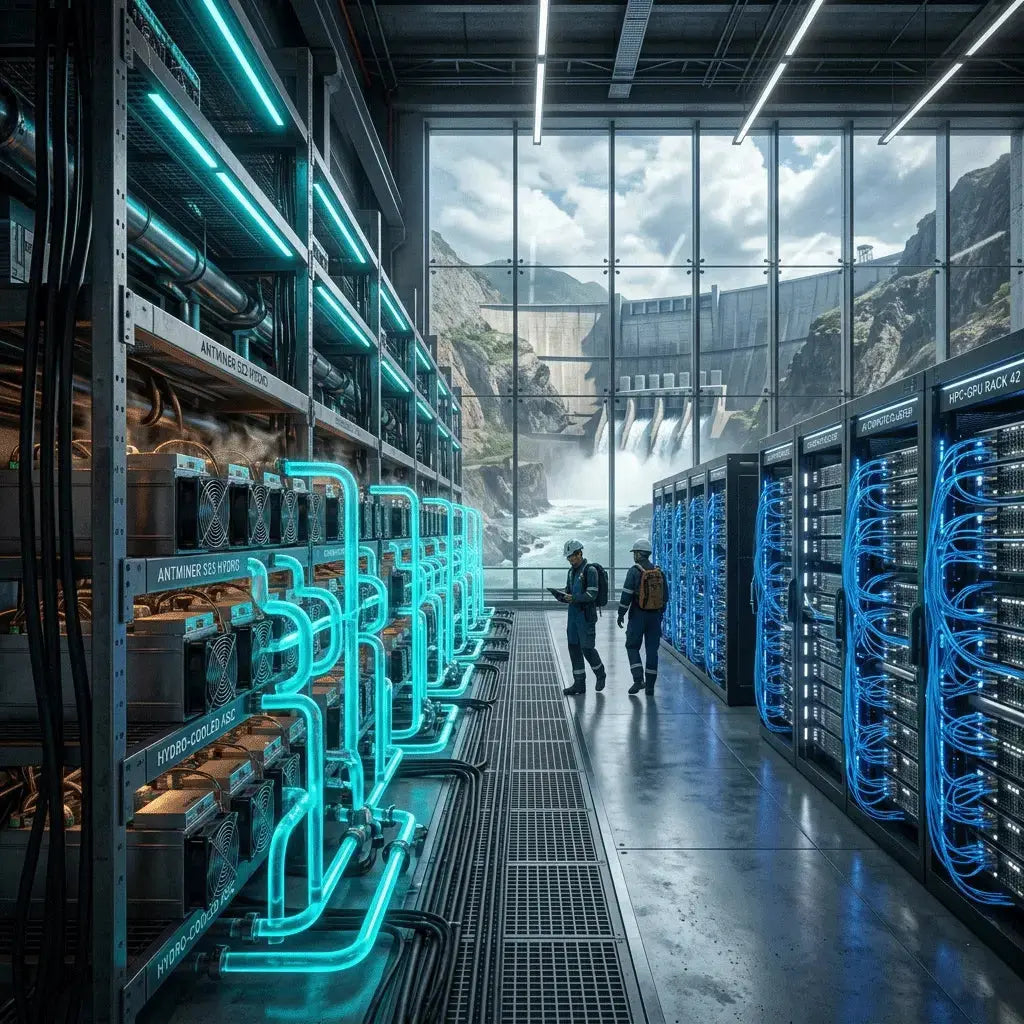
Hydro cooling and immersion cooling are no longer gimmicks in 2026. Hydro cooling reduces noise below 50 dB (air-cooled units typically run 75–90 dB) while significantly improving heat dissipation and extending machine life. Immersion cooling can even provide 15–20% overclocking headroom.

Buying advice: Always purchase from official sources or reputable authorized distributors. Used miners may be cheap, but older models with poor efficiency can become "e-waste" within six months under current difficulty and electricity prices.

As a Beginner, Should You Choose Solo Mining or Pool Mining?

For nearly all individual miners, pool mining is mandatory. Solo mining under 2026‘s global hashrate is equivalent to buying a lottery ticket with astronomically low odds — you could go years without finding a single block.

  • Solo mining: You mine alone. If you find a block, you keep the entire 3.125 BTC + fees. But the probability is extremely low. With a 270 TH/s miner against a global hashrate of ~1,066 EH/s, statistically it would take nearly a century to mine one block.

  • Pool mining: You combine your hashrate with other miners worldwide, share rewards proportionally, and receive small, stable daily payouts — like earning a salary.

Major mining pools in 2026 include: Foundry USA, AntPool, F2Pool, Braiins Pool (supports Stratum V2), among others. Beginners should prioritize FPPS (Full Pay Per Share) payout mode, which offers the most stable earnings and includes a share of transaction fees.

What Are the Exact Steps to Set Up a Miner From Scratch?

The complete seven-step process is: profitability calculation → hardware purchase → wallet setup → pool registration → miner configuration → monitoring & maintenance → tax compliance. Skipping any step can lead to severe losses.

  1. Profitability Calculation (non-negotiable)
    Use calculators like WhatToMine or HashrateIndex. Input your ASIC model, local electricity rate (cents/kWh), current Bitcoin price, and difficulty.
    Bottom line: Above $0.08/kWh, individual mining is very difficult to profit from. Below $0.05/kWh, you have a decisive competitive advantage.

  2. Purchase Hardware
    Buy from official sources (Bitmain, MicroBT) or reputable resellers like CryptoMinerBros. Be aware of import tariffs (10–35% on Asian electronics in the US in 2026).

  3. Set Up a Bitcoin Wallet

    • For daily pool payouts: Use a software wallet (e.g., Electrum).

    • For long-term secure storage: Must use a hardware wallet (Ledger/Trezor). A "2-of-3" multisig setup is recommended (e.g., office cold wallet + offsite backup + custodian).

  4. Register a Pool Account
    Enter your Bitcoin receiving address and obtain the pool's stratum address (e.g., stratum+tcp://btc.foundryusapool.com:3333).

  5. Configure Your ASIC Miner
    Connect power and Ethernet → Find the miner's IP → Open web interface → Enter pool address, worker name, password → Save and reboot.

  6. Daily Monitoring
    Check: Reported hashrate matches specs, rejection rate below 1–2%, chip temperature below 80–85°C.

  7. Tax Compliance
    In jurisdictions like the US, mined Bitcoin is treated as ordinary income at its fair market value upon receipt. Appreciation upon sale is subject to capital gains tax. Use Form 1099-DA for standardized reporting.

What Are the Biggest Hidden Costs and Common Mistakes in 2026 Mining?

The biggest hidden cost is not the miner's price — it's the ongoing electricity bill, cooling/soundproofing modifications, and the gradual erosion of revenue due to rising difficulty. The most common mistake is underestimating how noise, heat, and electricity price volatility destroy long-term profitability.

Three typical misconceptions:

  • Mistake #1: Ignoring heat recovery value
    In 2026, leading miners use waste heat for home heating, greenhouses, or industrial pre-heating. MARA Holdings' pilot in Finland showed a >30% reduction in effective energy costs through heat reuse.

  • Mistake #2: Blindly chasing cheap used equipment
    Older S19 models have efficiency of 25–30 J/TH, which can be loss-making at high electricity prices. Always run a "shutdown price" calculation before buying used.

  • Mistake #3: Underestimating noise and electrical infrastructure
    ASIC noise is like a vacuum cleaner that never stops (75+ dB). They require 240V industrial-grade circuits. Soundproofing and electrical upgrades typically account for 10–15% of total investment.

Is Bitcoin Mining Still Worth It in 2026? Who Can Actually Make Money?

The conclusion is clear: Bitcoin mining in 2026 has transformed from "gold panning" into an "energy business." If you can secure stable electricity below $0.05/kWh, use ASICs with efficiency below 15 J/TH, and accept a 2–3 year payback period, then mining remains a highly attractive way to acquire Bitcoin and arbitrage energy.

Global hashrate distribution and competitive advantages (Q1 2026):

  • USA (37.5%): Low Texas electricity prices + demand response subsidies, but extremely high compliance requirements.

  • Russia (16.4%): Cold climate reduces cooling costs, but policy uncertainty is high.

  • UAE (3.1%): Sovereign backing, tax-free policies, converting natural gas directly into Bitcoin reserves.

  • Ethiopia (2.6%): Ultra-low hydroelectricity prices, but policies are volatile.

Who is suited?

  • Those with low-cost electricity (industrial rates or stranded energy)

  • Those who can access next-generation efficient hydro-cooled miners

  • Those willing to treat mining as a long-term infrastructure investment, not short-term speculation

Who is not suited?

  • Residential electricity rates above $0.10/kWh

  • No suitable space for noise and heat management

  • Expecting to break even in a few months

Check_out_the_latest_ASlC_Miners

FAQ

Q1: I have only one miner at home on my balcony. Neighbors are complaining about the noise. What can I do?

A: Bottom line: A single air-cooled ASIC (75–90 dB) is loud enough to cause neighborhood disputes — this is not a small issue. Three effective solutions: ① Buy a silencer box ($200–500, reduces noise to <50 dB, but watch for heat); ② Move it to a garage or basement away from bedrooms and neighbors; ③ Hosting — if home solutions fail, sending it to a professional hosting facility is actually the least stressful option. Never wrap your miner in soundproofing foam — it will overheat and destroy the chips.

Q2: If I buy an S21 XP today in 2026, how long until I break even?

A: Bottom line: Conservatively, 18–36 months, heavily dependent on electricity cost and Bitcoin price. One year is impossible. Assuming S21 XP (270 TH/s), $0.05/kWh electricity, $70,000 BTC price, and steady difficulty growth: monthly net profit ~$300–450, miner cost ~$8,000–10,000 → payback period ~22–30 months. If BTC price rises or electricity is cheaper, the period shortens; if the opposite, it lengthens. Any sales pitch promising "6–12 month payback" can be safely ignored.

Q3: My electricity is expensive. Can I mine only at night when rates are lower?

A: Bottom line: Yes, but you must recalculate profitability. This only works in regions with extreme peak/off-peak spreads (e.g., some European countries or US time-of-use plans). Running 8–10 hours per day reduces monthly revenue to about 1/3 of 24/7 operation, but electricity cost also scales down. The key issue: payback period lengthens, and frequent power cycling may affect stability on some models. Use smart plugs + automation scripts (e.g., Home Assistant) for scheduling. If your peak/off-peak ratio is less than 2x, this strategy is not worthwhile.

Q4: I see many "cloud mining" platforms for a few hundred dollars. Are they legit?

A: Bottom line: The vast majority of cloud mining is either a Ponzi scheme or a loss-making contract. In 2026, fewer than five genuinely transparent, audited cloud mining platforms exist. Typical cloud mining traps: ① The contract allows the platform to unilaterally terminate or reduce hashrate when the price drops; ② Projected earnings are inflated, not accounting for real electricity and maintenance; ③ The platform itself is a ponzi. If you still want to try, only use long-transparent platforms like Bitdeer or MiningRigRentals, and only invest what you can afford to lose entirely. The safest approach: rather not mine at all than cloud mine.

Q5: Can I do anything useful with the heat my miner produces, other than venting it outside?

A: Bottom line: In 2026, waste heat recovery has become a significant profit lever for advanced miners, reducing effective energy costs by 20–40%. From simple to complex: ① Winter home heating (a garage can reach 25°C+); ② Greenhouses or grow tents (steady heat benefits winter crops); ③ Industrial pre-heating (e.g., drying lumber, pre-heating workshop spaces). For home users, option ① is most practical — use a duct fan to redirect warm air into living spaces. Note: The exhaust air is not toxic, but avoid blowing it directly on people.

Q6: I bought a used S19 miner described as "90% new." After a week, hashrate is only 70% of spec. What do I do?

A: Bottom line: Low hashrate is common with used miners, usually due to damaged hashboards or tampered firmware. Three-step diagnosis: ① Flash the latest official firmware (from Bitmain's website) to rule out fake firmware limiting hashrate; ② Check "Hashboard Status" in the admin panel — see if any board shows "X" or zero hashrate; ③ If a board is damaged, contact a professional repair service to replace it (~$100–300). Lesson for next time: always ask for a live backend screenshot and at least 24 hours of hashrate logs before buying used.

Q7: I‘m a US user. How do I report mining income on my taxes? What happens if I don’t?

A: Bottom line: The IRS requires miners to report ordinary income at the fair market value of Bitcoin when received, and capital gains/losses when sold. As of 2026, Form 1099-DA standardizes reporting. How to do it: ① For each pool payout, record the date, BTC amount, and BTC closing price that day (use CoinMarketCap historical data); ② Sum annual income and report on Schedule 1 (additional income) or as self-employment income; ③ When you sell, calculate the difference between proceeds and your cost basis (the USD value at receipt) — that‘s capital gain/loss. Consequences of not reporting: The IRS increasingly uses on-chain analysis and exchange data to track miner addresses. If audited, you’ll face back taxes + interest + penalties (typically 20–40%), and potentially criminal charges in severe cases. This is not scare talk — compliance is the only sane option.

Q8: What is the Stratum V2 protocol? Do I need to care about it?

A: Bottom line: Stratum V2 is the next-generation mining pool protocol, reducing bandwidth usage by 30%, latency by 80%, and allowing miners to select their own transactions (censorship resistance). In 2026, it has become an important advantage for advanced miners, but it‘s not a day-one requirement for beginners. If you’re a small individual miner, continuing with legacy Stratum (V1) won‘t lose you money. But if you’re efficiency-focused or care about decentralization, choose pools that support V2 like Braiins Pool or Luxor. The real-world benefit is about 5–8% in effective earnings, mainly from lower rejection rates and fewer orphaned blocks.

Q9: My country is not friendly to cryptocurrency. Is mining illegal?

A: Bottom line: In most countries, personal mining itself is not illegal, but selling, holding, or cross-border movement of Bitcoin may be restricted. You must check three layers of law: mining activity, electricity usage (power theft is a serious crime), and Bitcoin transactions. Typical cases: China: Commercial mining is banned; small-scale personal mining is a gray zone with personal risk. Kazakhstan: Licenses required; legal hosting exists but policy is volatile. Iran: Mining is legal but requires government authorization, with export restrictions. Safest approach: Consult a local crypto attorney, or simply host your miner in a crypto-friendly jurisdiction (US, Canada, UAE). Never assume “no one checks” — power audits and network monitoring can easily expose you.

Q10: You‘ve listed so many challenges. Who is still mining in 2026, and why do they do it?

A: Bottom line: Three groups still mine at scale in 2026: ① energy companies with electricity below $0.03/kWh; ② sovereign funds or large institutions converting stranded energy (e.g., natural gas flaring, hydro spill) into Bitcoin reserves; ③ veteran miners who have fully depreciated their hardware and have ultra-low power costs. They are not chasing short-term price moves. They value three strategic advantages: Electricity monetization: cheap power that can‘t be transmitted to cities is turned into globally liquid Bitcoin. Balance sheet allocation: Firms like Citadel Mining (UAE) treat BTC as digital gold reserves. Grid service revenue: In places like Texas, mine when power is cheap, shut down for compensation during peak demand — total returns are more stable. For individuals: unless you can secure industrial electricity rates (< $0.06/kWh) and have a multi-year mindset, the more rational choice is to simply buy Bitcoin directly, rather than mine it.

次に読む

Bitcoin Mining Profitability Analysis & ASIC Miner Buying Guide – April 2026

コメントを残す

このサイトはhCaptchaによって保護されており、hCaptchaプライバシーポリシーおよび利用規約が適用されます。