
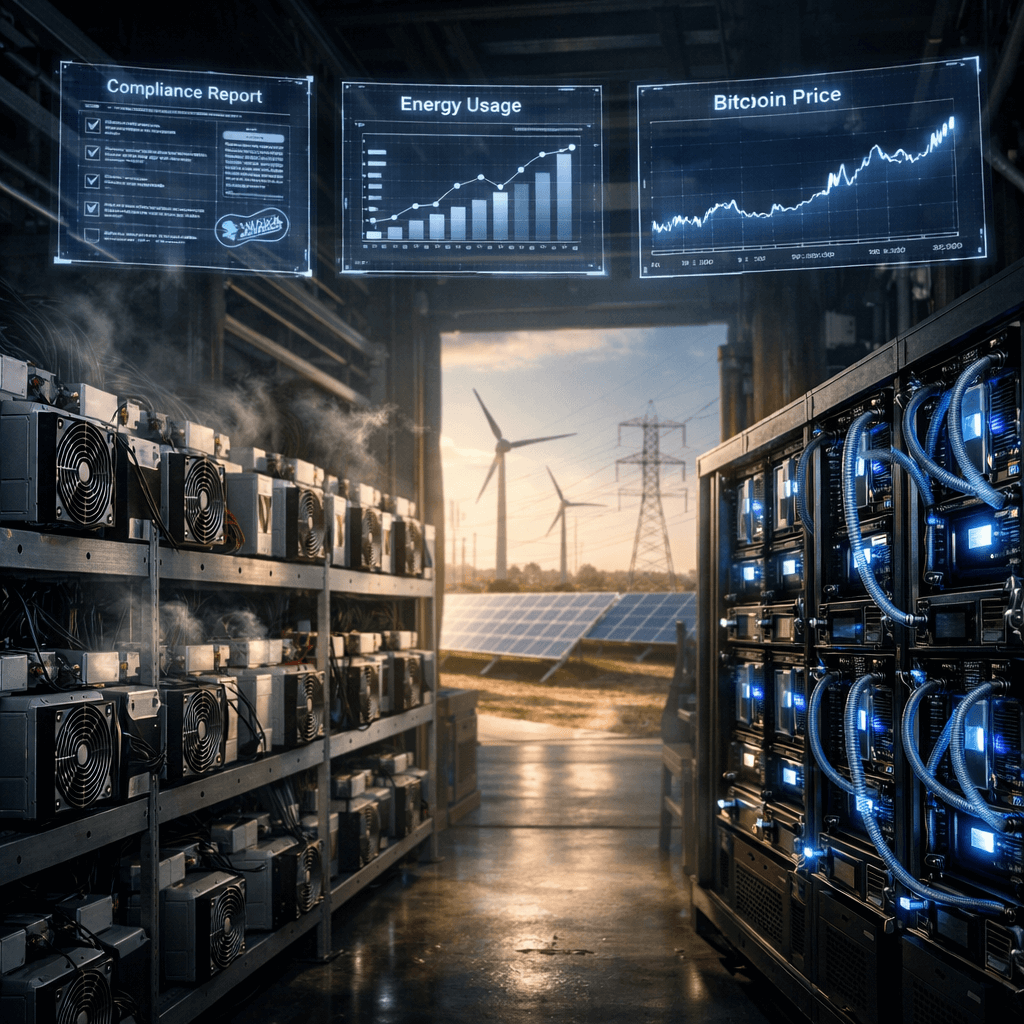
Why Compliance, AI Transformation & Energy Integration Will Decide Who Wins
The age of easy crypto mining is officially over.
Once upon a time, all you needed was a few ASIC miners and cheap electricity to print money. In 2026, that era is gone. Mining has entered a new phase defined by regulation, institutional capital, industrial-grade infrastructure, and energy strategy.
For miners, this is not a crypto winter — it is a great filtering event. Small, unstructured operators are being pushed out, while professional, compliant, and capital-efficient miners are positioned to dominate.
Let’s break down the four forces every miner must master in 2026.
1. Compliance Is No Longer Optional
Mining Has Gone Mainstream — and Regulated
Governments have now fully accepted that Bitcoin and digital assets are here to stay. That means licensing, reporting, and taxation are being enforced worldwide.
Key 2026 developments:
-
United States
The Digital Asset Market Clarity Act classifies BTC and ETH as digital commodities, allowing:-
Legal bank custody
-
Institutional financing
-
Clear tax treatment
-
-
Russia & Central Asia
Mining licenses are mandatory. Power usage, equipment and revenue must be registered. -
Europe & Canada
Fossil-fuel mining is restricted, while green energy mining receives tax credits and incentives.
What This Means for Miners
| Miner Type | What You Must Do |
|---|---|
| Mining companies | Register business, file taxes, keep revenue and electricity records |
| Home miners | Control power usage, avoid high-tier electricity pricing, manage noise |
| International miners | Choose legal zones (Texas, Canada, Kazakhstan) and avoid banned countries |
Compliance is no longer a cost — it is a competitive advantage.
2. Texas Mining License: The Global Gold Standard
Texas has become the world’s mining capital thanks to:
-
Electricity as low as $0.02–$0.04/kWh
-
Legal protection for digital asset businesses
-
Grid programs that pay miners to shut down during peak demand
Texas Mining Setup Process (2026)
| Step | What You Do | Timeline |
|---|---|---|
| 1 | Register LLC | 3–5 days |
| 2 | Apply for power grid access (ERCOT) | 2–4 weeks |
| 3 | Environmental & land approval | 4–6 weeks |
| 4 | Mining operation registration | 1–2 weeks |
| 5 | Tax ID and reporting | 3–5 days |
Bonus: Qualified miners receive up to 50% property tax reduction for 3 years and can earn extra income by selling power back to the grid during peak demand.
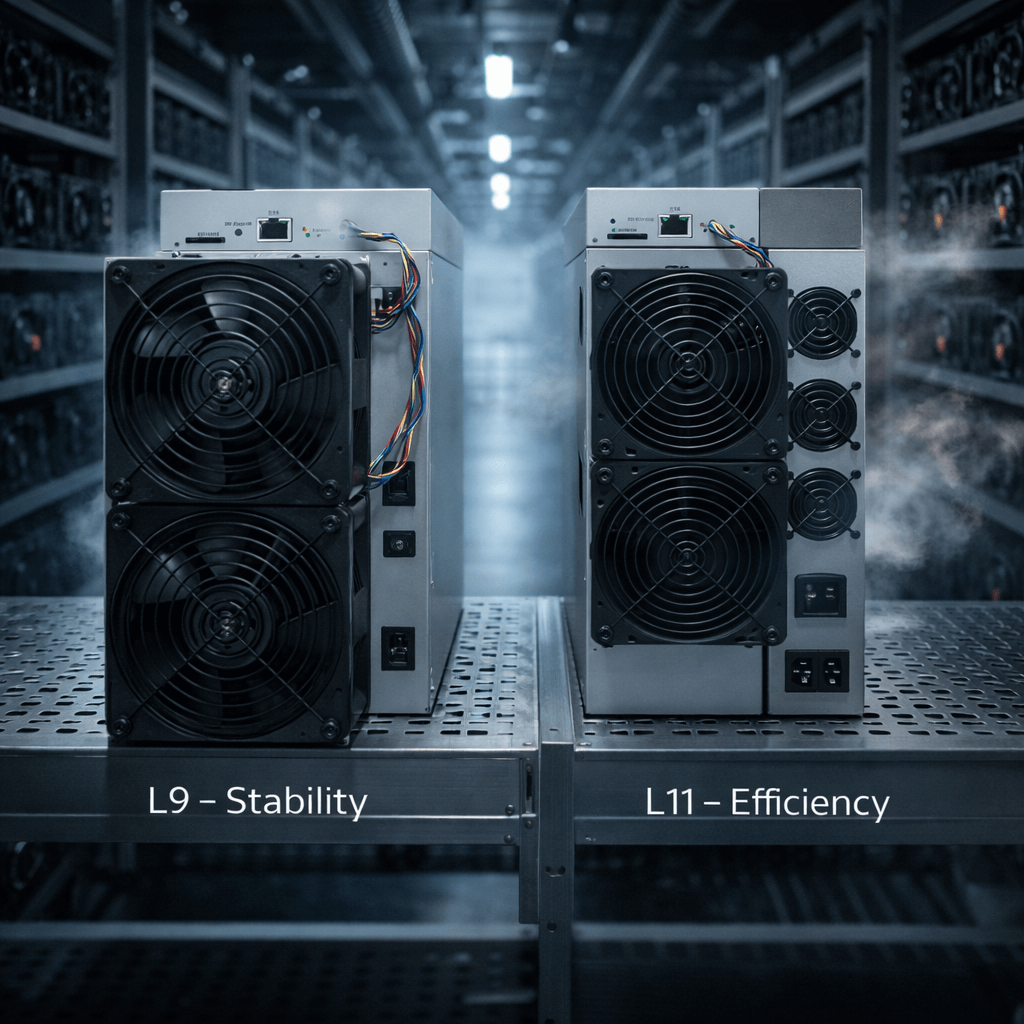
3. ASIC Efficiency Is Now the Survival Line
In 2026, anything above 10 J/TH is obsolete.
Old miners can no longer survive unless electricity is nearly free.
Top ASICs in 2026
| Model | Hashrate | Power | Efficiency | Price | Payback (4¢/kWh) |
|---|---|---|---|---|---|
| Antminer S21 | 335 TH/s | 2200 W | 6.57 J/TH | $3,200 | 312 days |
| Whatsminer M53S++ | 310 TH/s | 2100 W | 6.77 J/TH | $2,950 | 338 days |
| Sealminer A2 | 226 TH/s | 3729 W | 16.5 J/TH | $1,800 | 404 days |
| Old 2023 models | 110 TH/s | 3200 W | 29 J/TH | $800 | Unprofitable |
Why Old Machines Are Dead
-
60% lower efficiency
-
3× lower profit
-
3× higher failure rate
-
Almost no resale value
Modern miners don’t just earn more — they stay profitable longer.
4. The Rise of AI-Powered Mining Facilities
Mining farms are no longer just for Bitcoin.
As AI explodes, data centers are running out of:
-
Power
-
Land
-
Permits
-
Grid connections
Mining companies already have all four.
By upgrading cooling and networking, miners can:
-
Run GPU AI clusters
-
Lease power and space to AI companies
-
Earn revenue even when Bitcoin difficulty rises
AI hosting allows mining companies to earn during bear markets and halving cycles.
Public mining firms have already raised $4.6 billion to transform their sites into hybrid Bitcoin + AI compute centers.
5. Energy Integration Is the Real Profit Engine
Electricity represents 60–70% of mining costs.
The smartest miners now own their power.
Three Winning Energy Models
-
Build your own solar, wind, or gas plants
→ Stable cost: $0.02–$0.03/kWh -
Use stranded or wasted energy
→ Buy excess wind/solar power at 50% discount -
Move to energy-rich countries
→ Kazakhstan, Turkmenistan, natural gas regions
One public mining company now produces Bitcoin at $18,000 per BTC, far below the global average.
6. Mining Is Now a Financial Asset
Mining in 2026 is no longer “plug in and hope.”
Smart miners use:
-
Hashrate-backed loans
-
BTC futures to lock in profits
-
Bitcoin ETFs to hedge and hold
Monthly Mining Profit Model
| Metric | Example |
|---|---|
| Total hashrate | 10,000 TH/s |
| Power per miner | 2200 W |
| Miners | 30 |
| Daily power use | 1584 kWh |
| Electricity cost | $0.04 |
| Daily power cost | $63.36 |
| BTC price | $97,000 |
| Network hashrate | 78 EH/s |
| BTC mined per day | 0.0577 |
| Daily revenue | $560 |
| Pool fee | $11.2 |
| Daily profit | $485 |
| Monthly profit | $14,563 |
| ROI | 8.2 months |
Final Rule for 2026 Miners
Comply. Upgrade. Control energy. Add AI. Hedge risk.
Bitcoin mining is no longer for hobbyists — it is an industrial, financial, and energy-driven business.
Those who evolve will dominate the next decade.
Those who don’t will disappear.




コメントを残す
このサイトはhCaptchaによって保護されており、hCaptchaプライバシーポリシーおよび利用規約が適用されます。