Zcash Privacy Value in 2026:
Why Financial Privacy Matters
shielded transactions · transparent-chain risk · regulatory balance · privacy demand · practical ZEC use cases
On This Page
1Why Financial Privacy Matters Again
Public blockchains made digital money auditable, but they also made financial activity unusually visible. A transparent address can expose balances, incoming payments, outgoing payments, counterparties, timing patterns, and repeated behavior. That information may be useful for compliance teams and analytics firms, yet it can be uncomfortable for ordinary users, businesses, donors, employees, contractors, and anyone who does not want every payment trail permanently open to public inspection.
Zcash sits at the center of this debate because it was built around the idea that blockchains can be verifiable without forcing every transaction detail into public view. The stronger privacy story is not that every user wants secrecy at all times. It is that digital cash should allow a reasonable private mode for legitimate activity, much like cash, bank confidentiality, payroll privacy, or business invoice privacy in the traditional financial world.
This merged update keeps the stronger historical page about renewed privacy-coin demand and folds in the older surveillance-era article. The combined article now focuses on privacy value, transparent-chain risk, Zcash's practical design, and regulatory balance. It avoids mining ROI or ZEC hardware selection because those belong in separate mining guides.
Zcash's long-term relevance depends on whether users continue to value optional financial privacy in a world where public-chain analytics, exchange monitoring, and cross-border data sharing keep expanding.
2Transparent Chains Create a Permanent Data Trail
Bitcoin-style transparency is powerful because anyone can verify balances and transactions. The tradeoff is that addresses and flows are visible by default. Once an address is connected to a person, company, exchange account, payroll batch, donation campaign, or merchant wallet, past and future activity may become easier to map. This is not only a privacy issue for wealthy holders. It can affect freelancers, nonprofits, small businesses, political donors, public figures, and users in countries where financial exposure creates personal risk.
Transparent ledgers also create business intelligence leakage. A supplier may infer customer volume, a competitor may estimate treasury activity, and a public donation address may reveal donor clustering. In a world where blockchain data does not expire, even harmless activity today can become sensitive when analyzed later with better tools.
3What Makes Zcash Different
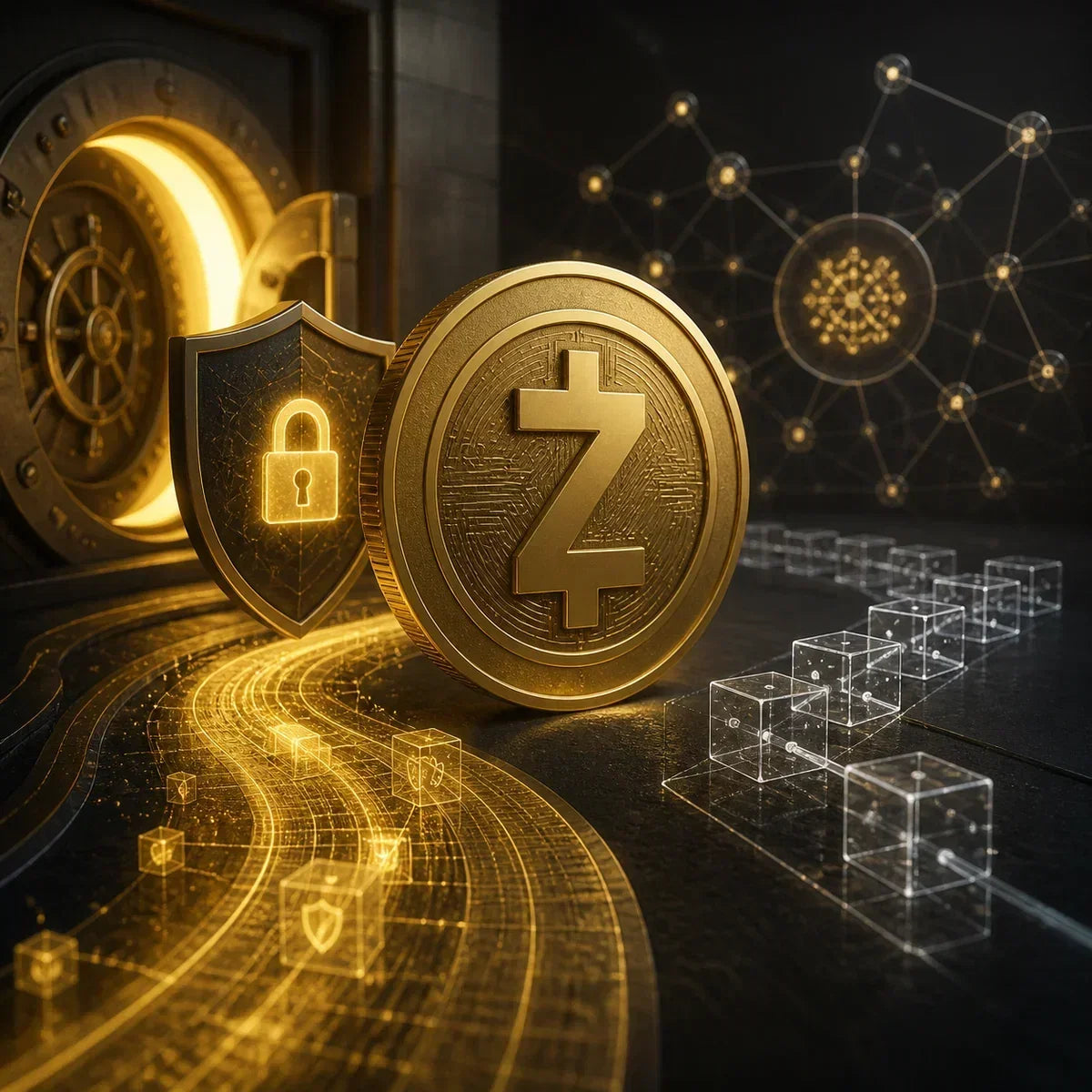
Zcash supports both transparent and shielded transaction modes. Transparent addresses work similarly to Bitcoin-style addresses and do not provide user privacy. Shielded Zcash transactions, by contrast, can hide addresses, transaction amounts, and memo information while still allowing the network to validate that transaction rules are followed. That distinction is why Zcash is often discussed as a privacy-preserving digital cash network rather than only another proof-of-work asset.
The key design idea is optionality. Users can operate transparently where public auditability is needed, or use shielded functionality where financial privacy is appropriate. Unified addresses improve usability by representing multiple Zcash receiver types in a single address format, helping supported wallets route funds with less friction.
| Feature | Transparent Mode | Shielded Mode | Why It Matters |
|---|---|---|---|
| Address visibility | Publicly visible | Designed to hide sender or receiver details depending on transaction type | Reduces address-based profiling when used correctly |
| Amount visibility | Publicly visible | Can be hidden inside shielded transactions | Protects salary, invoice, donation, and treasury values |
| Verification | Public ledger verification | Zero-knowledge proof verification | Allows privacy without simply trusting a central party |
| Wallet experience | Widely supported | Depends on wallet support and user choices | Adoption improves when private mode becomes easier to use |
4Practical Zcash Privacy Use Cases
Privacy is often framed too narrowly. In practice, everyday financial privacy has many legitimate uses. A nonprofit may not want every donor and recipient publicly linked. A freelancer may not want clients to see other client payments. A small business may not want suppliers to inspect wallet balances.
Zcash is most compelling when privacy is tied to a real user problem. That means shielded wallets, better education, clear compliance boundaries, and simpler address handling matter as much as ideology. If a privacy coin is difficult to use safely, many users will stay on transparent rails even when they care about privacy. If private payments feel as simple as normal payments, the value proposition becomes easier to understand.
5Privacy and Regulation Need a Real Balance
The hard part is that financial privacy and financial crime prevention both matter. Regulators are not going to ignore virtual assets, and privacy advocates should not pretend that every use case is harmless. At the same time, a system where all financial activity is permanently public creates its own risks. The better question is how privacy tools, exchanges, wallets, and users can support lawful activity while preserving reasonable confidentiality.
Regulators continue to distinguish between private self-custody, money transmission, exchanges, hosted wallets, and other virtual asset business models. That does not erase the case for privacy-preserving networks. It means users and businesses need to understand where they interact with regulated services and when private self-custody differs from exchange activity.
Privacy is not the same as exemption from law. Users should follow local rules, understand exchange requirements, and keep appropriate records while still recognizing that public-by-default financial data creates real personal and business risks.
6Market Narrative vs Real Adoption
Privacy coins can surge when surveillance, regulation, exchange data sharing, or public-chain analytics become headline topics. But a narrative rally is different from durable adoption. Long-term value depends on wallet support, exchange access, developer continuity, user education, transaction reliability, and whether real users repeatedly choose private payments instead of only speculating on privacy as a theme.
For Zcash, the most constructive signal is not a short-term ZEC price move. It is growth in usable shielded wallets, better unified-address support, stronger documentation, credible development, and real payment paths. Privacy demand may rise quickly during stressful periods, but durable value comes from reducing friction during ordinary use.
| Signal | Healthy Interpretation | Weak Interpretation | What to Watch |
|---|---|---|---|
| Privacy headlines | More users understand public-chain exposure | Short-lived fear-driven speculation | Search demand, wallet downloads, and education quality |
| Shielded usage | Users are adopting private transaction paths | Privacy remains a marketing claim only | Wallet support and shielded-pool activity |
| Exchange access | Liquidity remains usable in key regions | Access narrows and conversion becomes harder | Supported venues, withdrawal options, and policy changes |
| Developer activity | Usability and security continue improving | Protocol story becomes stale | Releases, documentation, wallets, and ecosystem grants |
7How to Evaluate Zcash as a Privacy Asset
A privacy asset should be evaluated differently from a pure speculative token. The first question is whether the privacy feature is technically meaningful. The second is whether normal users can access it without confusion. The third is whether liquidity, regulation, and wallet support are strong enough for the asset to remain usable. The fourth is whether the privacy narrative has a real-world audience beyond market cycles.
Users should separate privacy value from price prediction. Zcash may benefit when public-chain surveillance becomes more visible, but liquidity, macro conditions, exchange support, competing privacy technologies, and user experience will all influence outcomes.
- Check privacy mode: Confirm whether a wallet actually supports shielded transactions, not only transparent ZEC.
- Check usability: Look for clear unified-address support, understandable send screens, and recovery guidance.
- Check liquidity: Make sure buying, selling, deposits, and withdrawals are practical in your region.
- Check regulation: Know the difference between self-custody use and regulated exchange activity.
- Check narrative quality: Prefer evidence of real use over short-lived privacy-coin hype.
8Keep Privacy Value Separate From Mining ROI
Zcash is also a proof-of-work network, so mining naturally appears in many discussions. However, privacy value and mining profitability are separate search intents. A reader asking why Zcash privacy matters needs a clear explanation of shielded transactions, public-ledger risk, and regulation. A reader asking whether to mine ZEC needs hashrate, electricity cost, ASIC efficiency, difficulty, pool selection, and hardware resale analysis.
Mixing those two topics weakens both articles. This page should remain the privacy-value hub. ZEC mining guides should point back here only when explaining why Zcash may have demand beyond ordinary coin speculation. In the same way, this page can mention proof-of-work only as part of the network context, not as a hardware buying recommendation.
Use this article for privacy value, user demand, and regulatory context. Use separate Zcash mining articles for ASIC comparisons, profitability models, electricity cost, and operational risk.
9FAQ
Is Zcash completely anonymous?
Zcash supports shielded transactions that can protect transaction details, but privacy depends on wallet support, user behavior, address type, exchange activity, and operational choices. It should be treated as a privacy tool, not a magic invisibility layer.
Why not just use Bitcoin privately?
Bitcoin is transparent by design. Users can take privacy precautions, but the base ledger exposes address and transaction data. Zcash was built to provide a shielded transaction option while still allowing network verification.
Does privacy mean illegal use?
No. Privacy protects many legitimate activities, including payroll, donations, business payments, personal safety, and ordinary financial confidentiality. Users still need to follow applicable laws and exchange rules.
Should this article include ZEC miner profitability?
No. Mining profitability belongs in a separate Zcash mining guide. This page is focused on why financial privacy matters and how Zcash fits that market narrative.
10References
- Zcash: Is Zcash traceable?Zcash learning resource explaining shielded and transparent transaction visibility.
- Zcash: What are Zcash unified addresses?Zcash learning resource describing unified addresses and shielded-by-default wallet behavior.
- Zcash Documentation: Addresses and Value PoolsTechnical documentation for transparent addresses, shielded pools, and value-pool behavior.
- FinCEN: Application of Regulations to Certain Business Models Involving CVCOfficial U.S. regulatory guidance discussing convertible virtual currency business models and compliance boundaries.
Final Verdict
Zcash remains relevant because public-chain transparency creates a real financial privacy problem. Its strongest value proposition is not speculation alone, and it is not miner profitability alone. It is the ability to make digital payments verifiable while giving users a practical shielded option when confidentiality matters.
The page to keep is the broader privacy-demand article. The surveillance-era article should be redirected into it so authority, internal links, and user intent are consolidated into one stronger Zcash privacy resource.



Leave a comment
This site is protected by hCaptcha and the hCaptcha Privacy Policy and Terms of Service apply.