

Introduction: A Decade-Long Misconception
For over a decade, Bitcoin mining has worn a label it never wanted: the "energy hog" of the digital world. We've all seen the headlines — comparing a single Bitcoin transaction to the energy consumption of a small country, or showing massive warehouses filled with noisy machines powered by coal plants. For a long time, this image stuck.
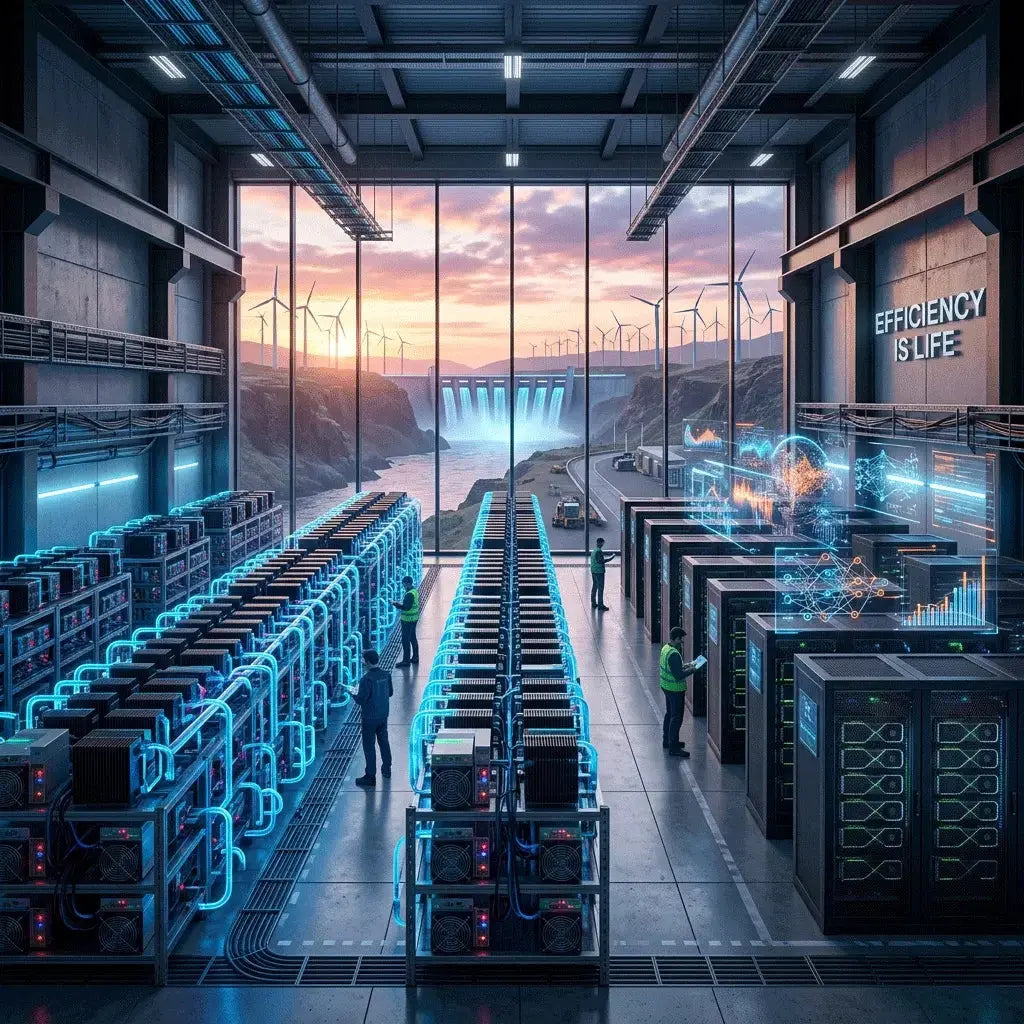
But if you've been following the crypto market over the past year, you've likely observed a change. This isn't because the industry is simply trying to clean up its act for good press — it's because economics, technology, and the very nature of electricity grids have driven a fundamental transformation. In 2026, the data tells a completely different story. Bitcoin miners are not only shedding the "energy hog" label — they are becoming unexpected drivers of the global energy transition.
Part One: The Numbers Don't Lie
Let's start with the facts, because the latest data is stunning. According to recent analysis from ESG experts and the Digital Assets Research Institute, over 56.7% of the Bitcoin network is now powered by sustainable energy sources. To put that in perspective, back in 2021, that figure was only around 34%. In just four years, the industry has flipped the script.
Furthermore, according to industry reports from early 2026, Bitcoin's global energy use sits at just 0.23% of the world total, and its carbon emissions at roughly 0.08%. These are hardly the numbers of a planet-eating monster.
| Metric | 2021 Estimate | 2026 Estimate |
|---|---|---|
| Sustainable Energy Mix | ~34% | 56.7% |
| Global Energy Use Share | ~0.28% | ~0.23% |
| Global Carbon Emissions Share | ~0.08% | ~0.06% |
A broader comparison helps put this scale in context: the global banking system consumes approximately 238.92 TWh annually, gold mining consumes about 240.61 TWh, global data centers (excluding mining) consume roughly 415 TWh, while the Bitcoin mining network consumes about 138 TWh. Bitcoin's carbon footprint is around 40 million tonnes of CO₂e, just 0.1% of global emissions. By comparison, global aviation or shipping typically accounts for 2-3% each.
Part Two: Why Are Miners Going Green?
Miners are turning to renewable energy not just out of environmental consciousness, but primarily because of economic incentives.
The Pursuit of Lowest-Cost Electricity
Electricity typically accounts for over 80% of a mining operation's operating expenses. After the 2024 halving — which reduced the block reward to 3.125 BTC — miners entered an even more intense efficiency competition. In the 2026 market environment, only miners securing power below $0.04 per kWh can remain profitable over the long term.
The cheapest electricity available today usually comes from surplus clean energy — strong winds at night, blazing sun at midday, or abundant hydropower during rainy seasons. These renewables often produce "curtailed energy" that the grid cannot absorb, and this power is frequently priced very low, sometimes even negative. Miners act as "buyers of last resort," using this otherwise wasted energy to maximize their profits.
Improving the Bankability of Green Infrastructure
In traditional renewable energy investment models, one of the biggest risks is the 10-15 year interconnection queue. Many wind and solar projects face cash flow crises after completion because they cannot connect to the grid in time. Bitcoin mining changes this financial dilemma by providing immediate, off-grid electricity demand. Research shows that introducing Bitcoin mining at the early stage of a renewable energy project can shorten its payback period from 8.1 years to just 3.5 years. This "Bitcoin-subsidizes-green-energy" model has become a standardized financial tool in energy development by 2026.
Part Three: The Grid's "Flex Regulator" — A Fundamental Role Change
By 2026, grid operators in many regions have reclassified Bitcoin miners: from "power drains" to "critical flexible grid assets."
Demand Response Mechanisms
Bitcoin mining has a unique characteristic that no other heavy industry possesses: its load is near-instantly adjustable (second-level response). Miners sign demand response agreements with grid operators, shutting down rapidly during peak demand periods — such as extreme cold snaps or heatwaves — and returning valuable power to residential and critical sectors. In exchange, they receive compensation or lower electricity rates.
During winter storms in Texas, miners cut over 1.5 GW of power load within minutes — enough to power 300,000 homes — dramatically enhancing grid resilience. This flexibility allows grids to accommodate higher proportions of intermittent renewables, with mining farms acting as "virtual batteries." It's estimated that such flexible loads have saved Texas consumers nearly $18 billion in energy costs by reducing reliance on high-pollution peaker plants.
A key 2025 study from Duke University found that large-scale integration of flexible loads like Bitcoin mining could add 76 GW of grid capacity in the U.S. and reduce curtailment rates to just 0.25%.
Part Four: The Four Technological Pillars of Green Mining
By 2026, green mining is no longer a theoretical concept — it has been implemented worldwide through four成熟 technological pathways.
1. Hydropower: The Steady Workhorse
Hydropower, with its high baseload reliability, remains the top choice for large-scale mining operations. Regions like Quebec, British Columbia, Norway, and Ethiopia now host approximately 23% of global hashrate from hydro power. Ethiopia, in particular, has become a leading African Bitcoin hub by utilizing 6,000 MW of surplus power from the Grand Ethiopian Renaissance Dam at an ultra-low cost of 3.2 cents per kWh.
2. Wind and Solar: Complementary Power
In regions like Texas and Australia, miners use "hybrid" models, leveraging excess wind power at night and solar peaks during the day. Advanced energy management systems coordinate operations: when renewable penetration reaches 40%, miners run at full power; when renewables dip, they automatically throttle down or shut off. This synergy has shortened the payback period for renewable energy plants by approximately 57%.
3. Methane Capture: The Hidden Gem
This is the most environmentally impactful model in 2026. Methane is 80 times more potent than CO₂ as a greenhouse gas over a 20-year period. At oil drilling sites and landfills, miners deploy modular generators to capture natural gas that would otherwise be flared or vented, converting it into electricity. This reduces methane's global warming impact by up to 90%. Currently, about 5-7% of global Bitcoin mining power comes from this carbon-negative source.
4. Waste Heat Recovery: Circular Economy
Modern mining facilities are no longer seen as heat pollution sources — they are heat providers. In Finland, MARA Holdings operates a project that uses waste heat from liquid-cooled miners to feed district heating pipelines, warming approximately 80,000 residents during winter and replacing fossil fuel heating systems. In Canada, Canaan launched a 3 MW waste heat recovery pilot that converts 90% of electricity consumption into heat, pre-warming water for tomato greenhouses.
Part Five: The Hardware Efficiency Revolution
Criticism of Bitcoin's energy use often overlooks the astonishing progress in hardware. Following a Moore's Law-like trajectory, ASIC miner efficiency has made a quantum leap over the past eight years.
| Model | Release Date | Hashrate | Power Draw | Efficiency |
|---|---|---|---|---|
| Antminer S23 Hyd | Jan 2026 | 580 TH/s | 5,510 W | 9.5 J/TH |
| Antminer S21 XP+ Hyd | Q4 2025 | 500 TH/s | 5,500 W | 11 J/TH |
| WhatsMiner M60S+ | 2025 | 170-186 TH/s | 3,441 W | 18.5 J/TH |
| 2018 Average | 2018 | 14-40 TH/s | 1,500 W | 94-98 J/TH |
Moving from 98 J/TH to sub-10 J/TH means that with the same energy consumption, today's network security is nearly 10 times higher than in 2018. This physical progress allows Bitcoin to continue expanding its consensus security without increasing its global emissions burden.
Part Six: The Global South — Bitcoin Mining as an Electrification Tool
In parts of Africa and South America, Bitcoin mining has transcended its financial asset nature to become a key catalyst for infrastructure development.
In Kenya, Malawi, and Zambia, Gridless Compute uses small-scale hydro plants to achieve rural electrification. The logic: remote hydro stations often face "insufficient initial demand" — the plant is built, but local residents use very little power, making it impossible to recover construction costs through electricity fees. Gridless deploys mobile mining containers that absorb up to 70% of the hydro plant's excess capacity. The stable cash flow from miners ensures the plant's debt service, allowing operators to significantly reduce residential electricity rates and bring stable lighting and industrial power to over 8,000 households that previously lived in darkness.
Ethiopia, meanwhile, uses surplus hydro power from the Grand Ethiopian Renaissance Dam to mine Bitcoin directly through state-owned entities as a foreign exchange earning strategy. In 2024, the Ethiopian Electric Power company earned $338 million in foreign exchange by exporting just 7% of its surplus power — a significant portion coming directly from power purchase agreements with Bitcoin miners.
Part Seven: Debunking Common Myths About Bitcoin Mining and Energy
Myth 1: "Bitcoin mining wastes energy."
Reality: Energy use is not the same as energy waste. The Bitcoin network secures trillions of dollars in assets and processes billions of dollars in value daily. By comparison, the traditional banking system, gold mining, and fiat currency systems consume far more energy when their full infrastructure is accounted for.
Myth 2: "Miners only use coal power."
Reality: As noted, over 56% of mining uses sustainable energy. Coal's share of Bitcoin's energy mix has collapsed from 36.6% three years ago to just 8.9%.
Myth 3: "One Bitcoin transaction uses a country's worth of power."
Reality: This comparison is misleading. It divides the network's total annual energy use by transaction volume, ignoring that mining secures the entire network regardless of transaction count. A better metric is energy per dollar of value secured — where Bitcoin actually outperforms many traditional systems.
Myth 4: "Green mining is a contradiction."
Reality: Mining is just an energy buyer. If the energy is renewable, the mining is renewable. There's nothing inherent in the SHA-256 algorithm that requires fossil fuels.
Conclusion: 2026 — Goodbye to the Myth, Hello to Innovation
For a long time, criticism of Bitcoin often overlooked the speed of technological progress. Bitcoin mining is at a profound turning point. It is shedding the "energy hog" narrative and becoming a core engine driving the modernization and decarbonization of global energy infrastructure.
From the 2026 perspective, the industry's sustainable energy ratio of over 56.7% not only demonstrates its rapid evolution but also reflects its deep alignment with the underlying physics of energy markets. By providing electrification funding for remote regions, frequency response services for unstable urban grids, directly mitigating potent methane emissions, and recycling waste heat for community heating, Bitcoin is proving that a decentralized digital asset system can coexist with humanity's climate goals.
In 2026, it's time to set aside old prejudices and take a fresh look at this "green engine" of the digital age. It protects the integrity of value through algorithms, and through physical incentives, it is helping to clean our planet.
References
-
Bitcoin: Roots, Facts, and Future Prospects | Deutsche Telekom
-
Bitcoin is now 56.7% green: Here's how it could get even cleaner | Cointelegraph on Binance Square
-
Bitcoin Mining Is Going Green: Why 2026 Is the Year Miners Finally Shed the "Energy Hog" Label - CryptoMinerBros





Leave a comment
This site is protected by hCaptcha and the hCaptcha Privacy Policy and Terms of Service apply.