
Introduction
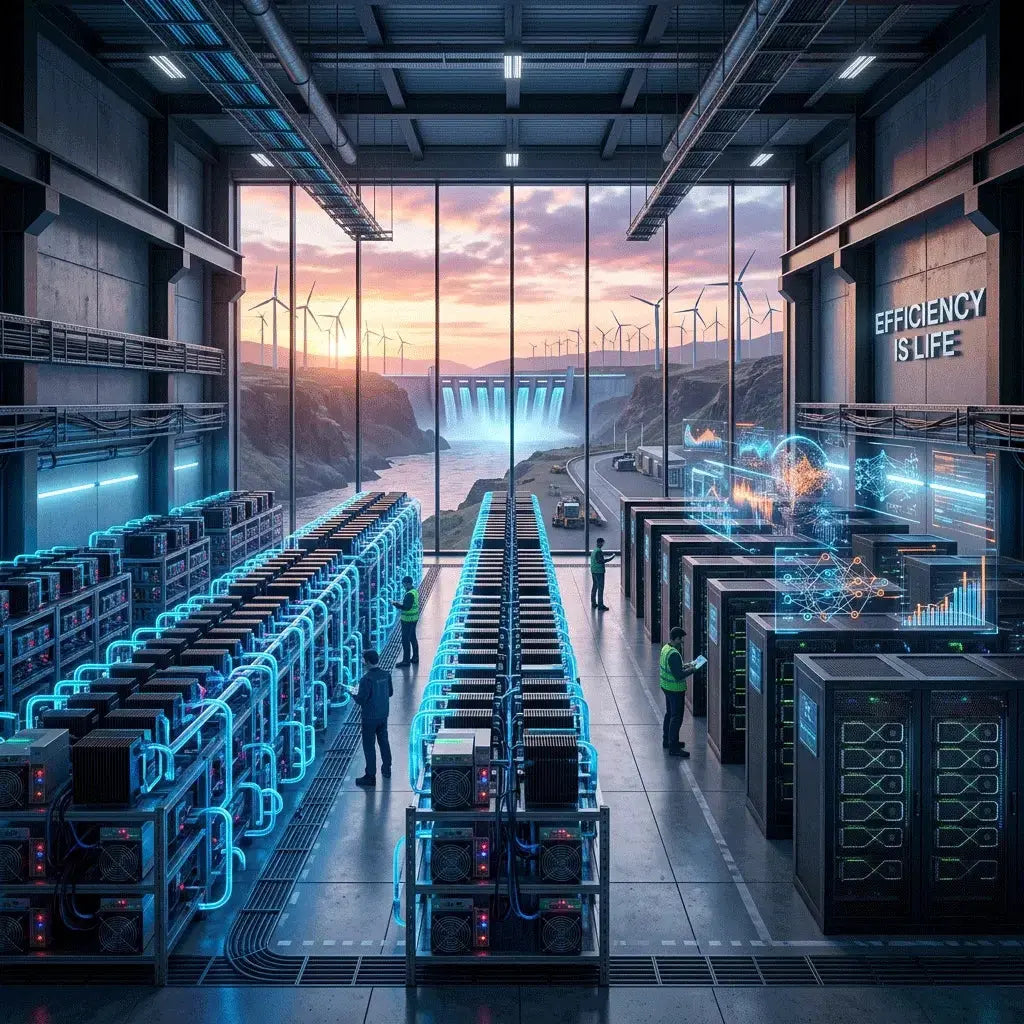
Cryptocurrency mining has rapidly evolved from a niche hobby into a multi-billion dollar global industry. Yet misinformation remains abundant. Many see it as a shortcut to wealth, unaware of the financial, technical, and environmental risks involved.
By 2026, mining has completely shed its early grassroots stage. It has transformed into a capital-intensive industry that deeply integrates energy management, semiconductor competition, financial derivatives, and geopolitical strategy. Whether you're a complete beginner or a seasoned miner looking to optimize returns in 2026, this comprehensive guide will break down the core mechanisms of mining and provide actionable strategies based on the latest market data.
Chapter 1: Global Cryptocurrency Mining in 2026 – Industrial Transformation and Macro Evolution
1.1 Structural Adjustments in Hashrate
As of the first quarter of 2026, Bitcoin's network hashrate has shown significant volatility — declining from 1,066 EH/s at the start of the year to approximately 1,004 EH/s, a drop of 5.8%. The core logic behind this fluctuation is a natural "survival of the fittest": as the hashprice hit a historic low of approximately $27.89 per PH/s per day in early 2026, a large number of inefficient, outdated mining rigs were forced offline.
1.2 The Shifting Global Mining Landscape
Although the United States still leads globally with 37.4% of the total hashrate, dramatic structural changes are underway. Many large-scale mining farms are pivoting their infrastructure toward artificial intelligence (AI) and high-performance computing (HPC) to balance the risk of relying solely on Bitcoin mining.
Meanwhile, emerging markets are becoming the new growth poles of global mining competition in 2026, leveraging their unique resource endowments:
-
Kyrgyzstan – 300% growth
-
Laos – 100% growth
-
Finland – 100% growth
1.3 Redefining Mining: The Energy Carrier of Decentralized Trust
At its core, cryptocurrency mining is the process of verifying transactions and adding them to a blockchain — a decentralized digital ledger. In a network like Bitcoin, there is no central authority (like a bank) to verify funds. Instead, miners use high-performance computers to solve complex mathematical problems.
-
Competition mechanism: Global miners engage in a "hashrate race"
-
Reward acquisition: The first miner to solve the problem adds a new block to the chain and receives block rewards plus transaction fees
-
Network security: This "Proof of Work" (PoW) mechanism ensures the ledger cannot be tampered with
For investors in 2026, understanding mining is no longer just about buying machines and plugging them in — it is a comprehensive test of energy arbitrage, technology upgrade cycle management, and acute sensitivity to global regulatory policies.
1.4 Global Hashrate Distribution Table (2026 Q1)
| Rank | Country/Region | Hashrate Share | Core Advantage | Policy Direction |
|---|---|---|---|---|
| 1 | United States | 37.4% | Mature infrastructure, high capital access | Stricter large-load regulation (e.g., Texas SB 6) |
| 2 | Russia | 16.9% | Cold climate, abundant industrial residual power | Structural support with compliance |
| 3 | China | 12.0% | Complete industrial chain, distributed flexibility | Continued crackdown on illegal electricity use |
| 4 | Kazakhstan | 11.9% | Historical energy advantage | Capacity constraints due to energy shortages |
| 5 | Paraguay | ~5% | 100% hydropower, ultra-low cost | Industrialized mining concessions |
| 6 | Ethiopia | Top 10 | Pure hydropower arbitrage | National-level mining hub development |
Chapter 2: The Hardware Showdown – ASIC vs. GPU in 2026
In the competitive environment of 2026, hardware choice directly determines a miner's survival. With network difficulty continuously rising, energy efficiency has replaced raw hashrate as the core metric for evaluating mining equipment.
2.1 ASIC Miners:极致 Efficiency and Industrial Choice
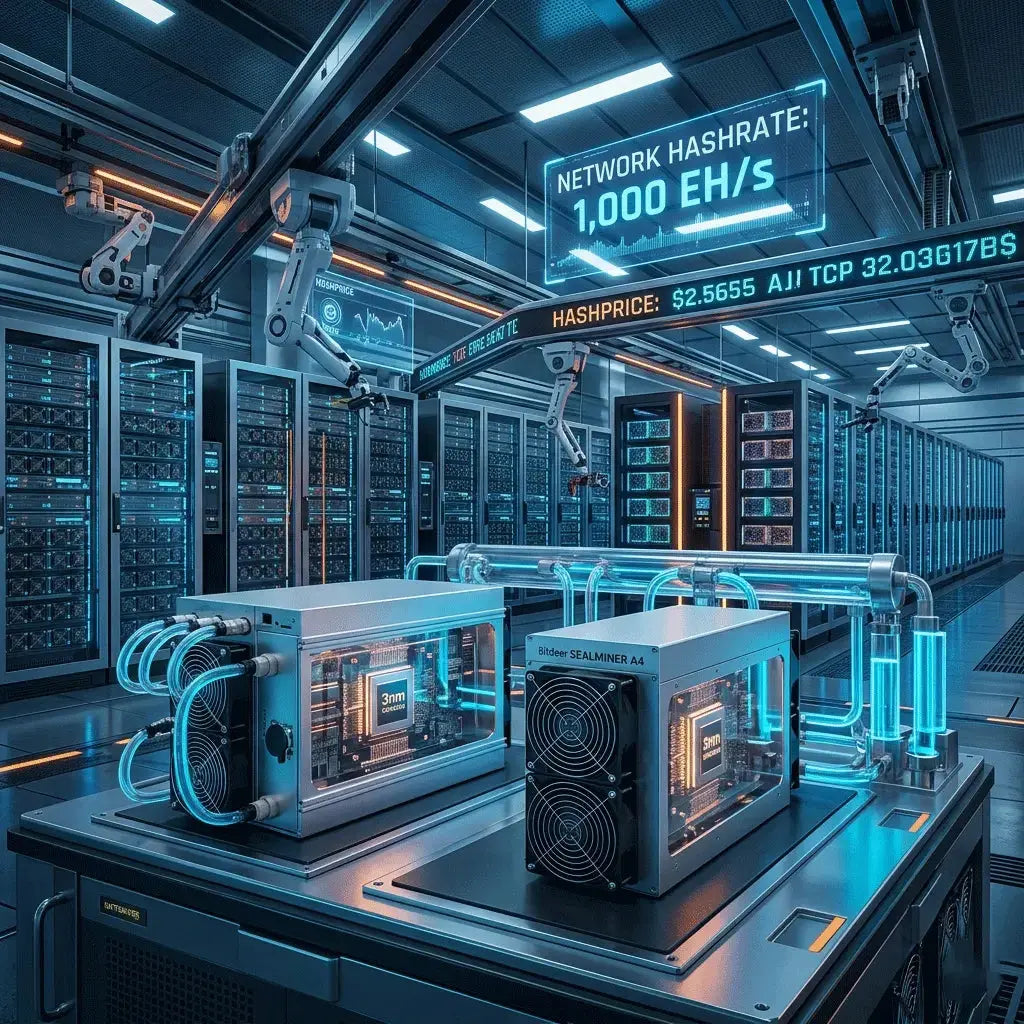
ASICs are integrated circuits specifically designed to mine particular algorithms. By 2026, this technology has evolved to 3nm and more advanced manufacturing processes.
Representative Model: Antminer S23 Hyd. (Liquid-Cooled Version)
-
Hashrate: 580 TH/s
-
Energy efficiency: 9.5 J/TH
-
Power consumption: 5,510W
This means that with the same electricity consumption, the S23 generates several times more revenue than mainstream models from just three years ago.
ASIC Pros and Cons:
-
Pros: Extremely high hashrate, excellent energy efficiency
-
Cons: Single-purpose. If the coin's algorithm changes or network difficulty soars, the hardware cannot be repurposed
-
Best for: Professional miners pursuing large-scale, long-term commitment to specific coins (e.g., Bitcoin, Litecoin)
2.2 GPU Miners: The Flexible Choice and AI Transition
For small-scale or home miners, GPUs play a completely different role in 2026. With Ethereum's complete transition to Proof of Stake, GPU miners have been forced to switch between Kaspa, Ravencoin, and emerging DePIN (Decentralized Physical Infrastructure Network) projects.
Representative Model: NVIDIA RTX 5090
-
Core algorithm: kHeavyHash / AI
-
Hashrate: ~2.2 GH/s
-
Power consumption: 550W
-
Memory: 32GB GDDR7
The RTX 5090 can not only mine traditional PoW tokens but also generate 3–6 times higher net profit from AI model inference and rendering tasks than from conventional mining.
GPU Pros and Cons:
-
Pros: High flexibility — can switch between different cryptocurrencies based on market conditions; hardware retains resale value
-
Cons: Far less efficient than ASICs for specific coins like Bitcoin
-
Best for: Beginners or small-scale miners with limited budgets who want to test different coins
2.3 2026 Mainstream Mining Hardware Comparison Table
| Hardware Type | Model | Algorithm | Hashrate | Power (W) | Efficiency | Best For |
|---|---|---|---|---|---|---|
| ASIC | Antminer S23 Hyd. | SHA-256 | 580 TH/s | 5,510 | 9.5 J/TH | Large-scale compliant farms |
| ASIC | Antminer KS5 Pro | KHeavyHash | 21 TH/s | 3,150 | 150 J/T | Kaspa mining |
| ASIC | Antminer L9 | Scrypt | 16–17 GH/s | 3,360 | 210 J/G | LTC/DOGE mining |
| GPU | NVIDIA RTX 5090 | kHeavyHash/AI | ~2.2 GH/s | 550 | 0.25 W/MH | AI computing + flexible mining |
| GPU | NVIDIA RTX 4070 S | Autolykos/AI | ~880 MH/s | 120 | 0.14 W/MH | Home high-efficiency mining |
Chapter 3: Understanding Mining Difficulty, Halving Economics, and the 2026 Market
In mining decisions for 2026, mathematical models matter more than intuition. Miners must understand two core variables: mining difficulty and the aftershocks of Bitcoin halving.
3.1 The Dynamic Balance of Difficulty
Bitcoin's difficulty adjustment mechanism remains the bedrock of network stability. To ensure a new block is produced approximately every 10 minutes, the network automatically adjusts difficulty every 2,016 blocks (roughly every 14 days) based on changes in total network hashrate.
In early 2026, due to some inefficient capacity going offline, Bitcoin mining difficulty saw a rare 8% decrease, providing a brief "profit window" for efficient miners who remained on the network. However, as new S23 miners continued to be deployed, difficulty rose again by about 4% in early April, signaling intensifying competition.
A common misconception: Many beginners think that as they join the network, mining will become easier. The opposite is true — the more miners join, the higher the difficulty rises.
3.2 The Long-Tail Effect of the 2024 Halving
The 2024 halving reduced the block reward from 6.25 BTC to 3.125 BTC. Entering 2026, we are in the middle-to-late stage of the halving cycle.
Historical halving progression:
-
Initial reward: 50 BTC
-
After multiple halvings
-
Post-2024: 3.125 BTC
Historical patterns show that the second year after a halving is often a period of price bottom-finding or significant volatility. For miners, halving means "output halved, costs doubled." According to the latest financial models, if the Bitcoin price cannot stabilize above $80,000, many miners with electricity costs above $0.05/kWh will struggle to recover their hardware investment within 18 months.
3.3 2026 Bitcoin Mining Profitability Formula
Miners should use the following formula to accurately calculate daily revenue:
P_day = (H_miner / H_network) × (R_block × 144 + F_total) × Price_BTC
Where:
-
P_day = Daily revenue (USD)
-
H_miner = Your hashrate
-
H_network = Total network hashrate
-
R_block = Block reward (3.125 BTC in 2026)
-
F_total = Total daily transaction fees on the network
-
Price_BTC = Current Bitcoin market price
Chapter 4: The Hidden Cost – Global Energy Map and Environmental Taxation
Electricity is the single largest ongoing expense in 2026 mining, accounting for 60% to 80% of total operating costs. A high-performance ASIC miner can consume over 5,500W, meaning that if you live in an area with high electricity prices, your mining revenue may not even cover your electricity bill.
4.1 Global Low-Cost Energy Hub Analysis
Paraguay: Leveraging the immense capacity of the Itaipu hydroelectric dam, Paraguay remains a "safe haven" for global miners in 2026. Electricity costs range from $0.033–0.05/kWh, far below the global average.
Ethiopia: The country has emerged as Africa's largest mining hub in 2026, with electricity prices around $0.048–0.053/kWh, attracting significant hashrate relocating from China and the United States.
Texas, USA: The implementation of SB 6 requires mining farms to have remote shutdown capabilities during peak electricity demand. While this adds compliance complexity, miners can receive electricity rebates by participating in "demand response programs," keeping actual net costs around $0.06/kWh.
4.2 2026 Industrial Electricity Prices by Country
| Country/Region | Industrial Rate (USD/kWh) | Energy Source | Mining Viability |
|---|---|---|---|
| Kyrgyzstan | 0.014 – 0.039 | Hydropower | Very High (quota limits) |
| Paraguay | 0.045 – 0.054 | 100% Hydropower | Very High (stable policy) |
| Ethiopia | 0.048 – 0.053 | Hydropower | High (infrastructure developing) |
| Texas, USA | 0.062 | Natural gas / Wind | High (SB 6 compliance required) |
| UAE (Dubai) | 0.054 – 0.08 | Solar / Natural gas | Medium |
| China | 0.076 – 0.098 | Mixed | Low (high compliance risk) |
| EU Average | 0.164 – 0.25 | Mixed / Green | Very Low (carbon taxes apply) |
4.3 The Green Mining Trend in 2026
ESG (Environmental, Social, and Governance) is no longer just a slogan — it is a financial constraint. Within the EU, MiCA regulations require all miners to disclose their energy consumption data. If miners cannot prove their electricity comes from renewable sources, they may face substantial carbon offset costs.
Using solar, wind, or geothermal energy not only reduces long-term costs but also helps avoid policy restrictions targeting high-energy industries in many regions.
Chapter 5: Six Core Strategies to Maximize Profits in 2026
To profit in the mature market of 2026, miners must transform from simple hardware buyers into sophisticated financial and technical managers.
5.1 Precise Coin Selection – From PoW to AI Computing
While Bitcoin remains the safe-haven choice, the profit leaders in 2026 often appear in areas with specific algorithmic advantages.
-
Kaspa (KAS): One of the most successful PoW innovation coins of 2026. Its BlockDAG structure solves scalability issues and has made mining returns on Kaspa exceed those of Bitcoin during certain periods.
-
DePIN and AI Rendering: For miners with substantial GPU resources, joining networks like Render Network (RNDR) or Bittensor (TAO) to use idle computing power for 3D rendering or AI model training is highly profitable. According to March 2026 data, an RTX 4090 can generate $90–210 per month from AI inference tasks — over three times the return of traditional mining.
5.2 Mining Pool Selection and Payout Optimization
Solo mining in 2026 is essentially buying lottery tickets. Joining a stable pool with reasonable fees is a prerequisite for survival.
-
FPPS (Full Pay-Per-Share) : The dominant model among major pools in 2026. It pays not only block rewards but also transaction fees, significantly smoothing revenue fluctuations.
-
PPLNS (Pay-Per-Last-N-Shares) : Suitable for miners with stable, long-term connections. Fees are typically lower, but revenue can fluctuate more during unlucky periods.
| Pool Name | Payout Model | Fee Rate | Network Share | Best For |
|---|---|---|---|---|
| Foundry USA | FPPS | Tiered | ~30% | Institutional / large-scale farms |
| AntPool | FPPS/PPS+ | 1.5%–2.5% | ~18% | Bitmain equipment users |
| F2Pool | FPPS/PPLNS | 4% / 2% | ~12% | Global, multi-coin miners |
| ViaBTC | PPS+/PPLNS | Various | ~10% | Those prioritizing withdrawal flexibility |
5.3 Infrastructure Revolution – Immersion Cooling and Heat Recovery
In 2026, cooling has become the second battlefield of mining farm competition.
-
Liquid cooling systems: Use specialized cooling plates to precisely control ASIC chip temperatures, reducing performance throttling due to overheating.
-
Immersion cooling: Submerging entire machines in dielectric fluid. This solution eliminates noise, extends hardware lifespan by 4–5 years, and expands overclocking headroom by up to 40%. In tropical or arid climates, immersion cooling is the only way to keep PUE (Power Usage Effectiveness) below 1.03 year-round.
5.4 Market Monitoring and "Shutdown Price" Hedging
Sophisticated miners in 2026 commonly use financial derivatives to lock in profits:
-
Hashrate futures and options: Lock in hashprice for the next three months via trading platforms, ensuring revenue covers electricity costs even if coin prices crash.
-
Dynamic shutdown logic: Use smart plugs and automation scripts to automatically shut down mining rigs when market hashprice falls below the "shutdown electricity price" for specific models, restarting during off-peak hours.
Recommendation: Before purchasing equipment, always use online mining calculators (e.g., miningnow.com) to input hashrate, power consumption, and your local electricity rate to calculate true net profit.
5.5 Asset Diversification – From "Mine-and-Dump" to Computing Service Provider
Successful miners in 2026 no longer hold only Bitcoin. They use platforms like NiceHash to automatically switch mining targets based on real-time profitability. At the same time, they convert some earnings into stablecoins or staking yields, using cross-chain asset allocation to hedge against the cyclical risks of the mining industry.
5.6 Investing in High-Quality, Transparent Cloud Mining
For investors unwilling to manage hardware themselves, cloud mining has matured significantly by 2026.
-
BitFuFu (NASDAQ: FUFU) : The only publicly traded professional cloud mining platform on a US stock exchange. It manages 26.4 EH/s of hashrate with fleet efficiency of 17.5 J/TH, offering small investors access to institutional-grade competition.
-
NiceHash Marketplace: Allows users to rent hashrate from other miners by paying BTC to mine specific algorithms. This can generate excess returns during the launch windows of new coins.
Chapter 6: Legal Compliance and Regulatory Environment in 2026
Globally, the regulatory environment in 2026 has shifted from "unregulated" to "standardized" — this is both a cost and a protection.
6.1 Texas SB 6 – The Far-Reaching Impact
As a global hub for miners, Texas saw its SB 6 bill take full effect in 2026.
-
Load interconnection standards: Any new mining facility exceeding 75MW must post a $50,000 per MW bond to cover potential wear and tear on power infrastructure.
-
Remote shutdown requirements: All mining farms connecting to the grid after December 31, 2025, must install remote shutdown devices. During extreme cold snaps or heatwaves, ERCOT (Texas power grid operator) has the authority to demand instant load shedding from mining facilities.
6.2 The EU's MiCA – Disclosure Obligations
The EU's MiCA regulations in 2026 affect not only exchanges but also directly impact miners.
-
Environmental assessment reports: Mining farms operating within the EU must submit quarterly environmental footprint reports, including CO₂ emissions per unit of cryptocurrency mined.
-
Compliance licensing: Mining pool operators must be licensed as "Crypto Asset Service Providers" (CASPs), meaning miners must undergo rigorous KYC verification — the era of anonymous mining is effectively over in Europe.
Chapter 7: Profit Maximization Case Study – A Blueprint for a Professional Mining Farm in 2026
Suppose a mid-sized professional mining farm enters the market in 2026. Here is its optimal configuration:
| Factor | Recommended Configuration |
|---|---|
| Location | Paraguay or Ethiopia, securing a long-term power contract at $0.045/kWh |
| Hardware | 100 units of Antminer S23 Hyd., total hashrate 58 PH/s |
| Infrastructure | Full immersion cooling, PUE below 1.03, waste heat used for greenhouse agriculture |
| Mining Pool | Foundry USA, using FPPS model for stable cash flow |
| Hedging | Pre-sell 30% of hashrate contracts on a hashpower trading platform to reduce volatility risk |
| Compliance | Retain legal counsel to ensure compliance with local tax and cross-border regulations (MiCA/SB 6 as applicable) |
Chapter 8: Conclusion – Securing Wealth in a Decentralized Future
Cryptocurrency mining in 2026 has become a pure efficiency contest. In this system, all profits come from:
-
Extreme optimization of energy efficiency
-
Precise arbitrage of electricity costs
-
Forward-looking judgment of global policy trends
Whether you are a GPU miner seeking a second growth curve in AI inference, or an ASIC giant building digital hydropower hubs on the African savanna, the survival rule for 2026 is the same: Efficiency is life. Compliance is your passport.
Cryptocurrency mining is no longer just about generating tokens — it is the hardest infrastructure of this digital age. By investing in high-quality hardware, optimizing cooling systems, and deeply engaging with low-cost energy regions, you can secure your share of wealth in this multi-trillion dollar decentralized ecosystem.
Buy professional mining equipment, draft your 2026 blueprint — the best time to act is now.
References
- Bitcoin Hashrate Declines by Nearly 6% Over the Quarter I ForkLog
- CoinShares 2026 Report: Have Bitcoin Miners Reached Their Toughest Moment?
- Texas Senate Bill 6 Update: What Data Centers and Large Load Customers Should Know About Proposed Interconnection Standards
- Mining Madness: The staggering energy cost of a single Bitcoin in 2026
-
Bitcoin Mining in Paraguay 2026: Complete Guide to Cheap Electricity & Setup (2026 Guide)




1 comment
rajesh sheth
Very informative and get inputs
Leave a comment
This site is protected by hCaptcha and the hCaptcha Privacy Policy and Terms of Service apply.